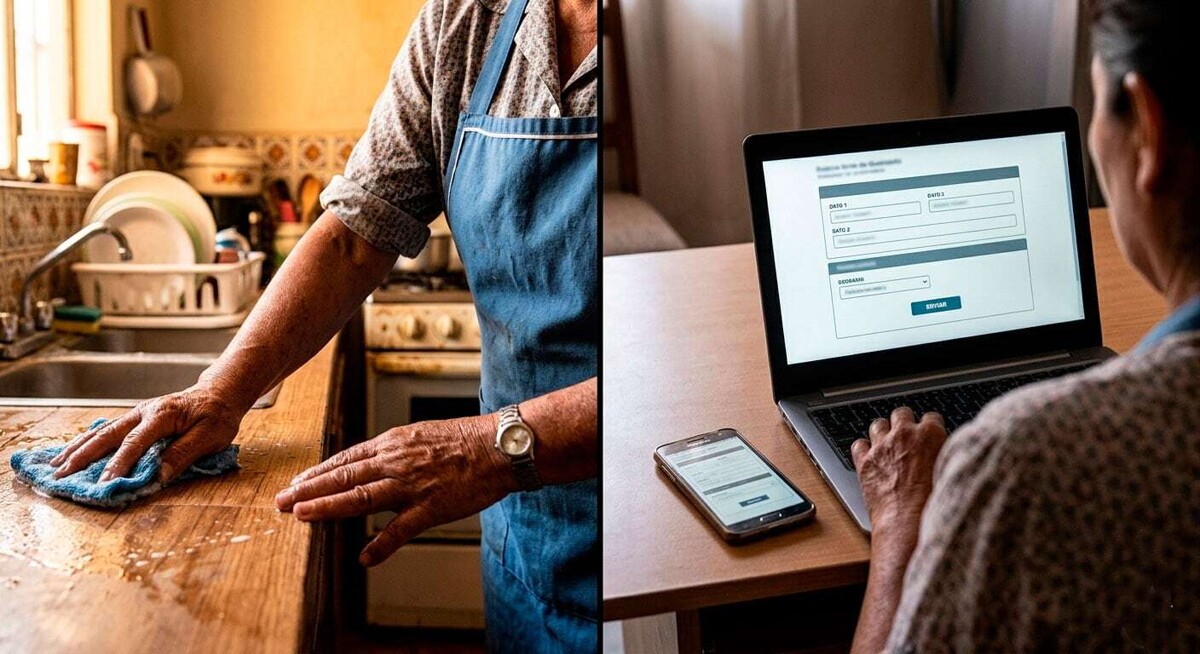
Domestic workers represent one of the most precarious sectors. Work does not guarantee escaping poverty The problem is not just the lack of affiliation. In Guanajuato, 33.6% of the population lives in labor poverty, meaning their income is not enough to buy the basic basket of goods. This places domestic work in a double vulnerability: on the one hand, the absence of formal labor rights; on the other, incomes that barely allow overcoming poverty conditions. In practical terms, working does not necessarily mean living better. A day to recognize… and expose Every March 30 is commemorated as the International Day of Domestic Workers, a date established in 1988 to recognize this work and demand decent conditions, social security, and a fair salary. However, in states like Guanajuato, the commemoration also exhibits a contradiction: although affiliation with IMSS (Mexican Social Security Institute) has been mandatory since 2019 and can be done online in a few minutes, formalization remains marginal. Between the possible and the pending The contrast is clear. There is an accessible mechanism to register domestic workers. In Guanajuato, domestic work remains one of the most widespread and at the same time most unprotected. Informality reaches 53.8% of the employed population, reflecting a market where millions work without benefits or social protection. On the other hand, a reality where almost no one does it. The explanation does not lie in the complexity of the procedure, but in a labor culture that normalizes informality, another form of gender violence that remains in a gray area of social and legal discourse. It is estimated that 114,000 people are dedicated to this activity, but only 2,153 are registered with the Mexican Social Security Institute, leaving more than 98% without access to social security. This data is not minor when observing the state's labor context. The problem is also structural.