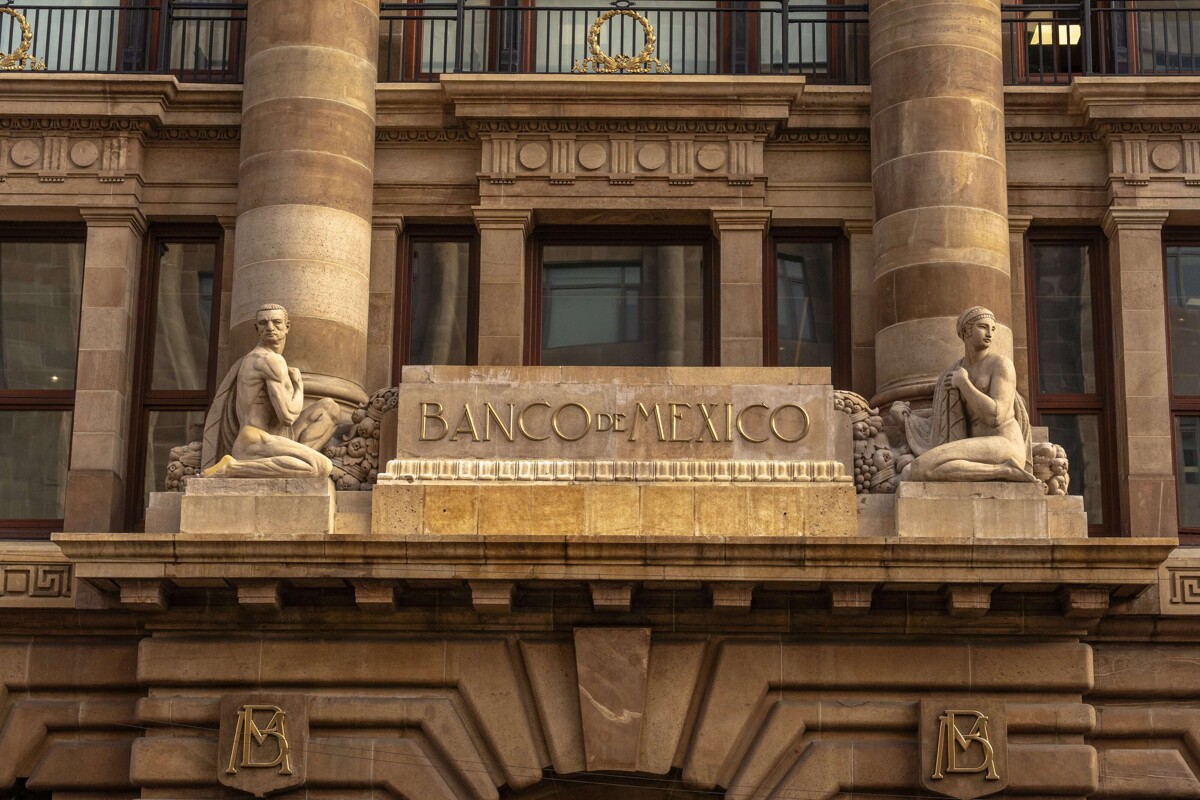
The Mexican legislator, fully aware of the imbalances caused by decades of monetary subordination, designed an institutional framework in which the Bank of Mexico's Governing Board makes decisions collegially, independently of the Federal Government, and with a medium and long-term horizon designed to transcend six-year administrations. The bank's autonomy means that sustainable growth can only be built on the basis of stable prices. When a central bank gives in to pressures to artificially stimulate growth by cutting interest rates that do not correspond to the current inflationary conditions, the value of the currency is put at risk, and with it, the purchasing power of millions of citizens. A central bank's mandate must be clear, bounded, and resistant to political cycles. In all these cases, institutional autonomy is the common denominator that allows these entities to make technical decisions without giving in to the political-electoral convenience of the moment. The case of Mexico deserves special attention. The autonomy and credibility of the Bank of Mexico are not a dispensable luxury but the minimum guarantee that monetary policy is conducted with technical responsibility and an unwavering commitment to price stability. Defending it is not an ideological stance, but an act of prudence and respect for long-term well-being. Countries that have allowed the political capture of their central banks have suffered from uncontrolled inflation, capital flight, and loss of institutional credibility. The autonomy of a central bank is not an institutional whim or a bureaucratic privilege but a historical conquest that responds to decades of evidence on the devastation caused by political intervention in monetary decisions. In times of economic uncertainty, the temptation to subordinate monetary policy to the short-term objectives of the Executive represents one of the greatest risks to the stability of any nation. It was not until the 1993 constitutional reform that autonomy was granted to the Bank of Mexico. Monetary policy was subordinate to public spending needs, which led to episodes of hyperinflation, abrupt devaluations, and recurrent crises that eroded confidence in the peso and impoverished entire generations. The Law of the Bank of Mexico, published in December of that year, clearly established its priority mandate: to ensure the stability of the purchasing power of the national currency, an objective that is neither accessory nor negotiable. The Federal Reserve of the United States operates under a dual mandate that includes price stability and full employment, although it has historically prioritized inflation control as a necessary condition for the latter. The European Central Bank has as its primary objective to maintain price stability in the euro area, with an inflation target measured in the medium term. The Bank of England, for its part, also pursues a measured inflation target that is set by the government, but it enjoys operational independence in determining how to achieve it. Various specialists have questioned whether this rate cut strictly responded to a technical reading of macroeconomic conditions or, on the contrary, reflects a growing pressure from the political environment to ease monetary policy at a time when the economy shows signs of slowdown. For much of the 20th century, the Bank of Mexico operated as an appendage of the Federal Executive. The division of opinions within the Governing Board itself and the reactions in the markets underscore the sensitivity of these decisions and the importance of each movement in the rate being based on data, models, and a rigorous analysis of the balance of inflationary risks, in strict adherence to the central bank's constitutional mandate. The historical lesson is conclusive. When a central bank cuts interest rates to stimulate productive activity without conditions justifying it, it can generate distortions that end up punishing the most vulnerable sectors more severely. Inflation is, in essence, a regressive tax that disproportionately affects those with the least. In this context, the decision made last week has generated controversy among analysts, markets, and political actors. Mexico has already walked this path and paid those consequences. The international experience demonstrates this.