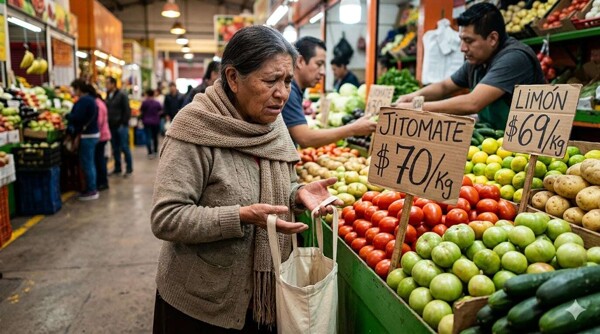
Most members of the Bank of Mexico's board consider that recent inflationary shocks will be temporary, leaving the door open for a new interest rate cut. According to the minutes of the March 25 meeting - when the bank surprised with a 25 basis point cut - three members agreed that the conflict in the Middle East will have a limited impact on prices in Mexico. Banamex analysts noted that "caution was left behind" and warned that the board may be overestimating the degree of economic slack. After the latest rate cut, the market anticipates that Banxico will pause in May. Additionally, doubts persist about the impact of the conflict in Iran, which has pushed crude oil prices up by more than 60% in recent months. For now, the reading of the minutes suggests that the central bank is not considering an immediate pause in the monetary easing cycle, unlike what part of the market anticipates for May. "If the measures established by the federal government (on gasoline prices) continue to be implemented, both the direct and indirect impacts of the external shock on domestic prices would be limited," warned one of the board members. In March, inflation rebounded to 4.59% annually. However, the energy component showed moderate increases: 1.06% monthly and 0.13% annually. In contrast, the increase was mainly explained by the fruits and vegetables component, which grew by more than 21% annually and 10% monthly. For Victoria Rodríguez, Galia Borja and Gabriel Cuadra, in both cases, they are transient shocks; they point out that this type of shock tends to dissipate as the production conditions of the affected products normalize. "These are supply-side disturbances that reverse quickly and do not affect the conduct of monetary policy," the minutes read. Not everyone agrees. Jonathan Heath and Borja, who voted to keep the rate unchanged, called for caution amid the uncertainty over the evolution of the conflict in the Middle East. In the market, the majority's stance has drawn criticism.