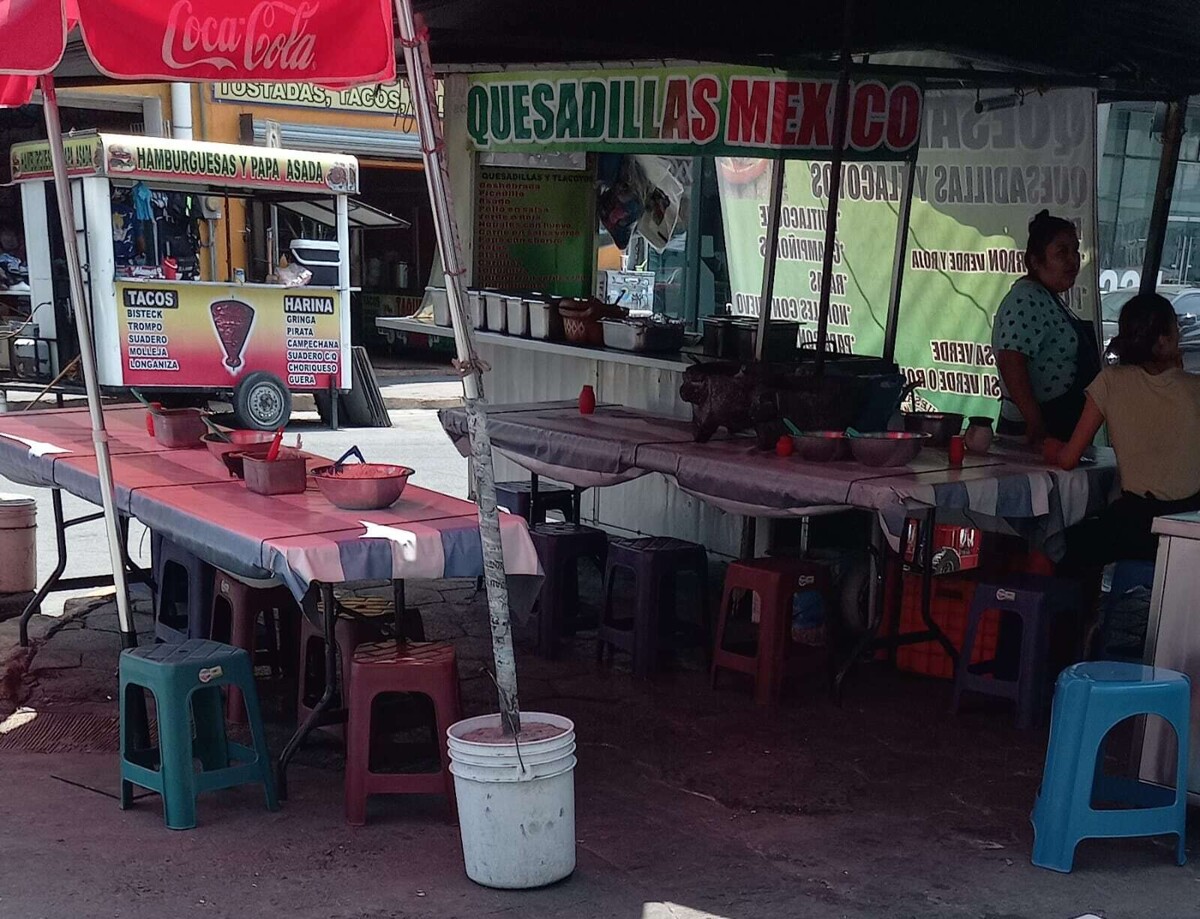
Behind this routine, there are more than 805,000 street food stalls that feed millions of people in the country every day. According to INEGI data, these businesses are not only part of the gastronomic culture but also sustain a significant part of the daily economy.
Eating on the street, part of daily life For millions of Mexicans, eating on the street is not an exception; it's a habit. Over 40% consume food outside the house at least once or twice a week, and a significant portion do so at street stalls. Quick breakfasts, complete meals, improvised dinners: street stalls adapt to the rhythm of the city and accompany every moment of the day.
However, behind each stall, there is a business that depends on a constant flow of customers and operates with limited income, which in many cases is almost entirely dedicated to maintaining daily operations.
They seek to give visibility to those who sustain the streets In this context, «Embajadores» emerges, an initiative that seeks to recognize those who, for generations, have fed the country from the public road. The campaign will take their stories to visible spaces such as buses, billboards, and digital platforms in cities like Mexico City, State of Mexico, Merida, and Guadalajara.
«If street stalls do well, Mexico does well,» stated Gabriela Riva Palacio, an executive from Grupo Herdez, highlighting the importance of this sector.
Beyond the numbers, street stalls represent identity, routine, and community. They are the meeting point, the quick solution, and, many times, the flavor that defines the day. Today, in the midst of the constant movement of cities, their presence not only remains firm but also begins to gain something they have rarely had: visibility. Mexico is also understood from the street: at the corner where the torta is assembled, in the hot dog cart that never fails, or in the chilaquiles that save the morning.