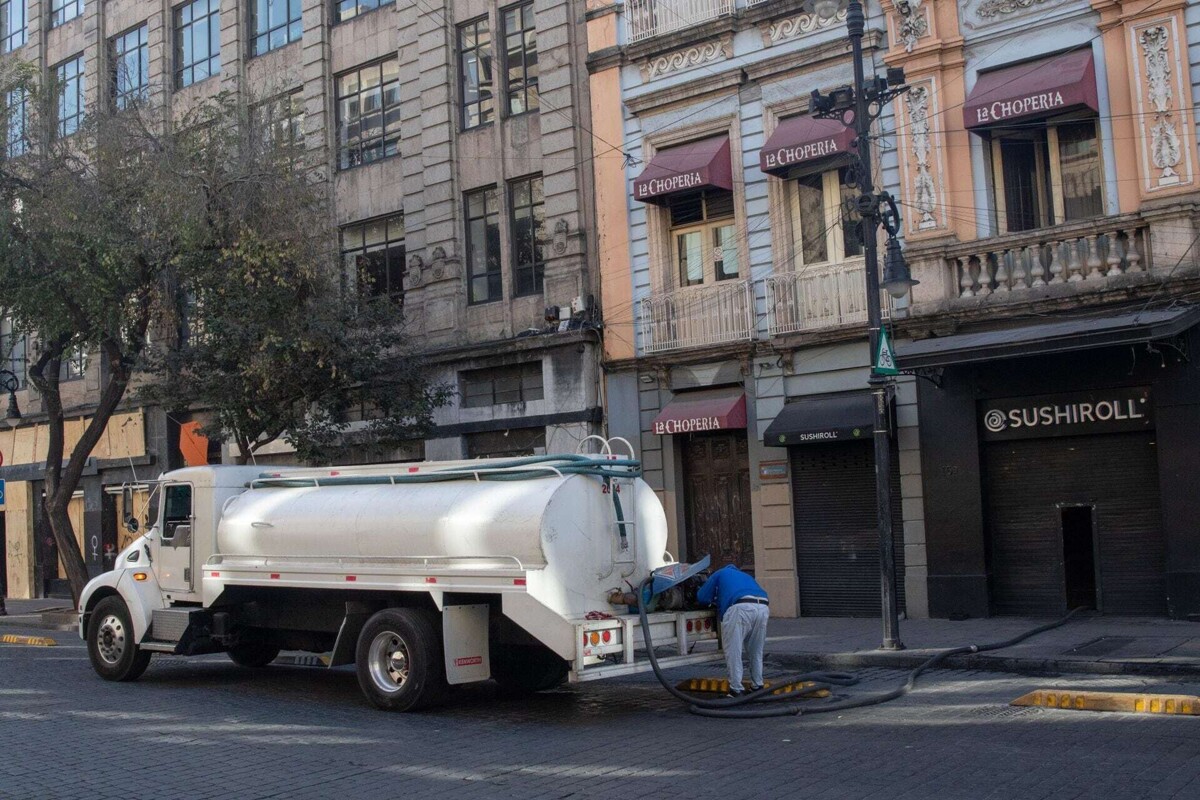
Industry cannot be established where water is scarce, and beyond nearshoring, this can generate additional pressures and disproportionate growth between regions. There are encouraging signals from the oceans. Droughts affect entire production chains, cities lose up to 40% of water through leaks, and scarcity translates to higher costs, financial risks, and political tensions. Innovation is already changing the landscape, with solutions being tested in different parts of the world that can transform how we manage this essential resource. In cities where a large amount of water is lost in the network, this technology can reduce waste and emergency costs. This allows for monitoring water quality in rural communities, local systems, or areas with limited infrastructure. Water is a structural factor of economic competitiveness, social stability, and attraction for investment, and it is beginning to emerge as a criterion for industrial location. I share ten innovations that are redefining the future of water. 1. Decentralized technologies for wastewater reuse. New treatment systems allow for the reuse of wastewater for irrigation, industrial processes, or non-potable urban uses. Although they do not replace traditional sources, they offer an alternative in arid regions or isolated communities. Their importance lies in improving the quality of available water and expanding the possibility of safe reuse. 5. AI models that predict demand and water stress. Advanced data analysis models can anticipate changes in water demand, drought patterns, and pressure on infrastructure. This forecasting capability facilitates investment planning and decision-making based on climate risk. 10. Water is a critical economic variable and a growing geopolitical factor of power. It is at the center of climate change adaptation and also of the new digital economy, where data centers require large volumes of water for cooling. For countries with long coastlines, such as Mexico, this innovation could complement other water sources in regions with severe water stress. 4. Urban aquifer recharge systems. Some cities are beginning to implement solutions that capture rainwater and infiltrate it into the ground through modular structures installed under streets or public spaces. This technology allows for the recovery of overexploited aquifers and reduces the risk of flooding, two problems that often occur simultaneously in urban areas. 8. Water determines the stability of cities, competitiveness, food prices, public health, and technological development. AI-powered systems for detecting leaks and failures in networks. AI allows for analyzing data from sensors installed in pipes, treatment plants, and distribution networks to anticipate leaks or failures before they occur. Early warnings can prevent diseases and improve the response capacity of health authorities. 3. Smart sensors that monitor water quality in real time. New devices combine sensors and algorithms to detect contaminants immediately, without relying exclusively on laboratories. 6. Water harvesting from atmospheric humidity. Atmospheric water generation systems extract water vapor from the air through condensation processes powered by renewable energy. Their potential lies in diversifying water supply sources in the context of prolonged droughts. 7. Advanced membranes and nanotechnology for purification. New generations of filters can remove increasingly small contaminants, including heavy metals, industrial chemicals, and microplastics. 2. Floating solar panels. Installing solar panels over reservoirs allows for the generation of clean energy and simultaneously reduces evaporation caused by high temperatures. 9. Modular desalination with solar energy. Traditional desalination consumes a lot of energy, making it expensive and environmentally complex. New modular systems use solar energy to reduce costs and enable smaller, more flexible installations in coastal areas. This dual function is especially valuable in regions with high solar radiation and water scarcity. 4. Next-generation offshore desalination. Some pilot projects are testing desalination plants installed under the sea, which can reduce energy costs and minimize the environmental impacts associated with onshore plants. In a context of increasing uncertainty, anticipating is becoming more important than reacting. The common thread among these innovations is that they transform how we understand water, allowing us to better manage it, reuse it, anticipate risks, and diversify sources. The conversation about water is expanding towards a vision that integrates oceans, ecosystems, and climate resilience. Such a high level of leakage is not just a technical problem; it also reveals failures in management and maintenance that exacerbate scarcity.