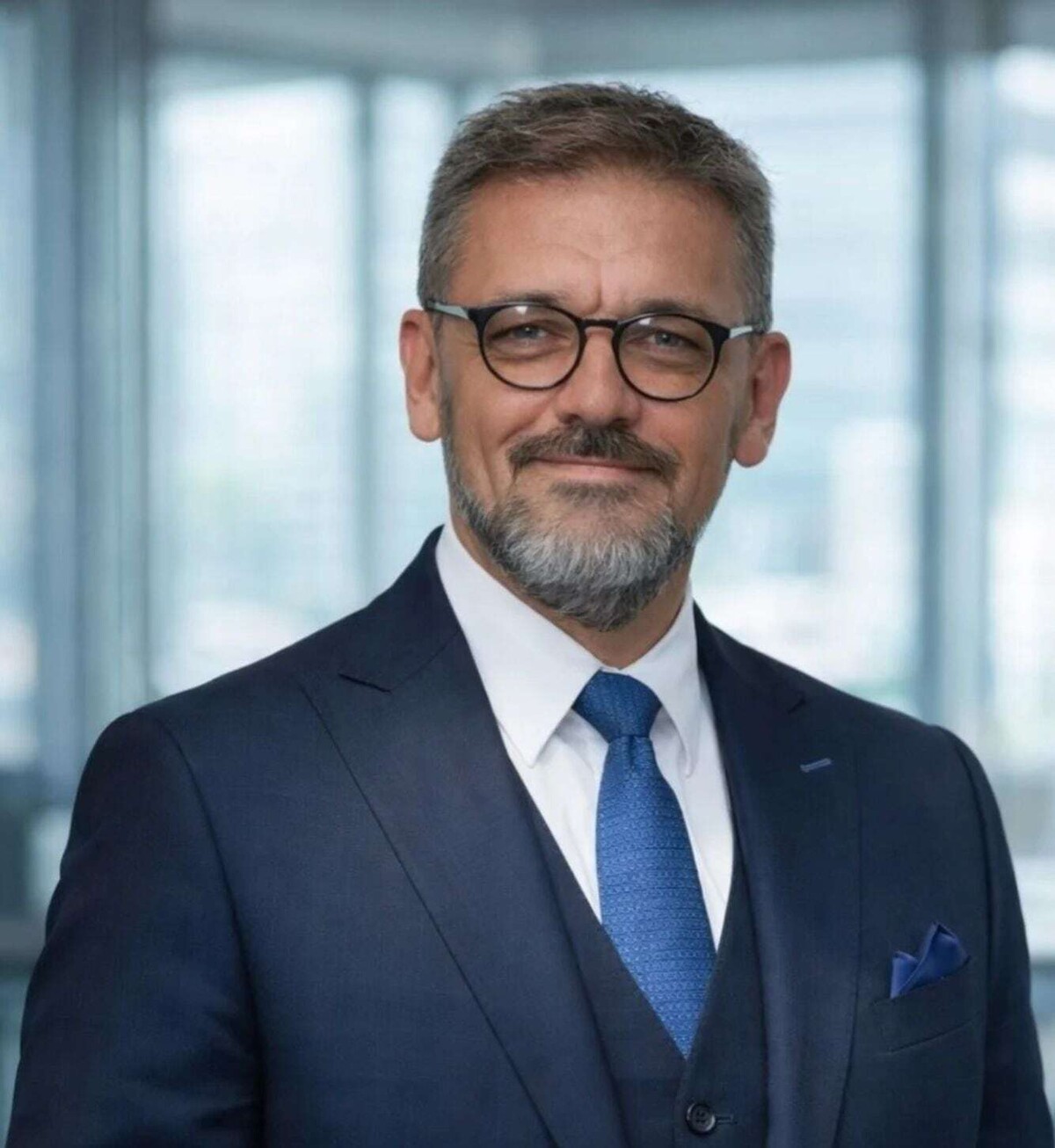
Mexican Nicolás Rosales has been elected Senior Vice President for Latin America at the International Association of Public Transport (UITP), one of the most influential organizations in the sector. His mission focuses on promoting cleaner, more efficient, and low-emission public transport systems through knowledge generation, innovation, and best practices. The appointment was made after a voting process by the Regional Executive Committee, in which 14 of the 15 members participated, giving Rosales a majority that reflects practically unanimous support for his career, leadership, and vision in urban mobility in the region. Furthermore, his appointment comes at a symbolic moment for the sector: the first commemoration of the World Day of Public Transport 2026, which will be celebrated on the upcoming April 17. An initiative of the international body itself that will be integrated into the international calendar with the aim of highlighting the strategic role of public transport in the productivity of cities and the construction of a more sustainable world. A service for current needs Nicolás Rosales has warned that the sector faces a deep structural crisis. Among the main challenges, he highlights: the inability of many systems to fully meet user needs; the slow recovery of demand after the pandemic, a phenomenon that has boosted migration towards private cars, mobility apps, bicycles, and motorcycles. In this scenario, the new senior vice president has proposed that the key to winning back the user lies in: substantially improving service quality, increasing frequency, and ensuring adequate cleanliness conditions. The Mexican Association of Transport and Mobility announced that its president, Nicolás Rosales Pallares, was elected Senior Vice President for Latin America of the International Association of Public Transport (UITP), one of the most influential bodies in the sector globally. His arrival at the UITP presidency not only recognizes over 15 years of work in favor of public transport but also positions Mexico and Latin America in a more prominent place within the global sustainable mobility agenda. Founded in 1885, UITP brings together more than 2,000 authorities, operators, suppliers, academics, and public policy makers worldwide. In this process, he has insisted that it is fundamental to open more spaces for the participation of female operators as part of the professionalization of the sector. These reflections will be part of the agenda of the International Transport Congress 2026 (17CIT), which will take place from May 7 to 9 at the Jaime Torres Bodet Cultural Center of the National Polytechnic Institute, where leaders, specialists, and decision-makers will meet at a key moment to redefine the course of public transport in Mexico. As part of the program, Nicolás Rosales will participate in the panel 'How to move efficiently; a reality in cities,' in which concrete solutions will be analyzed to improve urban mobility from an integral perspective. In this context, the 17CIT is emerging as a strategic platform to ground this international vision into concrete actions that drive more efficient, inclusive, and people-centered transport systems. Registration for this event is free, prior registration at citamtm.org. To this is added the urgency of advancing the transformation of the traditional 'man-truck' model towards formal business schemes capable of triggering fleet modernization and the adoption of electromobility technologies. The executive has also stressed that formalization processes, when accompanied, not only strengthen the operation of the systems but also allow for dignifying the working conditions of operators, facilitating the incorporation of technological innovation, and responding more effectively to current mobility challenges.