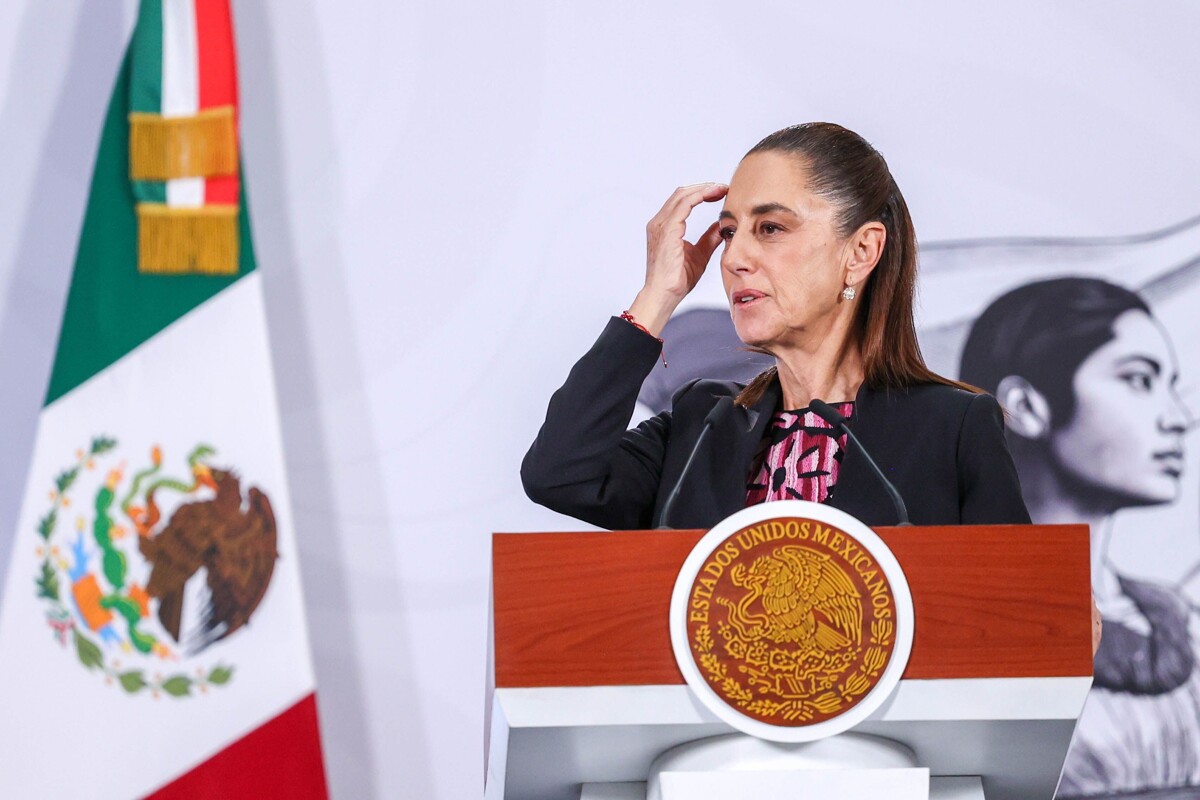
The attempt is to contain an imbalance without modifying its structural causes. Because as long as social spending —which continues to expand as a political axis— is not touched and a fiscal reform is not proposed, the margin will continue to shrink. From San Lázaro, where the budget is defined, the concern is evident. The president faces an equation that does not easily add up: maintaining the social spending that sustains political legitimacy, absorbing the rising cost of the debt, continuing to finance Pemex, and at the same time guaranteeing public investment and economic growth. The margin is practically non-existent. Speaking of “technical bankruptcy” may be politically uncomfortable, but operationally it describes a reality: a government that has no budgetary flexibility, depends on limited revenues, and faces rigid commitments that absorb most of the spending. It is not immediate insolvency, but a condition of structural fragility. The risk is that in the face of any external shock—a recession in the United States, tensions in the Treaty between Mexico, the United States, and Canada, or international financial volatility—the government will have very little room for response. And this has economic and political implications. Because when the State loses its ability to maneuver, decisions cease to be strategic and become reactive. And if that were not enough, there is the most emblematic case of fiscal pressure: Petróleos Mexicanos. Pemex is not only the most indebted oil company in the world, with financial liabilities exceeding 100 billion dollars, but it has also required constant support from the federal government. Between 2019 and 2024, public support for the company—through direct transfers, capital injections, and tax benefits—has exceeded 1.3 trillion pesos. Despite this, the results are limited. The oil company has recorded recurrent losses in several recent fiscal years, accumulating red numbers for hundreds of billions of pesos. Its production has not managed to recover historical levels, and its financial burden remains a structural drag. The message intends to convey discipline, order, and responsibility. But when the numbers—not the discourse—are reviewed, what emerges is something else: a government with ever-shrinking margins, pressured by commitments it itself helped to build. Faced with the warning, politically profitable and unavoidable spending is preserved, and what is left is adjusted. This implies that the financial cost of the debt—that is, what the government pays only in interest—has skyrocketed to levels close to a trillion pesos annually (around 1 trillion), although other records indicate it has reached 1.7 trillion, becoming one of the largest items in the federal budget, even surpassing key sectors like health or infrastructure. In other words: the government is spending more and more on paying debt, not on generating development. Then come the social programs that have devoured 4.5 trillion pesos between 2019 and 2026. Politically profitable spending is prioritized, not necessarily economically sustainable. The conclusion is clear: the president is not managing abundance, but severe restrictions due in large part to the cursed legacy of AMLO. The problem is that this “remainder” is becoming increasingly insignificant compared to the size of the State's obligations. The data confirms it. Rising inflation, increasing fiscal deficit, and populist decisions that limit the scope of the budget. Of course, the war in the Middle East disrupts the entire world economy. During the administration of Andrés Manuel López Obrador, the historical balance of the financial requirements of the public sector—the broadest measure of debt—went from approximately 10.5 trillion pesos in 2018 to more than 15 trillion pesos in 2024. That is, an increase of close to 4.5 trillion pesos, well above the two trillion estimated in a preliminary reading, reflecting a significant expansion of public debt. This growth is not minor. The rescue, in practical terms, has served to prevent an immediate collapse, but not to correct the underlying problem. The cost of that decision is absorbed by the public budget. If these three factors—growing debt, social welfare programs, and the rescue of Pemex—are added up, the result is clear: a rigid fiscal structure with very little room to maneuver. The government's discretionary margin shrinks year by year, while obligations increase. In that context, the call for Franciscan austerity takes on another dimension. It is not a preventive adjustment, but a reaction to the lack of fiscal space. President Claudia Sheinbaum has announced a new phase of “Franciscan austerity” in public spending. Cuts are made where possible, not where necessary.