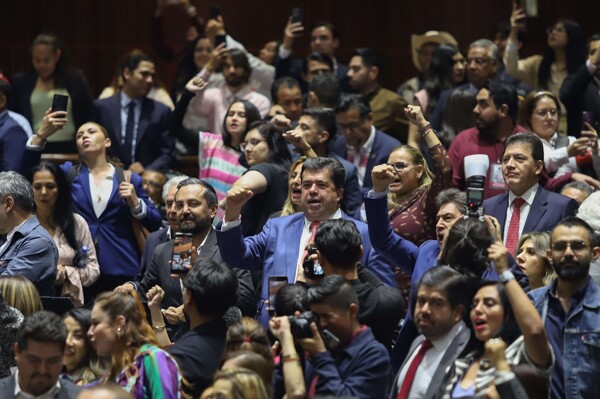
History shows that hasty reforms, designed without a deep analysis of their implications, can have lasting and difficult-to-reverse effects. Ultimately, reflecting on the 'Televisa Law' is reflecting on the kind of country one wants to build. A country where competition fosters innovation and where the State exercises its regulatory function responsibly and autonomously. The importance of remembering the failed attempt of the 'Televisa Law' lies precisely in its relevance. Its anti-competitive effects, its risks of regulatory capture, and its implications for democracy have not disappeared; they have simply taken on new forms. In a context of accelerated technological transformation, these lessons are more relevant than ever. The challenge, then, is to build a regulatory model that combines effectiveness, independence, and legitimacy. A model that learns from the past without getting stuck in it, that recognizes the progress made, but also the risks of backsliding. The story of the 'Televisa Law' is, in this sense, a warning and a guide. Twenty years after the publication of the 'Decree by which various provisions of the Federal Telecommunications Law and the Federal Radio and Television Law are reformed, amended, and repealed,' known colloquially as the 'Televisa Law,' Mexico is at a turning point that forces us to look back as a relevant warning. That package of reforms published on April 11, 2006, pushed in the context of the Vicente Fox Quesada government, was presented as a necessary modernization of the sector, but in reality it constituted a failed attempt to capture the regulatory apparatus for the benefit of dominant interests, weakening the principles of competition and State oversight in a strategic area for contemporary democracy, such as the telecommunications and broadcasting sector. The so-called 'Televisa Law' cannot be understood without placing it in the context of the democratic transition the country was experiencing. Or, conversely, a country where concentrated interests define the rules of the game and where the regulator acts as a mere executor of political decisions. The commemoration of these twenty years should not be an exercise in passive memory, but an opportunity to reaffirm commitments. Ignoring it would be a mistake; understanding it, an opportunity. In that environment, the 2006 reform introduced modifications that favored concentration in the broadcasting industry, particularly through the automatic renewal of licenses and the consolidation of advantages for existing concessionaires. The discourse of efficiency and legal certainty hid a logic of regulatory capture that was quickly pointed out by various actors, including academics, opposition legislators, and civil society organizations. One of the most critical aspects of that reform was the determination that there are no acquired rights over the radio spectrum, a scarce resource whose administration corresponds to the State for the public good. At this point, the mechanism of control through the unconstitutionality action 26/2006 was fundamental, by which the Supreme Court of Justice of the Nation resolved to invalidate some normative portions of the reform. This judicial precedent also laid the foundations for a more robust conception of the regulatory State. The resurgence of a decentralized regulatory scheme, dependent on the Federal Executive, raises questions about the State's ability to maintain technical autonomy and impartiality in decision-making. This return inevitably evokes the Federal Telecommunications Commission (Cofetel), whose history was marked by structural limitations derived from its hierarchical subordination. Cofetel operated in an environment where strategic decisions could be influenced by political considerations, which weakened its effectiveness as a regulator. None of the regulator models is intrinsically perfect, but the historical experience of the 'Televisa Law' suggests that the absence of checks and balances can lead to decisions that favor particular interests over the public interest. Likewise, the unconstitutionality action 26/2006 evidenced the crucial role of the Judiciary as a guarantor of constitutional principles in telecommunications and broadcasting. This precedent remains relevant today, especially in a context where regulatory decisions can have significant impacts on market structure. Twenty years after the 'Televisa Law,' Mexico faces the challenge of not repeating the mistakes of the past.