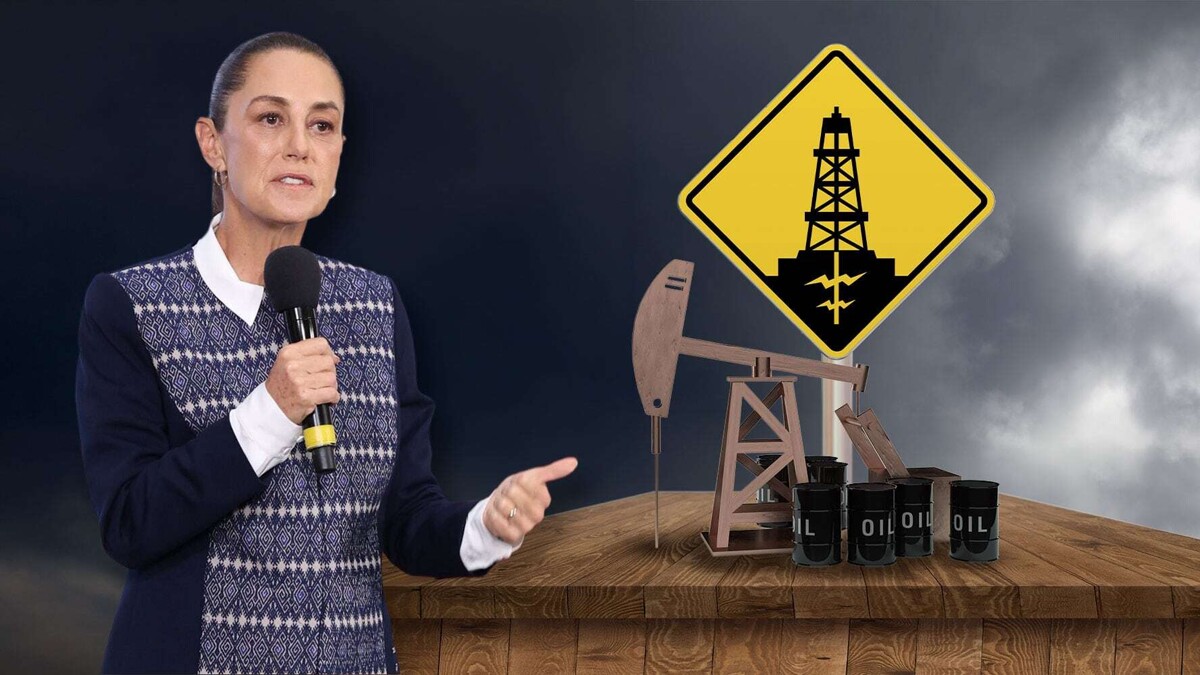
Mexico consumes approximately 9.1 billion cubic feet of natural gas daily, producing only 2.3 billion and importing the rest almost entirely from the United States. In 2025, average imports reached a record 6,638 million cubic feet per day, peaking at 7.5 billion in May. This 75% dependency is a critical factor underpinning the country's electricity generation and industrial activity. The president, who for years opposed fracking, acknowledged that conditions have changed and opened the door to evaluating the extraction of so-called unconventional gas. The committee, composed of specialists from leading universities and institutes, has two months to deliver its first guidance. This is an unprecedented exercise: subjecting an energy decision to academic scrutiny before its execution. Fracking requires between 10 and 14 million liters of water per well—about ten times more than conventional drilling. The country's largest unconventional reserves are concentrated in the Burgos, Sabinas, and Tampico-Misantla basins, which are classified as high-water-stress zones. The industry argues that techniques have improved and much of the water can be reused, but the committee will have to verify these figures with data, not promises. Mexico's unconventional gas reserves are estimated between 545 and 681 trillion cubic feet, ranking it among the top ten countries with the highest potential. However, geological potential does not automatically translate into profitable production. To achieve significant self-sufficiency, experts estimate that drilling 3,000 to 3,500 wells annually for a decade would be required, with annual investments of $35 to $45 billion. Meanwhile, drilling a well in Mexico costs $7 to $8 million, compared to $1 to $2 million in the US, where infrastructure has matured for decades. Not every geological resource is commercially viable. The upcoming USMEX review adds another variable: any private participation scheme will be subject to commercial negotiations that do not favor improvisation. The core dilemma has not changed: Mexico pays billions of dollars annually for gas crossing the border, and any disruption—a winter storm in Texas, a reallocation of LNG flows, or any other reason—leaves it exposed. The solution, however, cannot be worse than the problem. For the assessment to be valuable, it will have to answer questions that remain open. The first is economic: technology exists, but it requires regulatory will and budget. The second is about water, and perhaps it is the most delicate. If Mexico chooses this path, it must do so with standards that only a handful of global producers currently meet: satellite monitoring, independent verification, and strict control of leaks and venting. The third question is climatic: the energy sector generated about 145 million tons of methane in 2024, more than 35% of the total generated by humans. Before any authorization, it must be clear where the water will come from, how the return fluids—which can contain chemicals like toluene and xylene—will be treated, and who will bear the cost if something goes wrong.