Holy Week in Mexico is one of the country's most significant religious and cultural periods, featuring representations that combine Catholic liturgy, popular traditions, and a growing economic boost from tourism. In different regions, the celebrations take on unique nuances that reflect community identity, history, and devotion. From the massive production in Iztapalapa to the penitential processions in Taxco, and including lesser-known expressions in Santa Ana Chiautempan, Metepec, and Puebla, the country presents a mosaic of rituals that attract both the faithful and visitors. According to the Ministry of Tourism, Holy Week is one of the periods with the highest internal tourist mobility, particularly towards destinations with a religious tradition. However, detailed and systematic information about each local celebration is limited in official public sources.
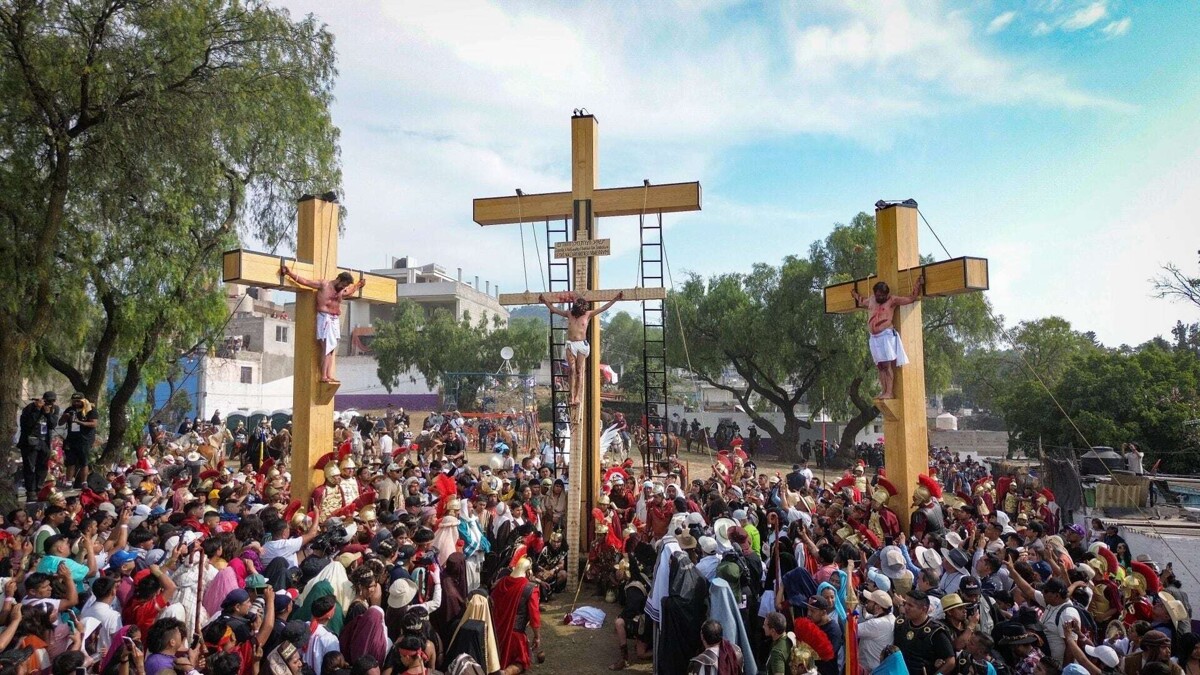
Iztapalapa: The most emblematic representation of the Passion of Christ. Holy Week in Iztapalapa is considered the most important representation of the Passion of Christ in Mexico. The processions travel through cobblestone streets in an atmosphere of silence and reflection. The Ministry of Culture has documented these practices as part of the country's religious cultural heritage.
Santa Ana Chiautempan: A local tradition. In Santa Ana Chiautempan, Tlaxcala, Holy Week celebrations include processions, representations of the Stations of the Cross, and liturgical activities in local parishes. Tlaxcala maintains a strong religious tradition, and in Chiautempan, thousands of people gather to accompany Christ's journey to his death on the Cross.
Metepec: Faith and syncretism in the State of Mexico. Holy Week in Metepec is characterized by parish celebrations, processions, and representations of the Stations of the Cross organized by local communities. The municipality, known for its artisan tradition, also incorporates cultural elements during these dates, although its Holy Week does not have the national projection of Iztapalapa or Taxco.
Puebla: Good Friday procession and religious tourism. Holy Week in Puebla is distinguished by the Good Friday Procession, one of the most important in the country, where various religious images from emblematic temples participate. This procession brings together thousands of believers in the historic center and is promoted by ecclesiastical and civil authorities. According to the Archdiocese of Puebla, the event aims to reinforce faith and promote community unity.
San Luis Potosí: The Procession of Silence. The central event of Holy Week in San Luis Potosí is the Procession of Silence, considered one of the most important in Latin America due to its solemnity and symbolism. It takes place every Good Friday in the Historic Center of the city and brings together brotherhoods that advance in complete silence, accompanied only by the sound of drums and bugles. According to the Government of the State of San Luis Potosí and the Ministry of Tourism, this procession is inspired by Sevillian traditions and has consolidated itself as a major religious and tourist attraction, attracting thousands of national and foreign visitors each year. The Procession of Silence is distinguished by the participation of various brotherhoods that carry robes, hoods, and banners in an atmosphere of deep reflection. It has been held since the 19th century and draws millions of attendees each year.