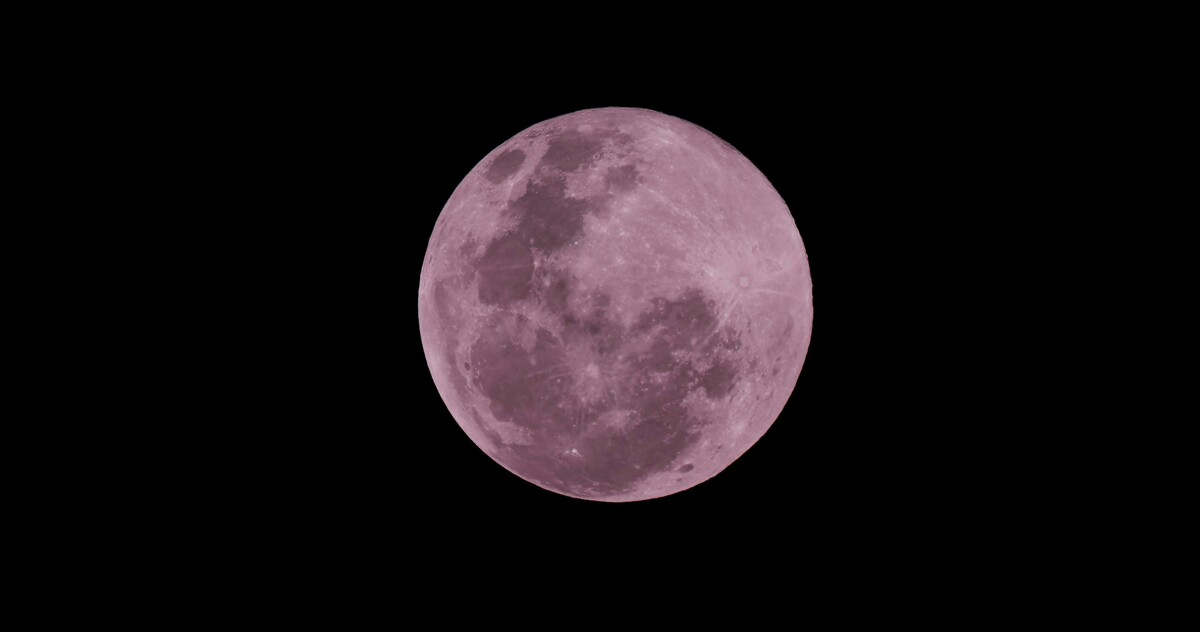
This April, the night sky will offer one of the most anticipated astronomical events for both enthusiasts and the general public: the Pink Moon, the first full moon of spring in the Northern Hemisphere. Although its name may suggest a pink hue, the satellite does not change color; the term comes from traditions linked to the flowering of pink-toned plants during this time of year. When and at what time can it be seen? According to astronomical data, the April full moon of 2026 will occur around 20:11 on April 1, Central Mexico time, and from before that hour, the Moon can be observed almost full in the night sky. This means that those who want to see the Pink Moon do not need to wait for an exact moment, but can enjoy its brilliance from the sunset of April 1 and for much of the night. It is recommended to look towards the eastern horizon shortly after sunset, when the moon rises and its full or almost full appearance can be anticipated. Why is it called the Pink Moon? The name 'Pink Moon' does not refer to the actual color the Moon will take on, but is a traditional denomination originating from indigenous cultures, especially in North America, where this lunar phase was associated with the flowering of Phlox subulata, a wild plant with pink tones typical of spring. This full moon is considered in many cultures a symbol of rebirth and renewal associated with the change of season, and in some contexts its presence is also linked to religious events such as the determination of Holy Week. How and where to see it? Unlike eclipses or other phenomena that require observation with specialized equipment, the Pink Moon is visible to the naked eye without the need for telescopes or binoculars. However, to enjoy it to the fullest, it is recommended to: • Look for a place with a clear sky and little light pollution. • Observe it from sunset to dawn, when the satellite will remain bright. • Take photographs when it is near the horizon, where it may appear larger due to the 'moon illusion'. An event that marks spring In addition to being a visually attractive spectacle for everyone, the Pink Moon has cultural and astronomical significance, as it represents the first full moon after the spring equinox in the Northern Hemisphere, a moment of transition in the seasonal cycle. In Mexico and other parts of the world, this phenomenon can be enjoyed without exclusive preparations, becoming an excellent opportunity to bring more people closer to the observation of the night sky and to the understanding of the lunar cycle that influences not only calendars, but also traditions and cultural activities.