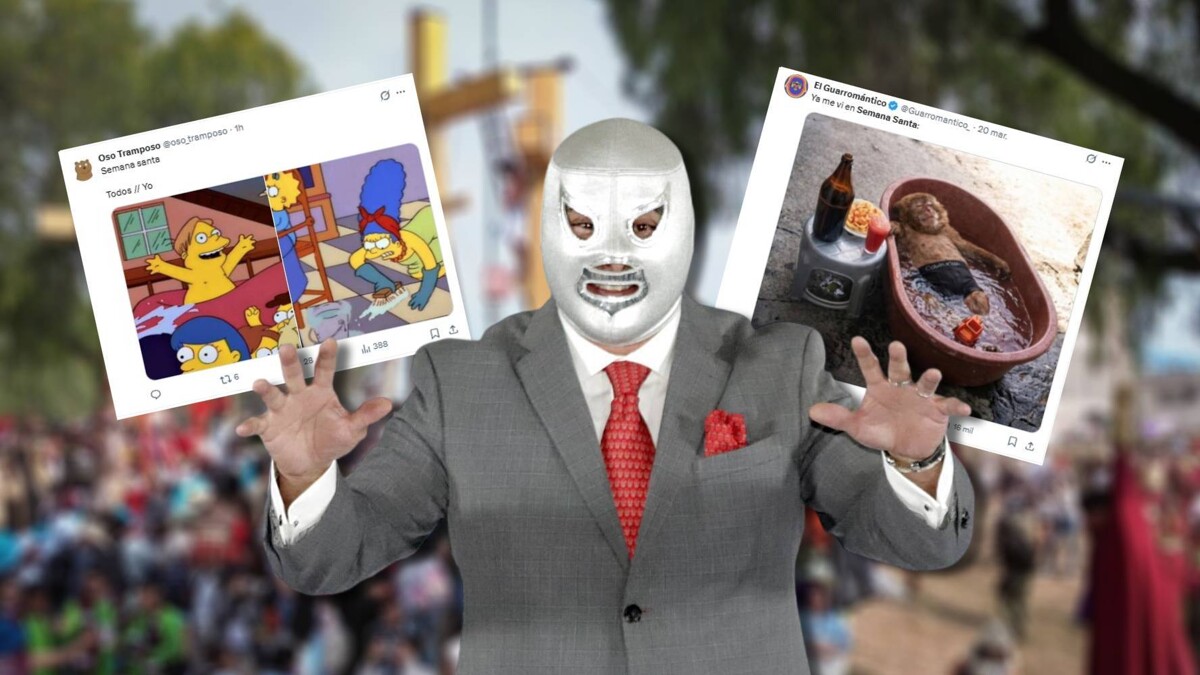
Since the Jews used a lunar calendar, the Church wanted to preserve that connection. Each year, Holy Week —which begins with Palm Sunday— is celebrated on variable dates, as Easter Sunday is determined from the first full moon after the spring equinox in the northern hemisphere, that is, March 21. Since this full moon does not occur on the same date every year, the calculation of Easter Sunday varies in the calendar, which causes the rest of the Holy Week celebrations to be rescheduled accordingly, making their dates change year after year. Many are already enjoying the beach, the pool, and drinking micheladas, while others are still in the office, as they must complete their full workdays. A situation that more than one person is experiencing. Memes don't lie: most of those circulating online are about the lack of Holy Week vacations, which, although frustrating, many have taken with humor. Why does the date of Holy Week change every year? In Mexico, the date on which Holy Week activities are held, including the school holidays given to students, is completely linked to the Catholic religion and changes every year. In this regard, the Diocese of Azcapotzalco explains that this is because the activities that commemorate the death and resurrection are governed by the lunar calendar. "This has deep roots in the relationship between the Christian Easter and the Jewish Easter (Pesach), since, according to the Gospels, Jesus died and rose during the Jewish celebration of Easter."