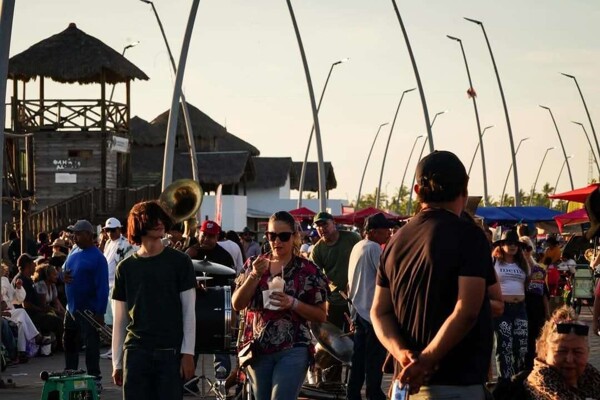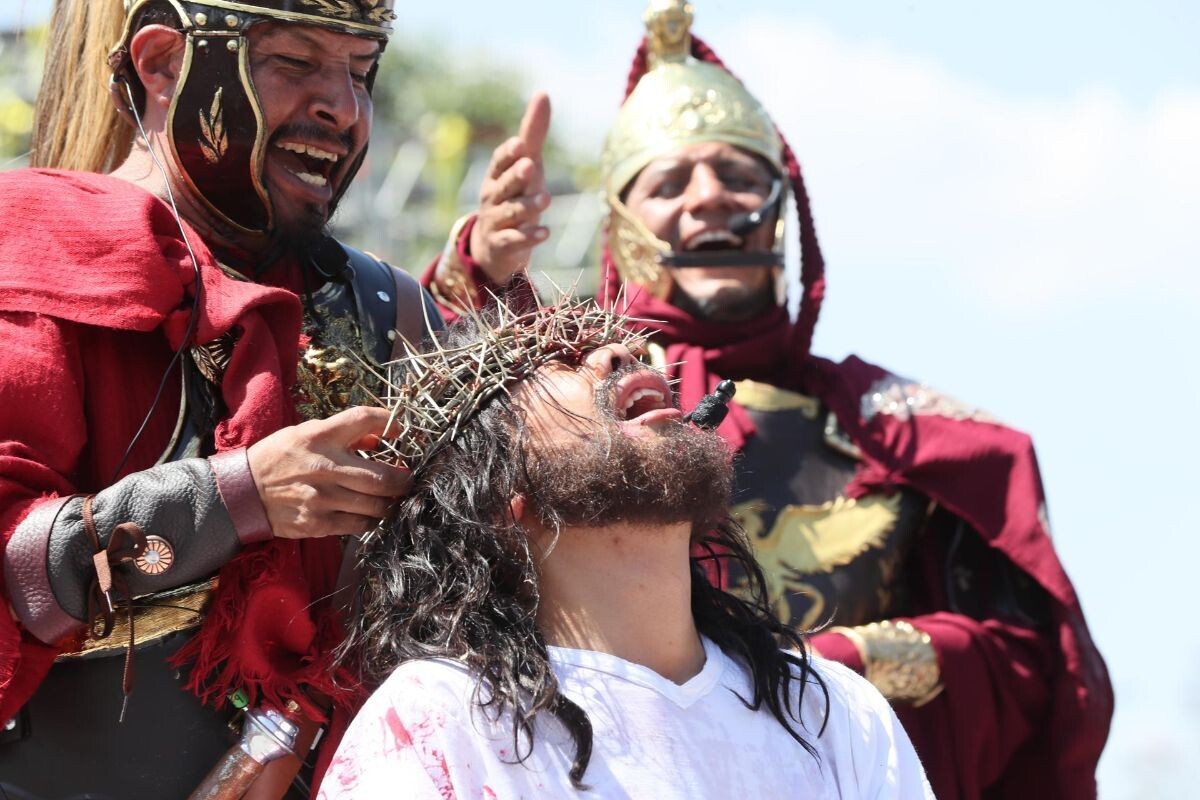
Mexico City, Iztapalapa. The residents of the Iztapalapa district in Mexico City are celebrating the international recognition of their traditional Via Crucis as Intangible Cultural Heritage of Humanity, awarded by UNESCO last December. This event, which organizers describe as an "unreachable dream, but achieved," is the culmination of years of work by the entire community. "There are still many children who come by themselves," explained Joaquín Rueda, a member of the organizing committee since 2005. "Neighbors take to the streets to support the procession by giving oranges, setting up packages, and bringing their own images to create a sense of community... Here, we don't belong to the church, we don't belong to the administrative authority, everything is communal," he emphasized. This tradition began in 1833 as a community vow to end a cholera epidemic that was decimating the population. A decade later, that commitment was formalized with the first staging, starting in 1843 a cycle that has now accumulated over 180 years of uninterrupted history. The procession takes place through the eight original neighborhoods of Iztapalapa, a borough in eastern Mexico City, where residents transform the urban space into biblical scenarios to enact episodes from the New Testament. It is the most crowded representation of Holy Week in the country and one of the largest religious gatherings in Latin America. A representation of the final hours of Jesus Christ. As every year, the more than 2,000 participants portrayed historical scenes from the Passion of Christ, such as his arrest, the lynching of Roman soldiers, and his subsequent crucifixion. Before starting the route, which ends with the death of Jesus Christ on a hill, Guadalupe told EFE that in her eleventh year of participation, she continues her family's "tradition," which originates from this borough and who attended annually. "It is very heavy, but it is very beautiful when you go up the hill... The feeling that passes is very beautiful, the whole crowd of people that gathers," said this Mexican woman, characterized as a Nazarene, who highlighted that "few women" participate in this festivity. Meanwhile, Ángel, 43, said that carrying a cross during Holy Week is a "moment of reflection," even more so on this occasion after the UNESCO recognition. On a horse and dressed as a Roman soldier, Armando Guzmán pointed out that this is a "unique experience" and a "tradition" of the people of Iztapalapa that has "cost quite a bit to endure," as well as "the most beautiful thing you can feel in life." In this edition, the organizers hope to gather more than two million people, returning to pre-pandemic attendance levels. The Iztapalapa borough experienced its massive Via Crucis this Friday in its 183rd edition, one of the most special in its history as it is the first since UNESCO declared this religious expression, one of the most important in the country, as Intangible Cultural Heritage of Humanity. Since morning, the streets of Iztapalapa have gone back more than 2,000 years to biblical times, with the presence of Nazarenes carrying crosses or Romans on horseback. "The health of the Via Crucis is excellent. Mainly you see it and you will be able to verify it with the children."