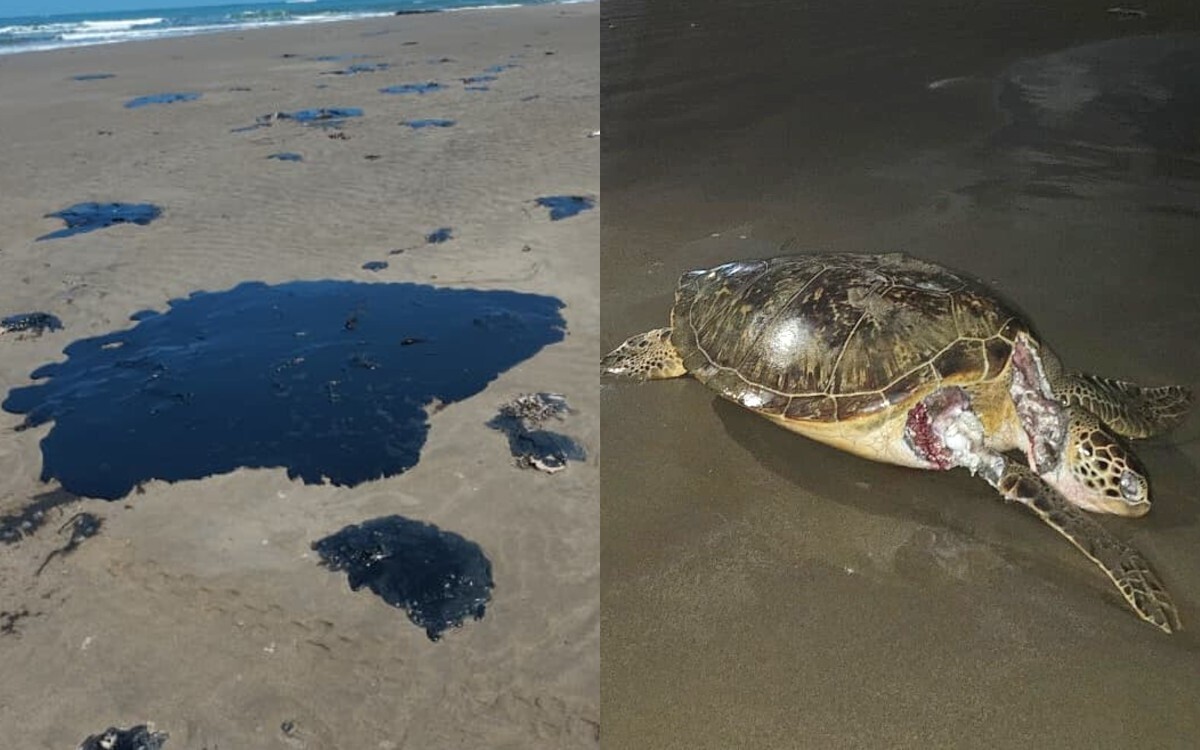
The indigenous communities of the Veracruz municipalities of Pajapan, Tatahuicapan, and Mecayapan, in coordination with the Regional Indigenous Movement in Defense and Respect for Life and the Human Rights Center Bety Cariño, denounced that crude oil (chapopote) continues to arrive on their coasts and in the Ostión Lagoon.
At a press conference, the communities stated that the "lethal chapopote" continues to arrive daily and have labeled the culprit a "ghost ship," as no one has seen it and the authorities have not provided clear information about the origin of the disaster. The community representatives affirmed that the local crisis is severe and plagued by irregularities in cleanup operations.
They warned that cleanup work is not being carried out properly, the brigades lack the necessary protective equipment to avoid health risks, they have not been paid for overtime hours, and the bags of toxic waste collected remain abandoned on-site.
Additionally, in a press release, they spoke about unofficial reports of the use of chemical solvents being dumped into the sea to sink the chapopote and prevent it from reaching the beach, a practice they fear will further damage the seabed.
On an economic and health level, they pointed out that the lack of widespread compensation has pushed many fishermen to catch and sell contaminated fish to survive. The communities have documented cases of residents with diarrhea and stomach pains from consuming spoiled seafood, with the population not yet being informed about the health risks and the possible presence of carcinogens in the environment.
Faced with this paralysis, the communities have filed a citizen complaint with the Agency for Security, Energy, and the Environment (ASEA) and are organizing with environmental experts. This community complaint coincides with the alert issued by the Gulf of Mexico Reef Corridor Network, which has documented how the hydrocarbon slick has spread along 630 kilometers of coastline.
The disaster spans from Tampico in Veracruz to Paraíso in Tabasco, affecting the entire Southwest Gulf of Mexico Reef Corridor, with a total of 51 sites reported with the presence of chapopote.
According to the organizations, cleanup efforts have been concentrated mainly on tourist beaches, leaving remote areas and priority ecosystems like the Ostión Lagoon, a habitat for mangroves and protected species such as the blue crab, abandoned.
The spill occurs just weeks before the nesting season for five endangered sea turtle species (leatherback, green, loggerhead, hawksbill, and ridley), according to the Gulf of Mexico Reef Corridor Network. The arrival of dead turtles on the beaches has already been reported, and so far, at least 7 turtles, 2 dolphins, 2 manatees, and 1 pelican have been affected, the vast majority of them dead.
The Official Response
At her morning press conference on March 23, President Claudia Sheinbaum commented on the crisis, assuring that the main spill came from a private vessel and not from Pemex facilities. The head of state indicated that Pemex is assisting in the oceanic and coastal cleanup efforts, and that agencies such as the Federal Attorney for Environmental Protection (Profepa) and ASEA are on-site to assess the damages.
She also informed that the intervention of the Prosecutor's Office has been requested to establish criminal responsibilities, emphasizing that the company responsible for the spill must compensate the affected fishermen and service providers.