Mexico has announced a comprehensive action plan to address the oil spill in the Gulf of Mexico. This includes economic fines, environmental liabilities, and long-term restoration actions. The Mexican government assures it will continue to protect the environment, ensure transparency in the investigation, and prioritize assistance to affected communities, although civic sectors and environmental organizations have expressed concerns about the true extent of the contamination and the effectiveness of the measures implemented. Authorities have reiterated that the exact cause has not yet been officially confirmed and are analyzing possible sources, including private vessels or industrial operations in marine zones.
Following the detection of hydrocarbons in the waters and beaches of the Gulf of Mexico, the Government of Mexico announced a comprehensive action plan led by an inter-institutional group composed of entities such as the Secretariat of the Navy (Semar), the Secretariat of Environment and Natural Resources (Semarnat), the Agency for Security, Energy, and the Environment (ASEA), Petróleos Mexicanos (Pemex), and the Federal Attorney for Environmental Protection (Profepa). This announcement responds to growing concerns over oil slicks that have reached the coastal areas of the states of Veracruz and Tabasco since early March 2026.
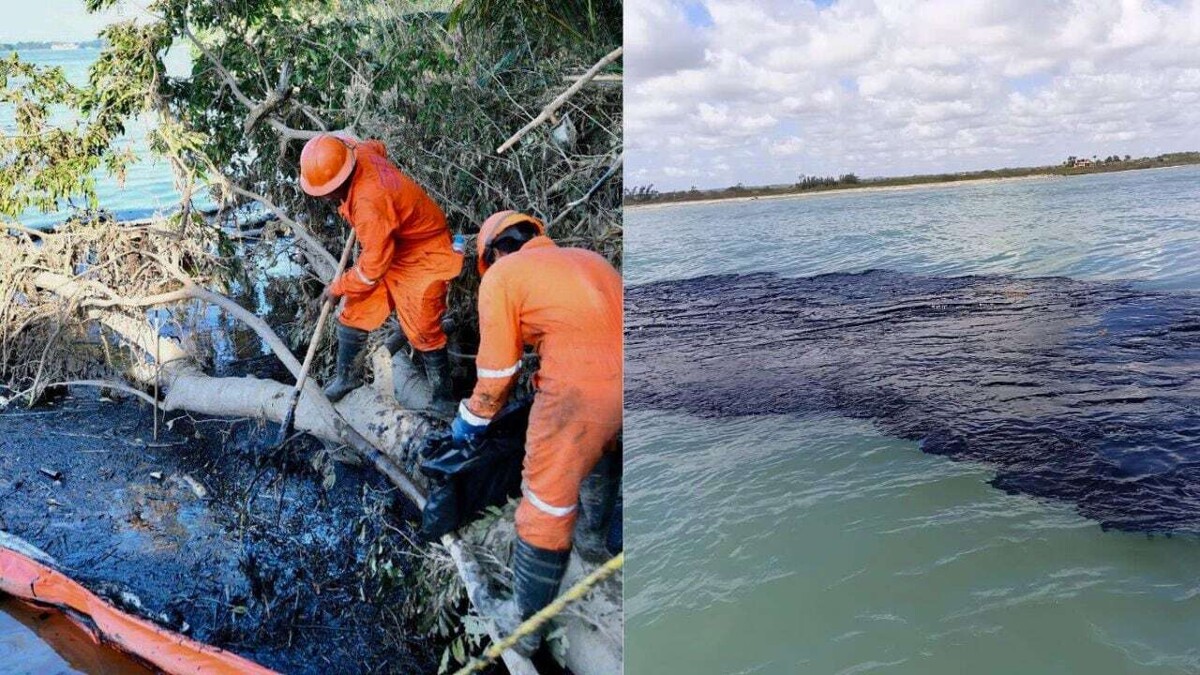
Since the presence of oil was detected on coastal fragments, federal and state authorities have deployed containment, cleanup, and monitoring operations in the affected areas, which, according to civil organizations, have spanned over 600 kilometers of contaminated coastline between Veracruz and Tabasco. A key priority of the government's strategy is the cleaning of beaches, waters, and mangroves affected by hydrocarbon residues. Inter-institutional brigades have conducted manual collection, placed containment barriers, and deployed oil-absorbent booms to prevent the spread of crude oil.
To date, approximately 128 tons of oil-saturated waste have been collected along more than 165 kilometers of coastline in Veracruz and Tabasco, including areas near the ports of Alvarado, Coatzacoalcos, Tuxpan, and Veracruz. Furthermore, environmental organizations have pointed out that this figure continues to increase as cleanup efforts advance, with recent estimates indicating that over 88% of accessible zones have been cleaned. To mitigate the economic impact caused by this contingency, especially on fishing communities, Petróleos Mexicanos has established communication channels with local cooperatives and has deployed support programs.
In parallel, a scientific and technical investigation continues to determine the origin of the detected hydrocarbons, using satellite imagery, aerial overflights, and maritime and land inspections.