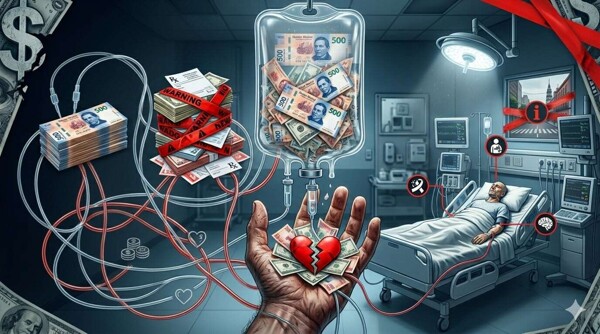
The ability to articulate positions, set agendas, and build agreements directly impacts the dynamics of the healthcare system. Therefore, the leadership change should not be read solely through an administrative lens. It is no coincidence that these approaches are beginning to be replicated and observed with greater attention. Similarly, medical innovation is forcing a rethinking of communication. Not only because it concludes a prolonged management period, but because it marks the end of a style of dialogue that, in a particularly complex sector, managed to keep communication channels open. For years, the Chamber found in Gual a reliable operator, capable of holding technical conversations with authorities, but also with the sensitivity to understand political timing. It is not just about innovating in technological terms, but about maintaining focus on the patient as the central axis of any strategy. At the same time, his work allows us to understand where the sector is moving. In this context, institutional stability ceases to be a desirable attribute and becomes an operational condition. It is no coincidence that this week the Chamber is celebrating its 77th Ordinary General Assembly, a space that, beyond the protocolary, often marks relevant internal definitions. That combination is not common, and even less so in an environment where the pharmaceutical industry has faced regulatory pressures, budgetary tensions, and constant changes in public policy. His departure comes at a difficult time. If the transition manages to stay on course, strengthen its presence, and avoid internal fractures, the Chamber will emerge stronger. In an environment where access to information is often selective, finding a willingness to dialogue is no small matter. Otherwise, the cost will be reflected in a loss of influence at a time when the industry more than ever needs a coordinated voice. May you have a happy journey in what follows, my dear engineer Gual. Impact on access, prevention, and care The recognition of Dr. Fernando Guisa not only highlights an individual career but represents a way of understanding medicine that transcends the clinical act. It is a testament to strategic continuity. Founder of FUCAM, he has for years promoted a model that combines specialized care, timely diagnosis, and, above all, a deeply human approach to patients. Speaking of his work is speaking of a vision that is not limited to treatment but incorporates accompaniment, information, and emotional containment as an integral part of the care process. FUCAM has not only been a benchmark in oncological care but also a space where thousands of women have found a support network that the system often fails to offer. This type of leadership, which combines medical vision with social commitment, is increasingly necessary in an environment where pressure on health systems continues to grow. While the official discourse insists on high supply levels, the reality in hospitals remains marked by shortages, delayed surgeries, and patients who end up paying out of pocket. To this is added a chain of decisions that has complicated the board: failed tenders, changes in purchasing models, tensions with the industry, and logistical failures that have not been resolved in depth. The discussion on access to medicines, health regulation, and industry participation in the public agenda remains open, and in many cases, without clear consensus. In a country where breast cancer continues to represent one of the biggest challenges in public health, this approach takes on particular relevance. Beyond the figures or the recognition, there is something that distinguishes his career: the ability to build institutions that transcend individuals. CANIFARMA not only represents business interests; it also functions as a bridge between the private sector and the government. Precision medicine not only redefines treatments; it also raises the standard of how they are explained. Emergency Room The shortage of medicines has become one of the most uncomfortable puzzles for this government, one where the pieces don't quite fit. The industry will have to demonstrate that its dialogue does not depend on a single figure but on a structure capable of sustaining dialogue in adverse conditions. Personally, beyond the analysis, there remains the recognition of a professional profile that always maintained openness, at least for the writer of these lines. Because the problem is not in one piece, but in the entire mechanism. Reputation is no longer built solely from academic prestige or individual practice, but from the ability to generate tangible impact on access, prevention, and quality of life. In that logic, models like the one Guisa has promoted dialogue with global health trends, where the integration of services, early detection, and patient education are key elements to improve outcomes. This way of exercising leadership also leaves a legacy. What follows will be decisive. The moment could not be more symbolic: an industry that is meeting to review its course in the midst of a leadership transition that inevitably reconfigures the balance. The point is not minor. The system tries to correct itself on the fly, but has not yet achieved the squaring of the circle: guaranteeing timely, efficient, and sustainable supply. The advance of targeted therapies, particularly in lung cancer with specific mutations, elevates the scientific level of the discourse but also demands greater clarity. The departure of Rafael Gual Cossio from the General Directorate of CANIFARMA belongs to the latter type. There are transitions that are announced and others that are felt acutely. At the same time.