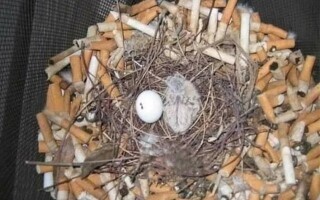
A study published in the journal 'Animal Behaviour' has revealed that these birds use cigarette butts because the nicotine and other toxins in them can eliminate parasites such as fleas, ticks, and blue flies, which pose a threat to their chicks' health. The study was conducted by researchers from the University of Lodz in Poland, who focused on Mexican birds and observed 99 birds in three types of nests: sterilized, natural untreated, and nests containing cigarette butts. After 13 days from the hatching of the eggs, blood tests of the chicks showed that the birds in the sterilized nests and those with cigarette butts were healthier compared to the natural untreated nests. After the chicks grew feathers, the birds' nests were examined for parasite density, and the results were clear: the natural nests contained a higher number of parasites, while the sterilized nests and those with cigarette butts were almost free of these insects, especially fleas and blue flies. The research indicates that this behavior reflects birds' ability to use chemicals from the environment to protect their young, highlighting the intelligence of nature in facing environmental threats. Rafael Gomez explained that these findings open new horizons for studying the relationship between animal behavior and the environment, and how birds can adapt to modern cities to protect their offspring. Scientists have observed strange behavior in some urban birds that carry cigarette butts to their nests. This is certainly not behavior driven by smoking, but rather 'to protect their chicks from parasites'. This behavior has been noted in the Mexican house sparrow, Darwin's finches on the Galapagos Islands, as well as the singing thrush in New Zealand.