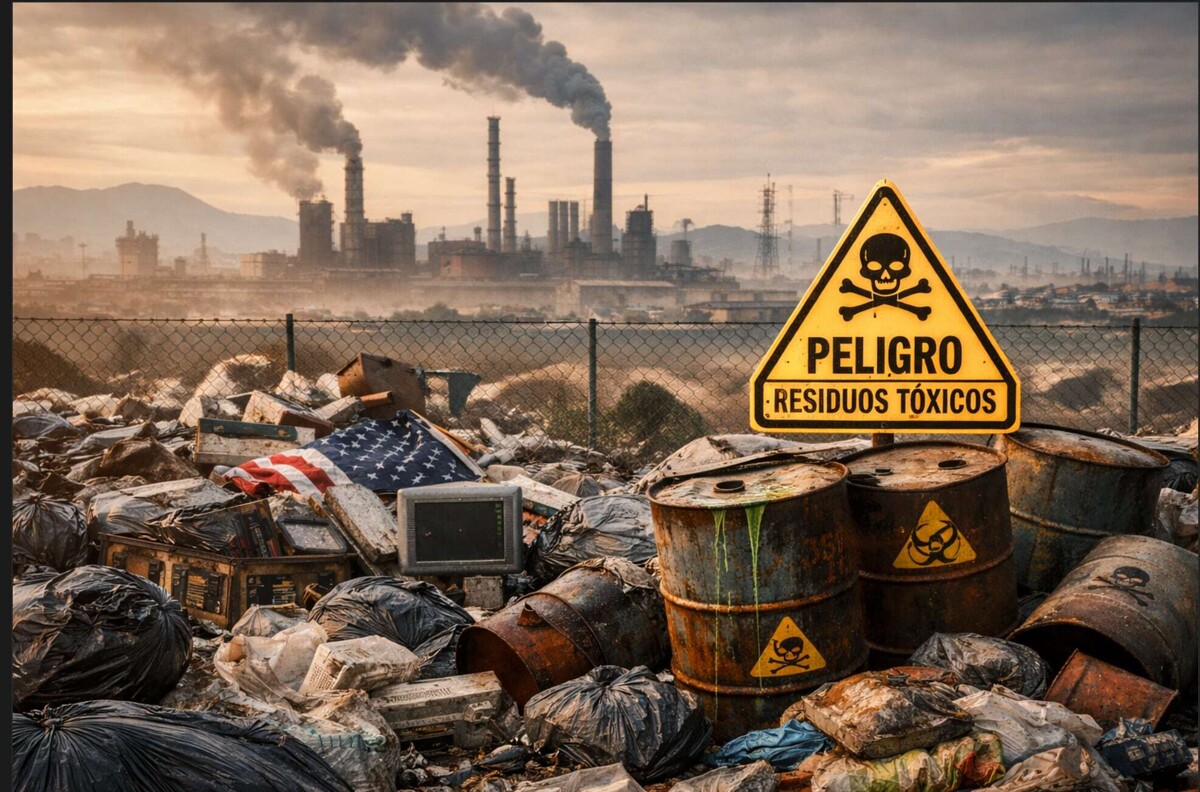
Mexico faces a growing environmental crisis marked by the accumulation of hazardous waste, in a context where internal regulatory failures and industrial activity also play a role. This was warned by Marcos Orellana, a United Nations (UN) special rapporteur, who stated that the country has become a receiver of pollution, including waste from the United States. The statement came after an official visit in which the expert documented conditions that directly affect communities exposed to toxic substances, raising alarms about the impacts on public health and the environment.
Waste from the United States Arrives in Mexico According to the rapporteur, the transfer of waste from the United States to Mexico often occurs within legal frameworks. However, he warned that there are weaknesses in the supervision and subsequent handling of these materials. Among the waste entering the country are: industrial waste, chemicals, and plastics intended for recycling.
The problem, as he explained, does not lie solely in the importation, but also in the limited capacity to ensure proper treatment once these waste enter the national territory.
More Than a Thousand Contaminated Sites and 'Sacrifice Zones' One of the most alarming points highlighted in the report is the existence of more than a thousand contaminated sites in Mexico, several of which are considered 'sacrifice zones.' In these regions, entire communities live exposed to pollutants linked to diseases such as cancer, respiratory ailments, and reproductive health issues. Among the documented cases are: the Atoyac River in Puebla, the Sonora River, industrial zones in Monterrey, and regions with environmental impact in Yucatan. These areas reflect a pattern of prolonged exposure to hazardous substances with cumulative effects that directly impact the population's quality of life.
Not Just Foreign Waste The report underscores that the environmental crisis cannot be attributed solely to waste from abroad. Internal factors that aggravate the situation also play a role. These include: national industrial activity, mining operations, spills of hazardous substances, improper waste management, and non-compliance with environmental regulations. This set of elements constitutes what the rapporteur described as normalized pollution, where different factors converge without an effective comprehensive response.
Mexico as a Waste Destination The expert warned that Mexico is being used as a destination for waste, partly due to regulatory differences and lower costs in waste management. However, he specified that the core problem is not just the transport of these materials, but the conditions in which they are managed within the country. This opens a debate about the institutional capacity to supervise, process, and contain the impacts of this waste, in a context where communities remain exposed to prolonged risks. The UN rapporteur's warning places the issue on the international agenda and raises questions about shared responsibility among countries, as well as the urgency of strengthening environmental regulation and monitoring mechanisms in Mexico.