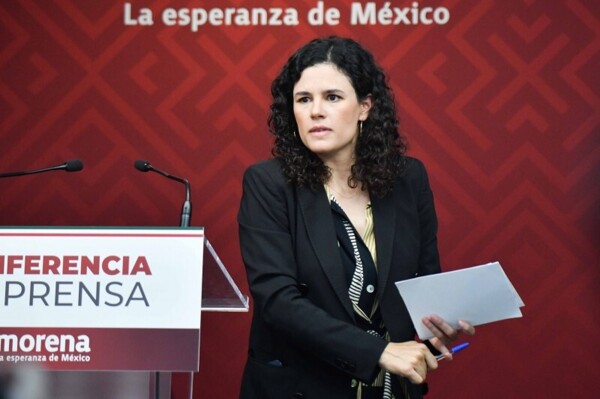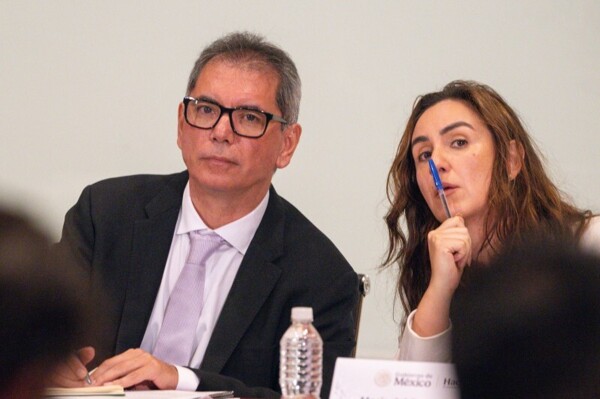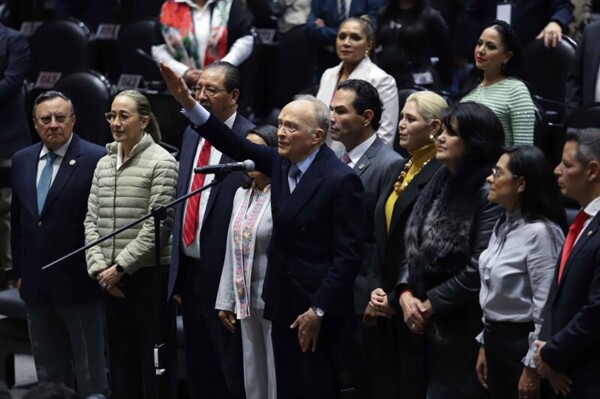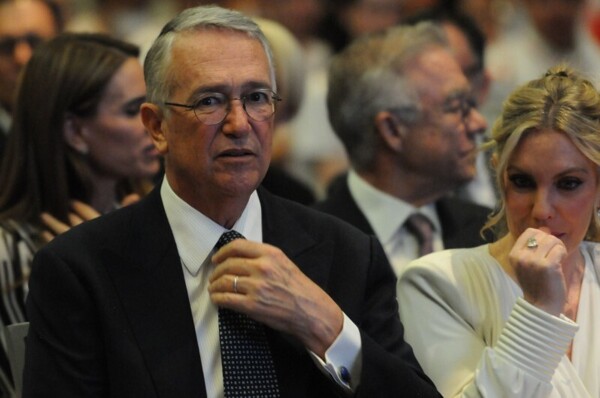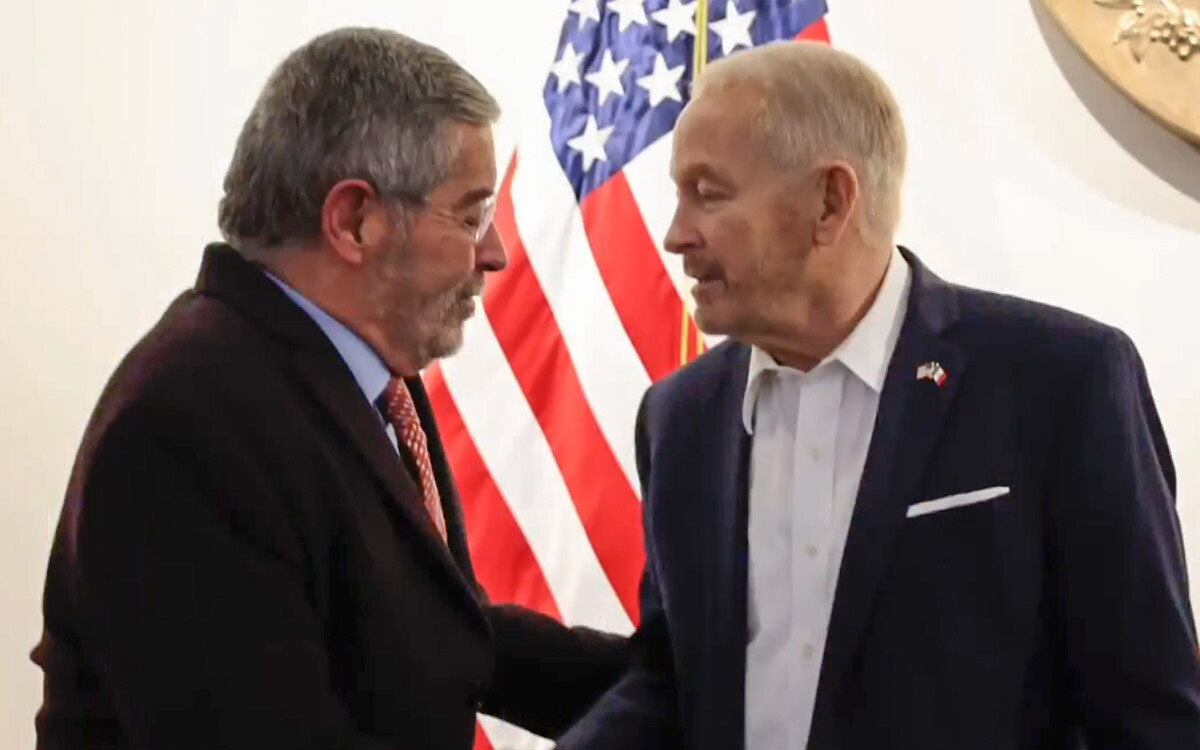
The US Ambassador to Mexico, Ronald Johnson, received several high-ranking officials from President Claudia Sheinbaum's government at his residence in a meeting aimed at strengthening bilateral cooperation on security and migration.
In a Saturday post on social media X, Johnson highlighted the collaboration between the two governments: "It was a pleasure to welcome some of our main partners to our home, with whom we work 24/7."
"Through strong cooperation between our governments, and under the leadership of President Donald Trump and President Claudia Sheinbaum, in 2025 we will secure the border, stop illegal migration, combat fentanyl trafficking, and save tens of thousands of lives," he assured.
The diplomat added that although progress has been made, "there is still work to be done, and in 2026 we will continue to advance towards mutually beneficial goals."
He also referred to the detention in Pachuca, Hidalgo, of Alejandro R. C., one of the FBI's ten most wanted fugitives, who is sought by authorities in North Carolina for crimes including first-degree murder, armed robbery, vehicle theft, and kidnapping.
"Cooperation, collaboration, and coordination yield real results. This case reflects the impact of these joint efforts," he said on the matter.
Last week, a call took place between Foreign Minister Juan Ramón de la Fuente and US Secretary of State Marco Rubio, following the call on Monday, January 12, between President Claudia Sheinbaum and President Donald Trump.
The State Department's Office of Western Hemisphere Affairs stated that the United States requires Mexico to provide "concrete and verifiable" results against drug trafficking, warning that "a gradual progress in the face of security challenges on the border is unacceptable."
In recent days, Mexico's Secretariat of the Navy (Semar) announced the creation of the Subsecretariat of Maritime and Port Affairs, as well as the Naval Operations Command, moves that seek to strengthen maritime security and consolidate national maritime authority.
According to Admiral Raymundo Pedro Morales, head of Semar, these new entities represent "a turning point" in the history of the agency, as they assume full control of Mexican ports and regulate the Merchant Marine.
The Subsecretariat of Maritime and Port Affairs will be led by Admiral Gerardo de Jesús Toledo Guzmán, while the Naval Operations Command will be headed by Admiral José Manuel Salinas Pérez. Additionally, Admiral Carlos Eduardo L'Eglise Escamilla was appointed as the new Naval Comptroller.
Shuffles with US Approval: María Idalia Gómez Last Friday, investigative journalist María Idalia Gómez revealed exclusively that changes are being prepared in the high-level commands of the Mexican Armed Forces, including the Subsecretariat of National Defense and the National Guard, with the approval of the US Government.
On "Aristegui en Vivo," Gómez explained that these adjustments are part of an internal reconfiguration similar to the one recently observed in the Navy and will affect strategic positions within the Secretariat of National Defense (Sedena).
She pointed out that Division General Enrique Martínez López, who held the position of Undersecretary for Administration, will be named Subsecretary of Defense following the retirement of General Enrique Covarrubias López. Furthermore, Division General of the General Staff Guillermo Briseño Lovera will take control of the National Guard, replacing Hernán Cortés, who in turn will occupy the position of Undersecretary for Administration.
"These changes have already been approved and discussed with the Northern Command and with the opinion of the Southern Command," the journalist noted.
In another post on X, Ambassador Johnson recognized the results of bilateral cooperation in security following the detention in Quintana Roo of Otmane K., a fugitive wanted for electronic fraud and money laundering: "This case underscores that when we work together [...] we can do more, and that criminals have no place when our efforts are aligned."