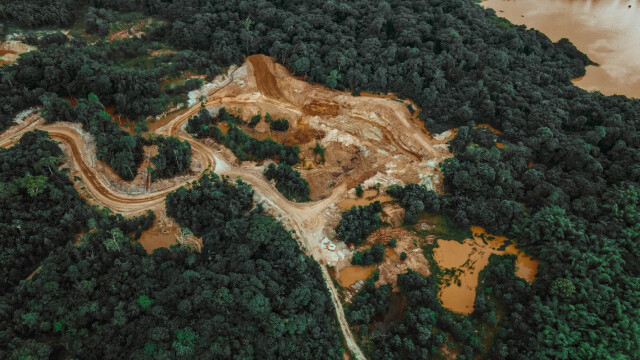
Land use planning aims to coordinate land use, infrastructure, and economic activities, taking into account the environmental and social characteristics of each region. Effective planning promotes coherence between development and conservation, prevents land use conflicts, and improves the quality of life. Environmental education and social awareness are fundamental to drive real change. Understanding how our actions affect the environment fosters more responsible behavior, from consumption to participation in local planning processes.
Paths to a more balanced territory Moving towards a more balanced territory involves adopting sustainable development models, strengthening governance, and promoting innovation. In this context, it is key to answer the question: "What is a territory and what types of human activities generate the greatest negative impact on it?", as the answer to this question determines many of the strategies for planning and space management.
The territory as a social and environmental construct The territory can be understood as a geographical space appropriated, organized, and transformed by a society. The choice of where to build a city, which areas to dedicate to agriculture, or which zones to protect as natural reserves determines the balance between development and conservation. However, sustainable tourism shows that it is possible to generate income and employment while respecting the environment and local communities.
Energy and new forms of space occupation Energy production has deeply marked the territory. Each activity, considered in isolation, may seem acceptable, but the sum of all of them creates increasing pressures on ecosystems. Long-term effects include desertification, loss of ecosystem services, increased natural risks, and social vulnerability. These processes are not always immediate, which makes their perception and management difficult. Anticipating these impacts requires a strategic vision, based on data, citizen participation, and cooperation between sectors.
Comparison of human activities and their territorial impacts | Human Activity | Main Impacts | Long-term Risks | |---|---|---| | Urbanization | Soil sealing, fragmentation | Floods, loss of biodiversity | | Intensive agriculture | Erosion, water pollution | Soil degradation | | Industry | Emissions, waste | Health problems and chronic pollution | | Infrastructure | Land occupation, ecological barriers | Territorial fragmentation | | Resource exploitation | Landscape alteration, deforestation | Resource depletion | | Mass tourism | Overcrowding, waste | Environmental and social deterioration | | Conventional energy | Emissions, ecosystem alteration | Climate change |
The role of territorial planning Territorial planning is a key tool to guide human transformations in a balanced manner. The overexploitation of water resources affects rivers and aquifers, compromising water access for future generations. An approach based on the sustainable management of resources seeks to balance economic exploitation with long-term conservation.
Tourism and territorial transformation Tourism is another activity with a strong territorial impact, especially in coastal, mountainous, and rural areas with high landscape value. Solutions are not unique or universal; they must be adapted to local realities and involve all stakeholders. The integration of environmental, social, and economic criteria in decision-making allows reducing negative impacts and enhancing collective benefits.
Education and social awareness The transformation of the territory does not depend only on governments and companies. Some modifications have driven development and well-being, while others have generated environmental imbalances, loss of biodiversity, and social conflicts. The replacement of diverse landscapes with homogeneous monocultures alters natural balances and makes systems more vulnerable to pests and climate change. In contrast, practices such as agroecology, crop rotation, and responsible water use demonstrate that it is possible to produce food while caring for the territory.
Industry and landscape transformation Industrial activity has been a key driver of economic development, but also a significant source of territorial alterations. The installation of factories, industrial parks, and logistics zones modifies land use and concentrates environmental impacts in specific areas. Among the most common effects are air pollution, waste generation, alteration of watercourses, and landscape degradation. In many cases, industrial areas are located near vulnerable communities, which aggravates public health and social inequality problems. The transition to a clean industry model with efficient technologies and a circular economy represents an opportunity to reduce these impacts without hindering productive activity.
Urbanization and city expansion Urbanization is one of the most visible transformations of the territory. The growth of cities has meant the conversion of rural or natural areas into urban spaces, with roads, buildings, and service networks. This process has facilitated access to education, health, and employment, but has also generated significant challenges. Among the most relevant impacts are soil sealing, which increases the risk of flooding, and ecosystem fragmentation, which hinders the survival of many species. Disorderly urban expansion usually increases travel distances, raising energy consumption and pollutant emissions. Sustainable urban planning seeks to mitigate these effects through compact cities, green spaces, efficient mobility, and rational land management.
Infrastructure and territorial connectivity Infrastructure—roads, railways, ports, airports, and energy networks—are essential for connectivity and development. It includes natural components—soil, water, climate, vegetation—and social elements, such as infrastructures, cities, land uses, and forms of production. The concentration of infrastructure often attracts new activities, intensifying pressure on the territory. Integrated planning and environmental impact assessments allow designing infrastructure more compatible with the environment, incorporating wildlife passages, green corridors, and low-impact solutions.
Natural resource exploitation The extraction of natural resources—minerals, wood, water, fossil fuels—has transformed extensive regions of the planet. The need to produce food for a growing population drove the expansion of arable land and the development of increasingly intensive techniques. Intensive agriculture has increased productivity, but has also caused soil erosion, aquifer contamination by fertilizers and pesticides, and a reduction in biodiversity. These activities usually generate short-term economic benefits, but carry significant risks if not properly managed. Open-pit mining, for example, drastically alters the terrain and can leave environmental liabilities that are difficult to reverse.
Cumulative impacts and long-term effects One of the biggest challenges in territorial transformation is the accumulation of impacts. The territory is not just the physical space we inhabit; it is the result of a constant interaction between nature and human actions. Daily decisions by millions of people influence resource demand, the urban model, and forms of production. When these decisions are made without a comprehensive vision, the consequences usually manifest in the form of environmental degradation or territorial inequality. Understanding how these transformations occur allows for more responsible and sustainable decisions, both at the individual and collective level.
Energy and new challenges Currently, the transition to renewable energy introduces new challenges and opportunities. Wind farms and solar plants require large areas and careful planning to minimize their visual and ecological impact. Nevertheless, their environmental footprint is usually smaller than that of fossil sources, and they contribute to reducing the emissions responsible for climate change.
Tourism and its consequences The construction of hotels, second homes, and tourist services modifies land use and the social structure of places. When tourism develops without control, it can lead to overcrowding, excessive resource consumption, increased waste, and loss of cultural identity. Conventional energy, thermal power plants, hydroelectric dams, and distribution networks have shaped entire landscapes.