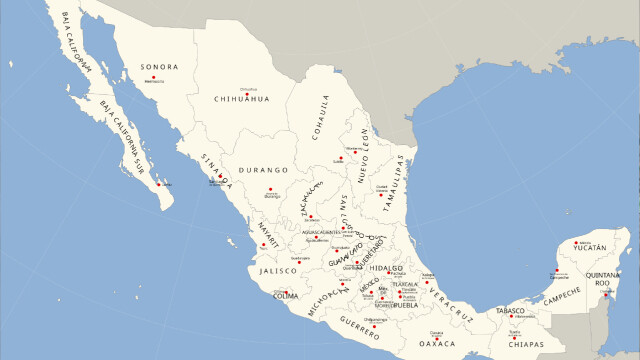
The shape of Mexico is more than just a line on a map; it defines the country's character and possibilities. Mexico is elongated from northwest to southeast, featuring two large coastlines. This asymmetrical configuration gives the country over 9,000 kilometers of coastline. In the public imagination, this shape is often compared to various objects: a boot, a horn of plenty, a seahorse, or even a horn. These analogies, while not scientific, help to visualize and understand the vast and diverse territory. For example, the Baja California Peninsula is often seen as the 'head,' with the rest of the country forming the 'body' and 'tail.' The shape of Mexico has profound implications for its climate, biodiversity, economy, history, and culture. It facilitates the existence of biological corridors and isolated ecosystems, leading to unique endemic species. Its location and shape transform Mexico into a natural bridge between North and Central America, which is strategically vital for trade and cultural exchange. In the north, the country is relatively wide, but it narrows significantly towards the south, especially in the Isthmus of Tehuantepec. This creates stark contrasts between regions: the north features vast spaces, extreme climates, and low population density; the center has highlands, intense economic activity, and urban concentration; the south consists of more compact territories with high cultural and natural diversity. Thus, the silhouette of Mexico is not merely a geographical curiosity but a key to understanding its national identity, shared history, and the unique opportunities born from such a particular territory.