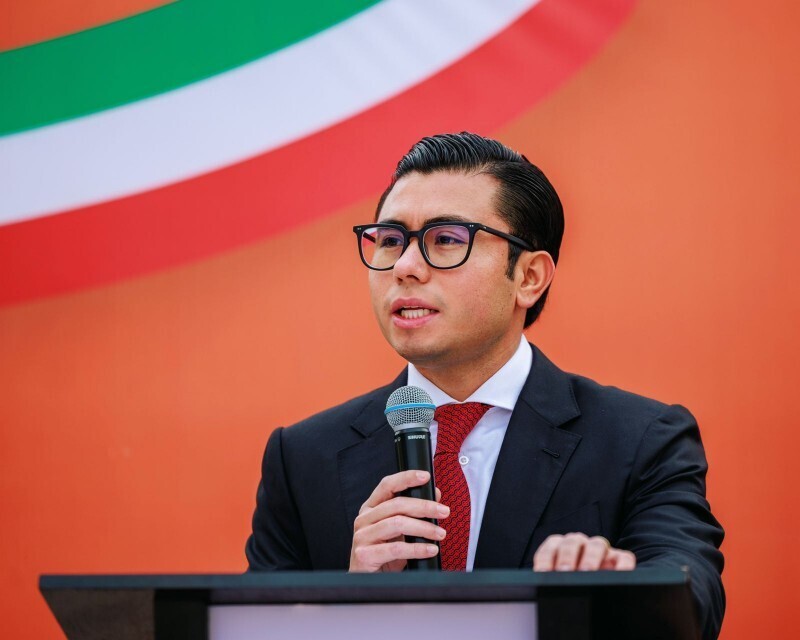
The Juárez City Council has requested the suspension of actions to avoid economic and administrative damages while the core issue is resolved. The ruling issued by the High Court will not only have effects for Juárez but could also clearly define the limits of action for local guaranteeing bodies against municipalities, providing legal certainty after the recent national reform on transparency. With this action, the Juárez Municipal Government reaffirms its position: to defend municipal autonomy, demand clear rules, and ensure that public resources are used where they are most needed, for the direct benefit of the people of Juárez. The mayor of Juárez, Félix Arratia Cruz, promoted a constitutional controversy before the Supreme Court of Justice of the Nation to review the legality of various fines and requirements issued by the State Institute of Transparency, Access to Information and Personal Data Protection of Nuevo León. The action is presented in the context of the federal constitutional reform on transparency published in December 2024 and the new General Law of March 2025, which modified the institutional design of the national information access system and ordered the federal entities to harmonize their legal framework. Mayor Félix Arratia Cruz stated that the sanctions imposed by the state body respond to criteria far from the central objective of guaranteeing the right to access to information and warned that, while there is no concluded legislative harmonization by the Congress of the State of Nuevo León, a scenario of legal uncertainty persists regarding the real scope of its powers, given that its extinction was ordered by constitutional mandate. "In Juárez we are not against transparency; we are in favor of it being applied with legality, certainty and without bias. The law must be clear for all and cannot be subject to interpretations that violate municipal autonomy," affirmed the mayor. The City Council argues that the continuity of fines and coercive measures, in the midst of an incomplete constitutional adaptation process, could lack a fully updated foundation and affect the sphere of autonomy recognized to municipalities by Article 115 of the Constitution. Although the sanctions were formally directed at a municipal official, the Juárez government maintains that their effects directly impact the institutional operation and the local public treasury, compromising resources that must be allocated to resolve the most pressing needs of the population. In this sense, Arratia Cruz proposed that it is time to thoroughly review the permanence and functioning of the state body. "Juárez needs investments that transform the lives of our people. If those resources were allocated, for example, to the construction of a new hospital for our families, the impact would be immediate and tangible," he emphasized. In the controversy, it is requested that the Supreme Court analyze the constitutionality of the challenged acts, determine if there is a legislative omission by the local Congress, and, in its case, invalidate the challenged fines. Every peso must translate into works and services, not into excessive bureaucracy.