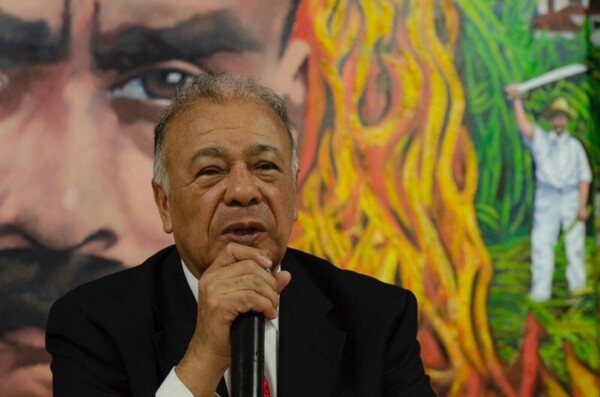
Laura Itzel Castillo, President of the Senate Board, defended the constitutional reform that sets a limit on the pensions of former public officials—known as "golden pensions"—which was passed unanimously by the upper house. During an interview with Aristegui en Vivo, the legislator stated that the measure addresses cases where retired public sector employees received very high monthly amounts from the public treasury. Based on this criterion, the pension limit would be around 70,000 pesos per month. Castillo indicated that the number of people who could be affected is not yet defined and that this information will be disclosed by President Claudia Sheinbaum, who sent the initiative. Given the possibility that some beneficiaries might turn to courts to challenge it, the senator noted that they could attempt legal actions, although she emphasized that the amendment was incorporated directly into the Constitution. "What was reformed was the Political Constitution of the United Mexican States, in its article 127, and therefore, this cannot be challenged," she affirmed. "It is outrageous that there are people who earn one million pesos a month due to this pension, because they are people who have already retired," she stated. She explained that some of these benefits were granted to former workers of institutions like Petróleos Mexicanos, the Federal Electricity Commission, Luz y Fuerza del Centro, or the Bank of Mexico. She pointed out that the measure aims to prevent the continuation of pensions that she considered disproportionate compared to the income of the majority of the population. Regarding the financial impact of these benefits, Castillo said that the federal government expects significant savings. She explained that some might argue the non-retroactivity of the law, provided for in article 14 of the Constitution; however, she maintained that since it is a constitutional reform, this principle cannot be invoked, so the measure can be applied to those who already receive those pensions. If legal challenges arise, Castillo said the case could go to the Supreme Court of Justice of the Nation, where there is a possibility that the case will be dismissed. As she indicated, in certain cases, it was enough to have worked very short periods to access these retirement schemes. "For having worked in some cases for very short times, even just three months, they retired with a pension that has effectively been called golden pensions due to the amount of resources assigned monthly," she affirmed. The senator highlighted that the reform received unanimous support in the upper house, which she described as an unusual agreement. "They were granted discretely and with the authorization of the authorities that were in power at the time in each of the institutions," she maintained. The reform establishes that no pension from former public servants can exceed 50% of the salary of the person holding the position of Head of the Federal Executive. "I don't have the exact figure, but what is considered is that there will be a savings of five billion pesos annually," she indicated. According to the President of the Senate, these resources could be destined for social programs and other public needs. She added that the amount is significant if one considers the contrast with the income of most workers. She explained that these schemes originated decades ago and were consolidated during the period she called the neoliberal model. She pointed out that, in her opinion, it was a matter of discretionary practices endorsed by authorities from different institutions. "Well, we would see in that case, but that is a possibility; we will see what happens," she concluded.