Academics from the National Autonomous University of Mexico (UNAM) warned that the problem with artificial intelligence (AI) is not technical, but economic and political, in a context where technology begins to replace key cognitive processes.
During the XIV Brain Week in Sciences, specialists pointed out that the discourse about AI as an “inevitable” tool has been overstated, while a dependency grows that could alter the way people think, learn, and generate ideas.
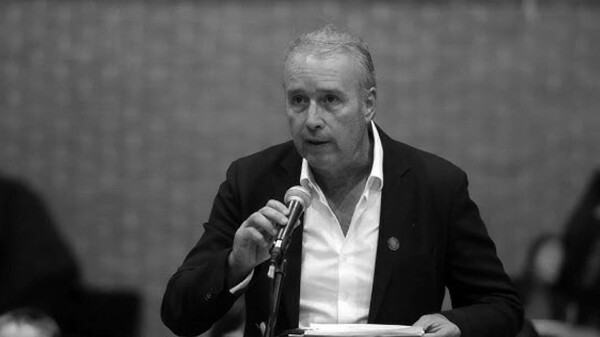
AI does not replace people, but it does replace mental processes Professor at the Faculty of Sciences of UNAM, Enrique Soto Astorga, stated that fears about human replacement by AI do not have a solid technical foundation, but rather respond to economic and political dynamics. In this sense, he warned that we are experiencing an accelerated generational change that could transform culture and the way knowledge is produced without there being full awareness of its implications.
Technological dependency and loss of skills During the academic debate, specialists agreed that society has already begun to delegate cognitive functions to technology. From remembering phone numbers to processing complex information, digital devices have replaced capabilities that were once central to daily life.
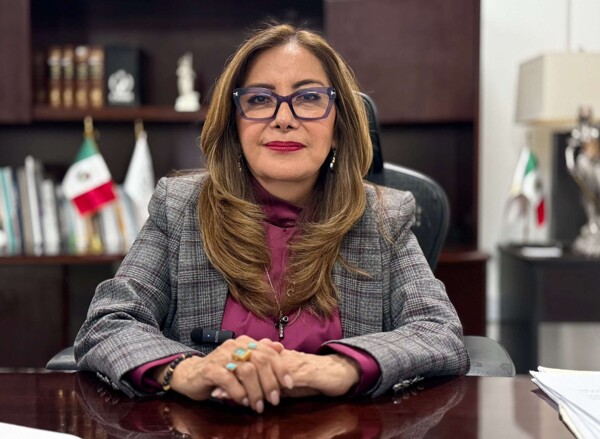
Academic Paola Hernández Chávez, from the Metropolitan Autonomous University (UAM), explained that this dependency generates excessive trust in technology, which could lead to a decrease in critical thinking and creativity.
“Digital feudalism”: the new model behind AI Another key point of the analysis was the economic model that supports the development of artificial intelligence. Specialists warned that users have become a “merchandise,” as their data is used by large tech corporations to generate economic value.
This scheme has been described as a “digital feudalism,” in which a few actors concentrate control over technology and its benefits, while the rest of the population becomes increasingly dependent on these tools.
Creativity at risk Experts agreed that the greatest risk is not that AI will “surpass” humanity, but that people will decide to delegate creative tasks to it.
Academic Marcos Rosetti Sciutto, from the Biomedical Research Institute, noted that while AI can offer impressive results, there is also the risk that people will stop thinking for themselves. He even mentioned that some views within the tech industry suggest that AI could become a basic service, similar to electricity or water, which would increase its level of integration into daily life.
The expansion of artificial intelligence (AI) no longer just raises questions about employment or the automation of tasks, but about a deeper phenomenon: the possible displacement of human creativity.