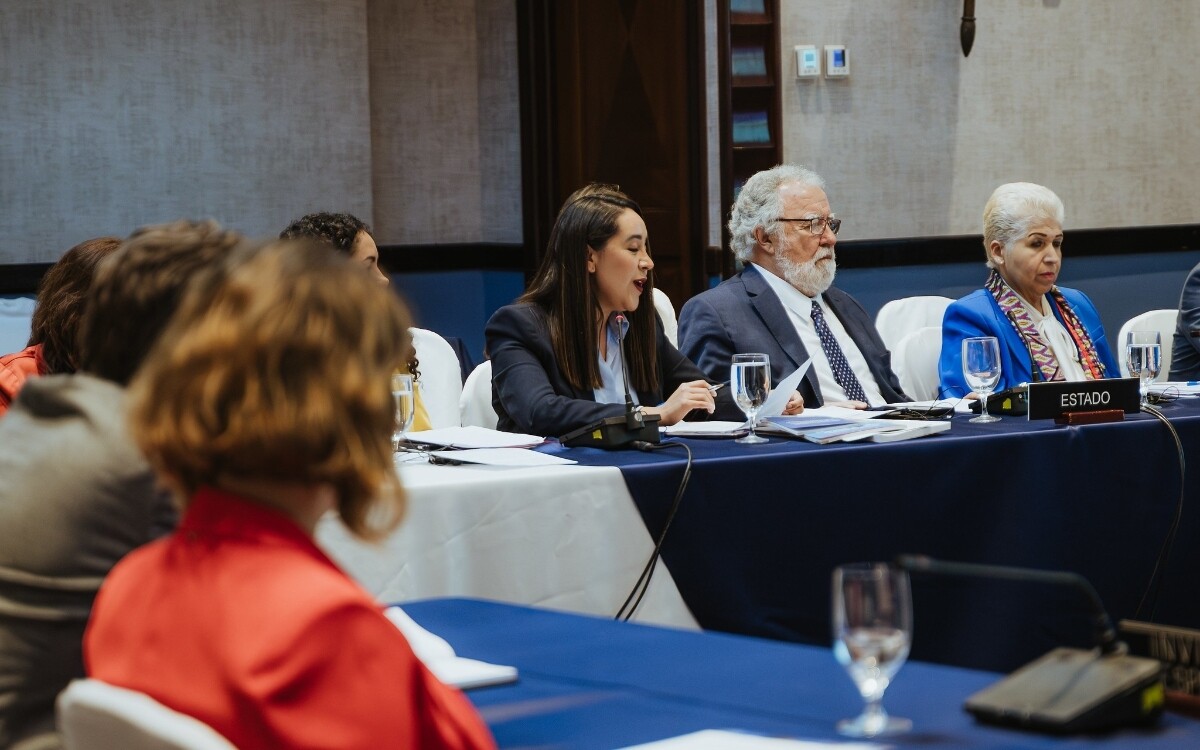
The Inter-American Commission on Human Rights (IACHR) has informed a group of 65 judges that the Mexican State has been formally ordered to respond within a maximum period of four months to the petition presented by judges, magistrates, and their colleagues against the judicial reform. In a letter dated March 19, the IACHR also indicates that it is considering resolving the admissibility and merits of the case in a single ruling, which implies that the body may consider treating the case with urgency and seriousness due to the procedural backlog and the serious harms denounced by Mexican judges with the application of the reform and the judicial elections held in June 2025. According to IACHR Resolution 1/16 on precautionary measures, resolving both the admissibility and merits in a single judgment is appropriate when the human rights violations alleged are serious and the response to the petitions is urgent. Another reason for a joint ruling on the merits is to ensure that the decision can be enforced in the country of the complaint and for the authorities involved to review their prior determinations before they become final and irreversible. The possibility of a joint ruling on the merits will be considered once the Mexican State responds to the petition from the 65 federal judges, meaning after the IACHR has the arguments of both parties regarding the alleged human rights violations committed with the approval and implementation of the judicial reform. The IACHR notification states that after the four-month period, its Executive Secretariat will verify the criteria of Resolution 1/16 on measures to reduce the procedural backlog, and if necessary, the IACHR may defer the examination of admissibility until the hearing and decision on the merits of the case. In the letter sent to the legal representatives of the protesting judges and magistrates, it is warned that after the 40-day period, they may be notified of the possibility of a joint ruling, opening a new additional four-month period for the IACHR to issue a merits decision. The final paragraph of the letter from the IACHR to the judges and magistrates also states that the body places at the disposal of the petitioning party and the Mexican State all mechanisms for both parties to reach 'a friendly settlement based on respect for the human rights established in the American Convention, the American Declaration, or other applicable instruments.' Nevertheless, the lawyer for the Mexican judges, Zamir Fajardo, warned that any negotiation would be subject to the government of Claudia Sheinbaum recognizing that the judicial reform involved serious violations of human rights and that it also violates the principle of judicial independence, in order to correct the reform, a possibility that the legal representatives of those affected do not foresee in the immediate future. Deliberate Blockade of the Judicial Reform Review It should be noted that in the petition presented by the Mexican judges, serious human rights violations are denounced that were committed with the approval of the judicial reform, including the mass dismissal of judges and magistrates, the dismantling of the judicial career, the violation of their labor rights, and the violation of the principle of judicial independence. According to the complainants, the alternative to resolve both admissibility and merits in a single ruling stems from the fact that the petition also denounces 'violations of access to justice and judicial protection for victims.' The petition argues that since the approval of the judicial reform, 'the ruling party has attempted to prevent national courts from ruling on its compatibility with human rights,' a strategy that included measures such as the constitutional reform of unimpeachability, the deliberate disregard of hundreds of court-ordered suspensions, the criminal and administrative persecution of judges, the concentration of all amparo trials in three federal courts, and the recent decisions of the Supreme Court of Justice of the Nation that closed any possibility of a constitutional challenge and review within Mexico's own judicial system. The Mexican State has deliberately blocked internal control mechanisms, which clearly opens the door for international jurisdictional intervention.