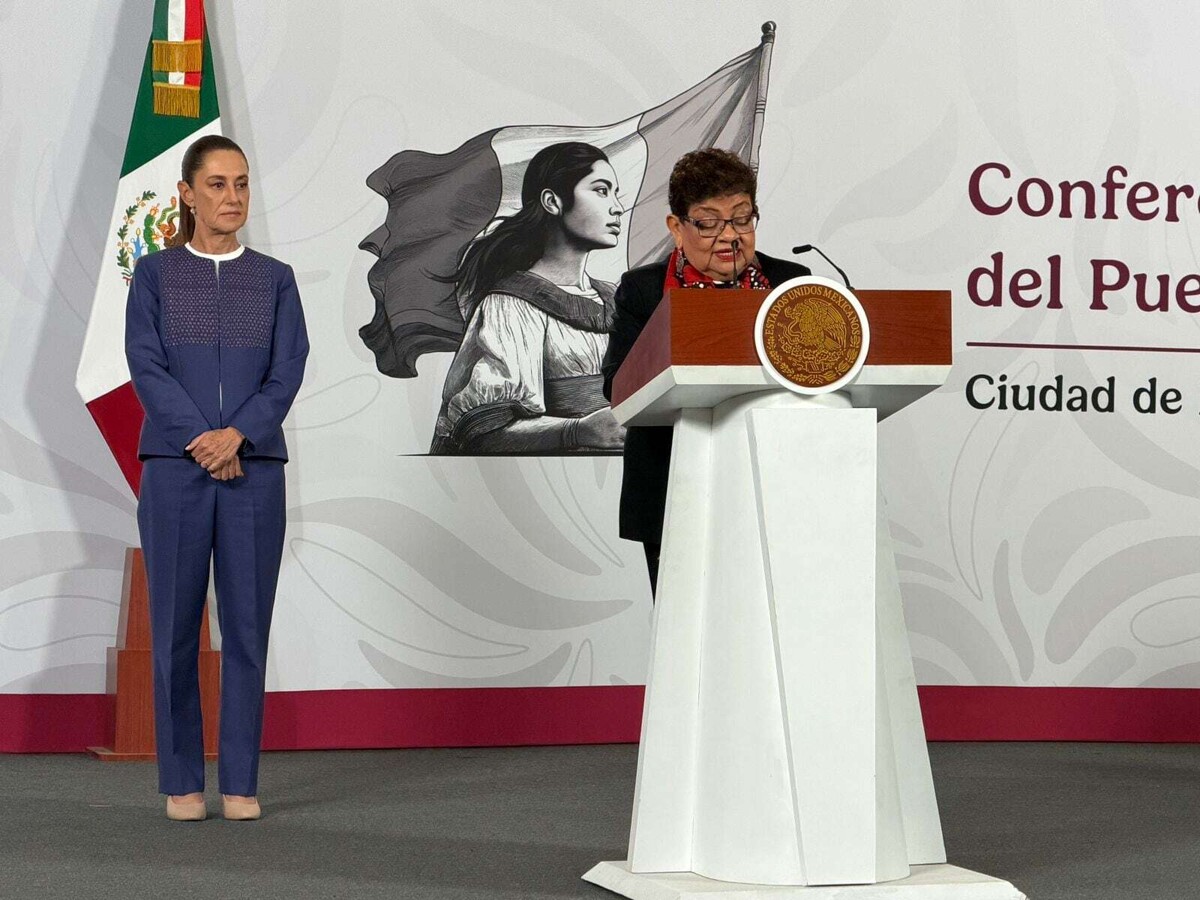
During this Tuesday's morning conference, the Attorney General of the Republic, Ernestina Godoy, presented a comprehensive reform proposal to standardize the crime of femicide across the country. The goal is to unify criteria, toughen penalties, and ensure investigations with a gender perspective in all cases.
The initiative proposes to establish a single type of offense, under which the killing of a woman for gender reasons will be considered femicide. It suggests that any violent death of a woman be investigated under the hypothesis of femicide, obliging the Public Ministry to act ex officio and apply specialized protocols.
Furthermore, the plan aims to strengthen the capabilities of the Attorney General's Office and state prosecutors through the creation of specialized units, as well as the use of intelligence and forensic services to ensure more solid investigations.
The project includes the issuance of a Homologated National Protocol for the investigation of the crime, to prevent omissions, standardize procedures, and eliminate practices based on gender stereotypes.
"New Responsibilities and Comprehensive Reparation"
Another key point is the incorporation of additional responsibilities for aggressors, such as the loss of inheritance rights, parental authority, custody, and disqualification from holding public office.
The initiative also emphasizes the comprehensive reparation of damage and the protection of indirect victims, particularly girls, boys, and adolescents who are left orphaned by a femicide.
"Towards a National Law"
The proposal contemplates a legal structure of 52 articles, organized into eight titles that cover from general provisions to policies for the prevention and attention of feminicidal violence.
With this initiative, the federal government seeks to close gaps between states, eliminate legal disparities, and establish a uniform framework to more effectively combat femicide in Mexico.
Even the crime would be considered imprescriptible, along with the sanctions and reparation of the damage.
"Mandatory Investigation with a Gender Perspective"
The reform also seeks to transform the way these crimes are investigated. The project contemplates prison sentences of 40 to 70 years, as well as economic fines, plus a catalog of more than 20 aggravating factors that could increase the sentence by up to an additional half.
It is also established that neither mitigating circumstances nor benefits such as sentence commutation, conditional release, or amnesties will apply in femicide cases.
Among the elements that could be used to prove this crime are signs of sexual violence, a history of violence, contexts of power inequality, or motivations based on stereotypes and prejudices.
"Tougher Penalties and No Benefits"
One of the central axes of the proposal is the toughening of sanctions.