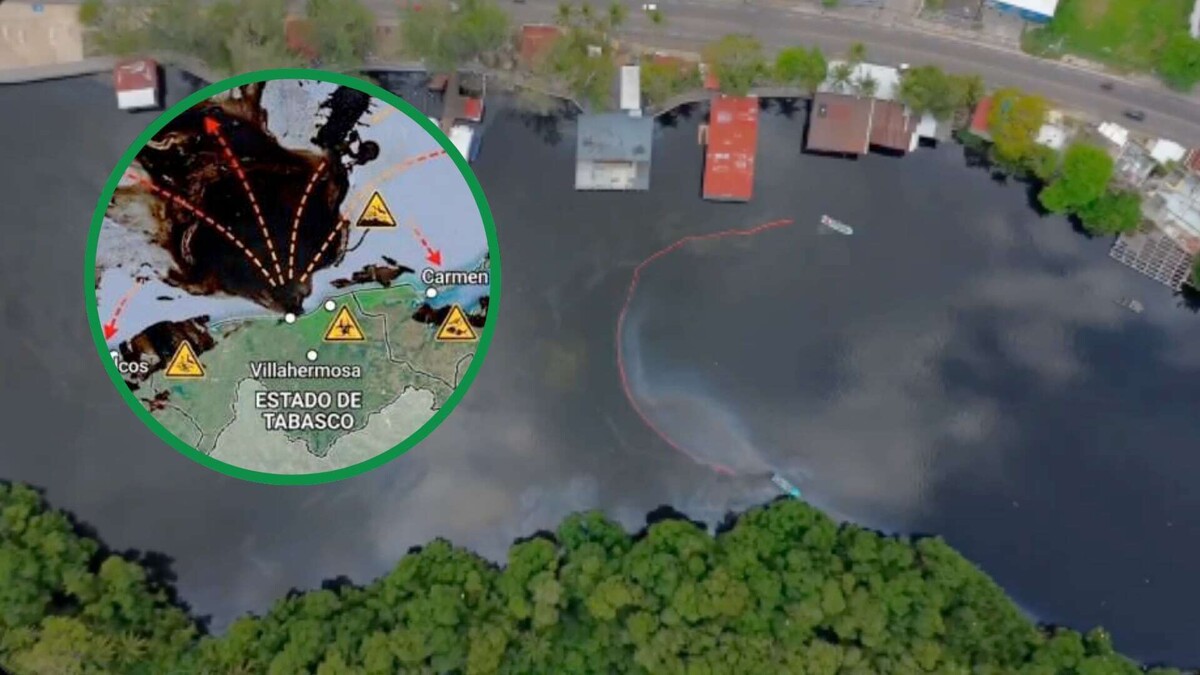
The controversy over the actual size of the hydrocarbon spill in the Gulf of Mexico intensified after federal authorities questioned the authenticity of an image shared on social networks. In response, Greenpeace México issued a statement clarifying the origin of the material and defending the validity of the information it has presented on the scope of the environmental disaster. During a press conference, the Secretary of the Environment, Alicia Bárcena, dismissed the viral image, stating that “it is clearly false, as it is a graphic representation superimposed on a base map,” emphasizing that it does not correspond to real satellite images. However, the organization admitted that its dissemination could have caused confusion and took responsibility for it. Beyond the controversy, the organization defended the robustness of its data, which —it ensures— comes from an interactive map developed with communities and organizations from the Gulf of Mexico Reef Corridor. This tool collects citizen reports on the presence of hydrocarbons and damage to flora and fauna on beaches and the sea since early March. The official insisted on the need to accurately assess the damage to flora and fauna in the identified sites. In response to these remarks, Greenpeace México acknowledged that the image in question was an infographic created by a media outlet and shared for illustrative purposes, “it was never stated that it was a satellite map or of our authorship.” Greenpeace emphasized that the estimate of up to 630 kilometers of affected coastline is based on this collective effort and denounced an attempt to discredit this information. Additionally, it presented new satellite images from the European Space Agency that would show a spill of at least 50 square kilometers off Campeche, as well as a late and opaque response from the authorities. Finally, the organization called for recognizing community work and strengthening transparency in addressing the disaster.