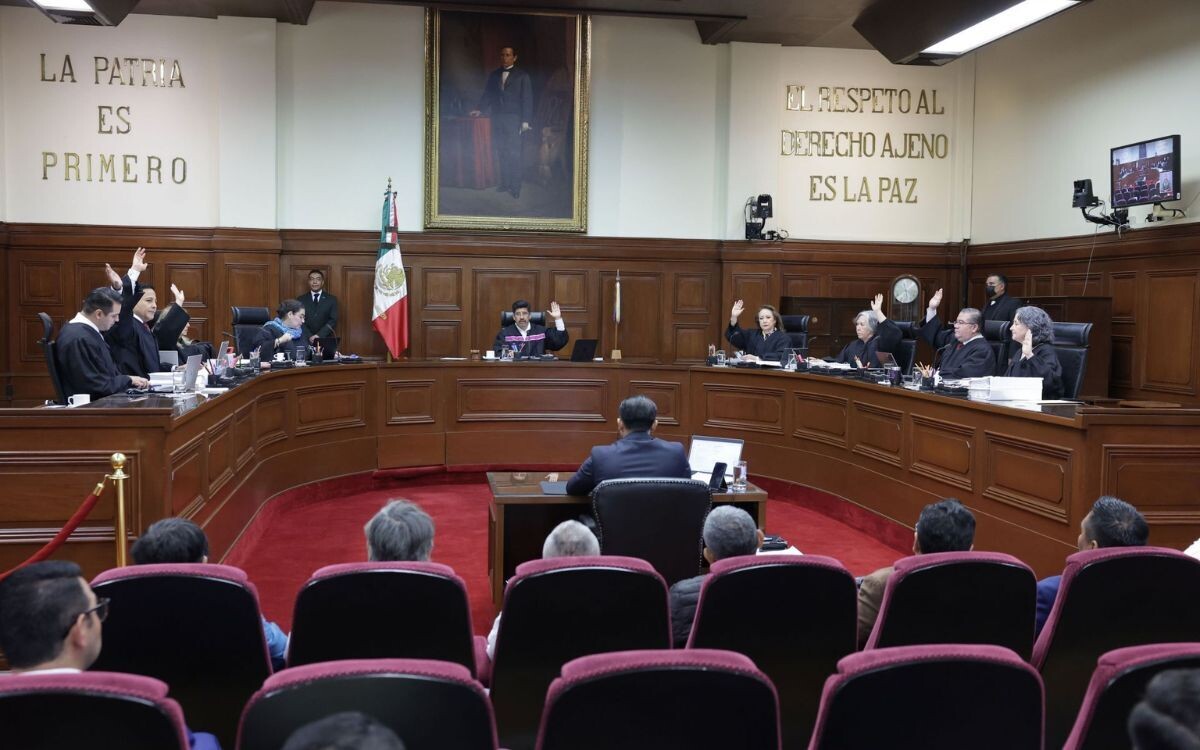
The Supreme Court of Justice of the Nation (SCJN) approved this Monday the power of the Financial Intelligence Unit (UIF) to block bank accounts without a prior judicial order. In resolving the Direct Amparos 14/2025 and 6320/2024, as well as the Unconstitutionality Action 58/2022, the Full Court of the highest tribunal validated article 116 Bis 2 of the Credit Institutions Law, arguing that this tool is fundamental to prevent financial crimes and the financing of terrorism. The ministers determined that the freezing of financial assets does not represent a prior conviction or a penalty, so the Full Court of the Court held that the block is a precautionary measure of annoyance, not a definitive sanction. The highest court specified that this action is implemented in the face of indications of illicit operations and clarified that it does not replace the powers of the authorities in charge of criminal investigation. In this sense, the SCJN emphasized that the measure guarantees the right of audience, defense and contemplates avenues of challenge, both administrative and judicial. Thus, the Court validated that the Financial Intelligence Unit does not need a formal and detailed foreign request to freeze accounts. According to the judicial criterion issued, the unit can act based on national or international information, in accordance with standards such as those of the Financial Action Task Force (FATF). "The SCJN strengthened the fight against money laundering by confirming, in two cases, that the blocking of bank accounts ordered by the Financial Intelligence Unit is valid when it is based on indications of illicit operations and respects the right of audience and defense," says the Court's communiqué.