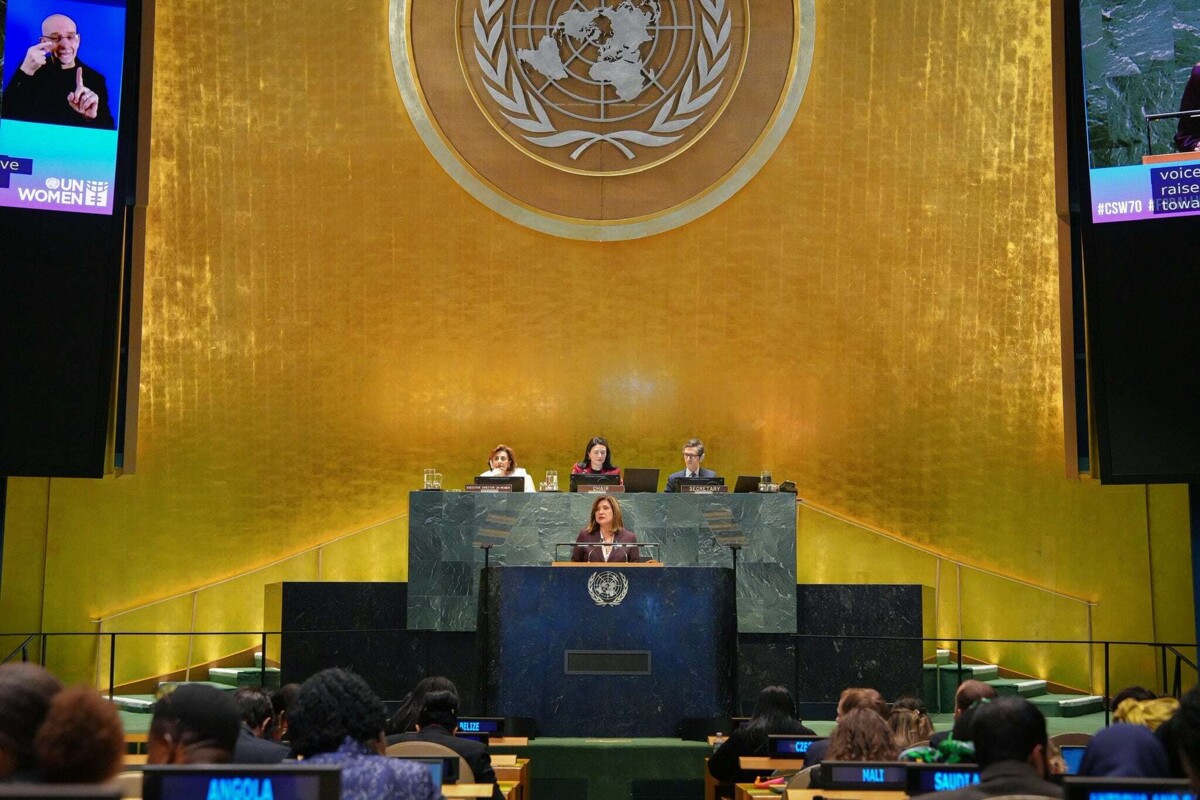
The United Nations Security Council failed on Tuesday to resolve the global energy crisis. Russia and China exercised their right of veto to stop a resolution that sought the immediate unblocking of the Strait of Hormuz, a vital maritime route for crude oil trade. The proposal, pushed by Western powers after recent bombings in the area, did not prosper due to the frontal opposition from both permanent members. Moscow justified its decision by calling the document “partial and unbalanced”.
According to the Russian representation before the body, the text ignored the military provocations suffered by Iran on Jarg island and sought to legitimize external intervention in sovereign territorial waters. The Russian ambassador stated that any solution must include the cessation of attacks against Iranian strategic infrastructure to ensure real stability. Russia and China blocked in the Security Council the use of armed escorts for merchant ships in the Strait of Hormuz, as requested by the Gulf countries. While Washington demands free navigation through military pressure, Russia and China maintain that foreign presence is the main obstacle to regional peace.
So far, the Security Council has not scheduled a new session to address the issue, leaving the Strait of Hormuz under a blockade status that threatens the economic stability of energy-importing nations. The stalemate in New York reflects the deep fracture between the great powers in 2026. For the Russian government, the resolution sought to blame only one party of the conflict without recognizing the context of prior aggression.
Meanwhile, the Beijing delegation argued that the imposition of coercive resolutions only aggravates tension in the Middle East. The Chinese government advocated for the use of diplomatic channels and direct dialogues between the involved parties. China emphasized that the security of supply routes is fundamental for the world economy, but warned that the use of force or punitive sanctions further destabilizes the energy markets. The Chinese representative urged the powers to abandon the confrontational mentality.
Impact on the global economy. This diplomatic paralysis occurs in a critical scenario where the price of a barrel of oil exceeded the 116-dollar barrier. Financial analysts predict a greater escalation in fuel costs due to the impossibility of guaranteeing the safe passage of supertankers through Hormuz, an area through which approximately 20% of the global crude supply circulates. Logistical uncertainty keeps stock markets in a negative trend since the opening of Asian markets. The rejection of the resolution came a few hours after the United States confirmed attacks against military assets in the region.