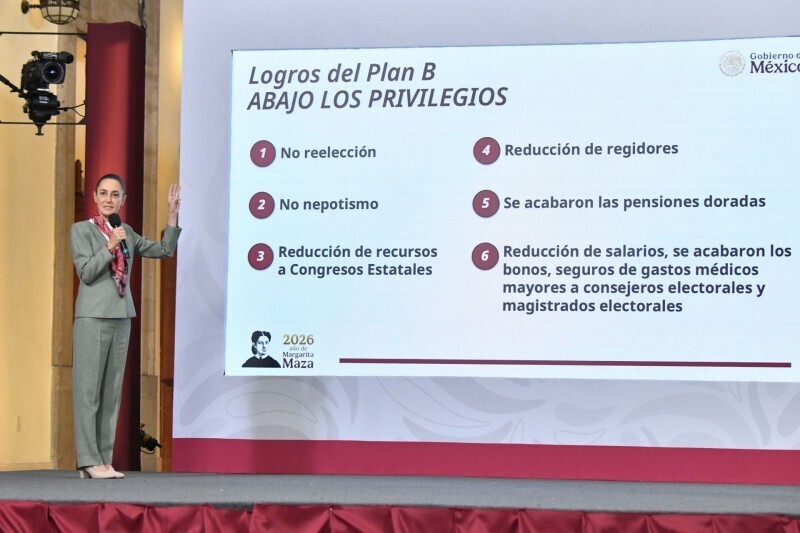
Plan B of electoral reform, promoted by President Claudia Sheinbaum, obtained constitutional approval after being approved by at least 20 state congresses, exceeding the required minimum of 17. "We now have 20 states, which means it is already constitutional," added the federal head of state. Plan B incorporates a series of changes that the ruling party claims aim at "austerity and institutional redesign." The reform was approved with a qualified majority, garnering 377 votes in favor and 102 against from the PRI and PAN. The PT voted for Sheinbaum's Plan B, but tensions with Morena persist. Now, the process falls to the Senate, which must issue the declaration of constitutionality and send the reform for publication in the Official Gazette of the Federation, a prerequisite for its entry into force. Legislators from the PRI and PAN warned that it is a "limited reform" that does not fundamentally change the electoral system, and criticized the speed with which it was approved. The express approval in the states came just hours after its passage in the Chamber of Deputies last Wednesday, where the ruling party managed to push through Plan B with the support of the PVEM, the PT, and Citizen's Movement. "The essence of the Plan B we sent was approved and this is now a fact for the country," affirmed the president today in her usual conference from the National Palace. The initiative modifies articles 115 and 116 and adds a paragraph to article 134 of the Constitution. Claudia Sheinbaum announced the approval of Plan B in the state congresses during her morning press conference. In several states, the discussion was brief and the process was resolved quickly, without major modifications to the text sent from the federal level. At the same time, it sets a cap of up to 15 regencies in municipalities and establishes a limit of 0.7% of the state budget for the operation of local congresses. Congress of BC supports the austerity plan with social investment. From the opposition, they questioned both the content and the methods. The reform prohibits re-election for elected positions and nepotism in public institutions, reduces resources allocated to state congresses and the Senate. With that support, the ruling party completed the legislative circuit in record time, leaving the initiative one step away from its entry into force. Within hours, the local legislatures, mostly controlled by Morena and its allies, convened to give the green light to the reform. In addition, it eliminates golden pensions and cuts salaries, bonuses, and medical expense insurance for electoral councilors and magistrates.