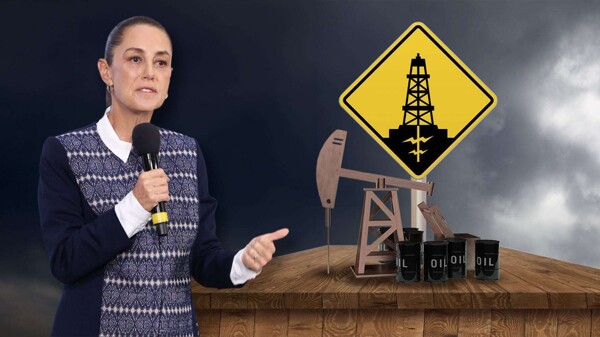
Adán Augusto López was removed from the powerful Senate coordination. Bartra, Castañeda, Cosío Villegas, and so many others have written about it. What Andrés Manuel did, surely a deep disciple and admirer of Plutarco Elías Calles, was to reserve for himself not only positions in the federal, state, and para-state governments, but above all, what they know as 'The Movement'. MORENA does not respond to Claudia, but to Andrés Manuel, and this essential difference in the reins of power is one that the President of Mexico still has to correct. But at the level of the government apparatus, its primary work, the changes are visible. Just to list them: there is a change in the form and substance of the national security strategy, but not in the discourse. Others, surprised, refuse to recognize or accept it and consider it only a collection of events and decisions joined by chance. But the truth is that the President has shown restraint and enormous patience in the face of the chaotic and disorderly legacy of her predecessor (Dos Bocas, Tren Maya, CNTE, Pemex, etc.). She has also shown extreme prudence in her movement and placement of pieces on the board. Perhaps the final game will be called 'For the recovery of power' or 'The reconquest of the Presidency'. It is yet to be written, but step by step, with a discreet profile, of unquestionable loyalty, even veneration for her predecessor, Claudia Sheinbaum has been recovering vital gears for the exercise of power. The old Mexican political system, in the times of the PRI, the president, upon retiring from the formal office, handed over to their successor the total controls of national power: the institutional, the constitutional, the symbolic, but above all—perhaps the most important—the legal and formal. This ritual was inevitably fulfilled at the moment of the handover, although with certain exceptions, sometimes before the institutional formalism. In the stage of democratic transition, it was mandatory. A Ms. Jennifer Krystel Castillo with postgraduate studies at ITAM—there is no disdain for high university education here, even if it comes from private schools—with more than 18 years of experience and service in the then Government of the Federal District assumed the strategic responsibility. The most transcendent and with implications not only economic for Mexico, but also energetic, is her announcement to address fracking with the analysis of experts, academics, and researchers from the main public universities of Mexico. Another huge and radical difference with her predecessor is that he appointed himself as wise and knowledgeable about all topics. Collaboration with the United States and the increase in the frequency of operations and arrests is also observed. The president was not only the head of State and Government, but also, very relevant, the head of the party that commanded and organized the succession processes and groups. Some have noticed it, reported it, and written a few lines about it. Alejandro Gertz Manero left the Prosecutor's Office. It was many years, only 70 with absolute control. There are extensive and abundant historical, political, sociological studies about the change of powers, the delivery of the apparatus, the commands, the lines of control, but above all, of the party. When the PAN came to power, the PRI had no choice but to step aside, although history records that, at the level of para-state entities, state governments, and many different instances of power with capital letters, it took two or three years for the PRI to disappear completely from the government scene. However, those who worked alongside him described him as an improviser, capricious, and ignorant in many areas, who gave orders on matters he knew nothing about. Claudia values and appreciates knowledge. Another capital difference. Finally, the return of Mexico to the international scene; abandoning the kiosk policy that characterized her predecessor. She defends it, and therefore, surrounding herself with such a solid group to tackle the taboo topic of fracking is undoubtedly a success. Claudia's chess game aims to control the lists and the selection of candidates for 2027. Her people, her team, that respond to her initiatives and guidelines, not to the dark interests and business of Palenque and its group entrenched in power. AMLO made his hypothetical 'brave honesty' an act of propaganda, under which friends, family, and colleagues have benefited with contracts, works, and multimillionaire concessions. Claudia believes in and defends real honesty, without strings or nuances. New game, new board, with different pieces. In addition, the unbearable activist Marx Arriaga left the SEP, not without scratches and fuss. And there are many more, imperceptible, even subtle. This Monday a bulletin circulated in the SAT announcing the change in the Administration of Large Taxpayers.