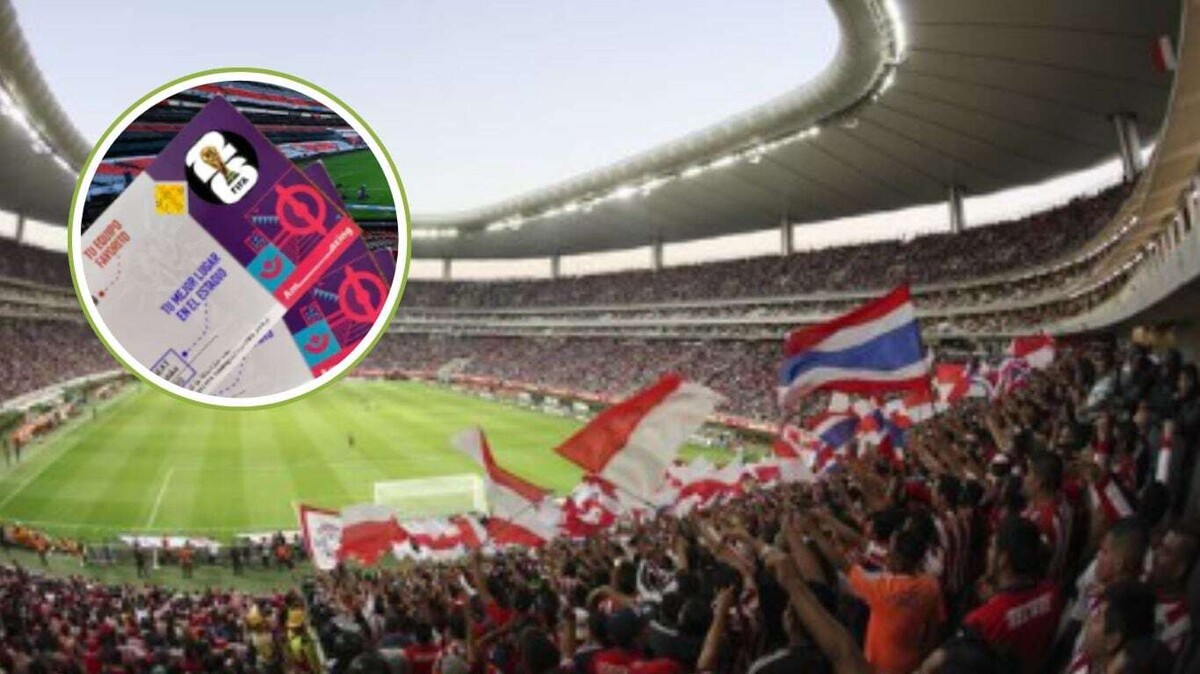
The countdown is on for the ball to roll in the FIFA Intercontinental Qualifying Tournament on Mexican soil, and during this final week of March 2026, the stadiums of Guadalajara (Akron) and Monterrey (BBVA) serve as the first laboratories for large-scale operations ahead of the summer World Cup. However, the public's response at the box office has drawn attention due to an atypical purchasing behavior that sharply contrasts with traditional World Cup fever.
Sales Below Expectations The demand to watch the playoff matches is progressing at a significantly slower pace than projected by football authorities. In the specific case of the 'Sultana del Norte' (Monterrey), reports from local organizers revealed that the presale of tickets barely surpassed the 15,000 tickets placed for the first match. This figure is below the initial target, which aimed to displace a minimum of 25,000 seats per match. Faced with this scenario, the organizing committee made the logistical decision to enable only the lower bowl of the 'Gigante de Acero' in Guadalupe, Nuevo León, closing the upper ring of the venue pending last-minute purchases justify opening the full capacity.
In Guadalajara, the momentum is similar, as 16,800 tickets have been reported sold so far; a low figure, while the commercial suites and corporate hospitality packages for the official June 2026 World Cup are nearing total sell-out, individual tickets for this March's knockout rounds are flowing with extreme slowness. The stadiums will feature partially empty seats, a strange sight for two of the most passionate soccer hubs in all of Latin America.
Why isn't the box office booming? To understand why the average Mexican fan is not flocking en masse to FIFA platforms to purchase their passes, the analysis points to three structural factors in the sports entertainment market:
Lack of connection with participating teams: The playoff ties involve national teams such as New Caledonia, Jamaica, the Democratic Republic of the Congo, Suriname, Bolivia, and Iraq. Without the participation of the Mexican team or historical continental powers (like Brazil, Argentina, Germany, or Italy), the average local fan does not perceive sufficient entertainment value to motivate them to travel to the stadium on a weekday.
Economic saturation of the local wallet: Fans of Monterrey and Guadalajara bear the financial strain of following their clubs in Liga MX and the CONCACAF Champions Cup. The Monterrey and Guadalajara public is aggressively saving capital to cover the costs of group stage tickets for the June 2026 World Cup.
Aware that the participating teams do not drag along local legions of fans, FIFA priced the tickets under a very popular and accessible fixed-price scheme, placing them practically at the cost of an average weekend trip to the movies in any commercial plaza in the country: First Round Matches (Thursday, March 26): 200 Mexican pesos (Approximately $11.50 USD). Second Round / Finals Matches (Tuesday, March 31): 300 Mexican pesos (Approximately $17.50 USD).
Purchases are made directly on the federation's official ticket portal without the need to participate in raffles, endure exhausting virtual queues, or pay excessive service charges from third-party ticket vendors. Organizers trust that this low price bracket will motivate spontaneous decisions from local families to attend the venues and register an attendance worthy of a World Cup playoff.
By prioritizing the summer's main event, the March playoffs are relegated to a secondary or tertiary position.
Perception of a 'Dress Rehearsal': For a broad sector of the population, this tournament is conceived more as a bureaucratic and logistical certification test for the stadiums (testing traffic flow, public transport, training bunkers, and telecommunications) than as a true festival of elite football.
Official prices: popular tickets contrasting with World Cup inflation Ironically, the sluggish demand is not due to prohibitively high prices.