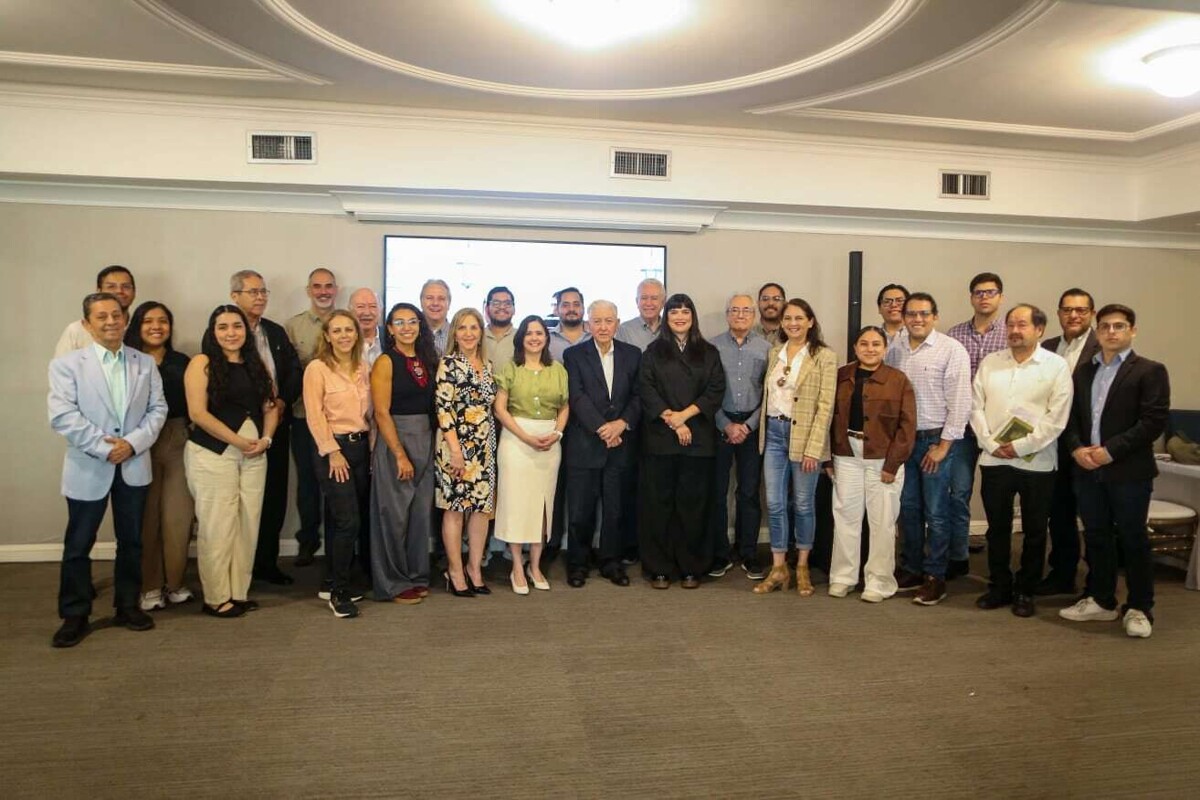
In the face of the challenges posed by the rapid growth of the metropolitan area, the Urbanism Society Monterrey A.C. (Surmac) made an urgent call on state and municipal authorities to enact a Metropolitan Coordination Law. Unlike previous attempts, this law must include clear criteria to ensure its proper application. The organization stated that this legislation should be based on four fundamental axes: a brief law with precise attributions, the creation of a technical institute free from political profiles, the integration of a citizen and academic council, and the development of a Metropolitan Plan. This proposal comes after the recent resumption of work between municipal and state authorities to create a regulation that governs coordination in the metropolitan area. Priscila Dávila, president of Surmac, highlighted the urgency of having this legal framework to address the needs derived from urban sprawl. "The creation of a Metropolitan Coordination Law and a technical body for its implementation is urgent in Nuevo León. It is fundamental to guarantee sustainable and planned urban development that ensures equitable access to services such as water, transportation, education, public spaces, and security," she stated. Dávila added that this key legislation is essential to address environmental challenges, combat practices such as corruption, and allow for effective investments in metropolitan-scale infrastructure and services. Building by consensus She emphasized that the new law must be built with the consensus of all the authorities involved and contemplate a governing body with a technical profile and financial independence. "To achieve true metropolitan coordination, a clear and well-delimited law is required, that respects municipal autonomy and establishes precise attributions." Also, she added, it is essential to have a Metropolitan Plan that is easy to follow. The president of Surmac explained that the technical body must be headed by specialists without political risks and accompanied by a council made up of citizens and representatives of academia from all municipalities. As part of the efforts to contribute to the construction of this law, the Urbanism Society addressed the issue in its General Assembly 273, where Patricia Martínez Barba, director of the Guadalajara Institute of Planning, participated. During her intervention, she explained the process for creating this type of regulatory frameworks and highlighted the need to generate clarity among the mayors about their scope to build political will. "You already have previous experiences, there have been some efforts, such as the issue of the metropolitan water body, or the transit regulations, plus you have the Nuevo León Council, you have academia that has studied the issue for a long time. "I think that political circumstances have to align, perhaps it will not be perfect, they will not make all the conditions that leave us satisfied, but you have to start with something, I think that yes, a crack can be found to achieve the: how yes," said Martínez Barba. The assembly was attended by specialists and public figures such as former governor Socrates Rizzo, president of the College of Architects of Nuevo León, architect Beatriz Lucio, as well as developers, architects, and urbanists, who agreed on the importance of advancing a metropolitan agenda with clear rules and plural participation.