The Mexican government-backed startup Olinia will present its first two prototypes next June, seeking $200 million in private investment to launch manufacturing and transform urban mobility.
According to Roberto Capuano, CEO of Olinia, engineering work on the mini electric vehicle prototypes should be completed by the end of this month. Last year, the company received less than 50 million pesos in initial funding from the federal government and the state of Puebla, where its design workshop is located.
In addition to existing tax incentives for electric vehicle purchases under the Mexico Plan, electric and plug-in hybrid vehicles purchased through 2030 can benefit from an immediate tax deduction equivalent to nearly 90% of their value. Even the Federal Electricity Commission (CFE) is collaborating by offering EV buyers a specific meter for recharging at a lower commercial rate.
Capuano noted that the approximate price would be around 150,000 pesos, or about $8,400. Sheinbaum promoted Olinia in her first speech after taking office as Mexico's president at the end of 2024.
"We are creating a category to be called 'light urban vehicle of low and medium capacity,'" he said. This is in addition to the 175 million pesos that, according to Capuano, Olinia has received from the Ministry of Energy and the state-owned Mexican lithium company LitioMx to build a battery pack manufacturing plant.
The company has also received backing from local public research institutes that are funding the salaries of the engineers and scientists working on the project. "The way to understand Olinia is like a baby being born in a big family, and everyone contributes so the baby can grow healthy," said Capuano.
Currently, Mexico has very little commercial battery production and does not yet extract lithium, despite having potentially large deposits of this key metal for batteries. The first two Olinia vehicles will have a maximum speed of 50 kilometers per hour.
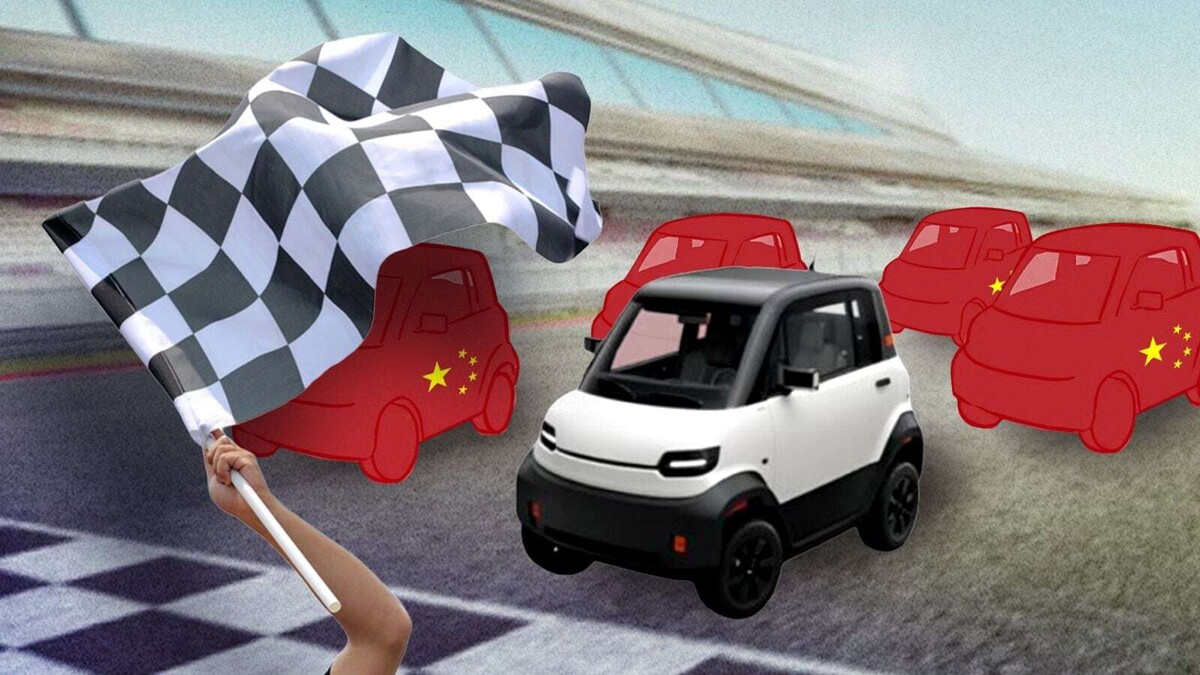
"It's a niche that doesn't exist today, in which we can have an advantage by being the first in the market," he pointed out. He also noted an open market and tough competition that could come from Chinese or Indian EV companies.
"Our intention has never been to create a monopoly on micromobility," he stated. He also commented that purchase orders from the federal government and state governments could help boost initial sales. Olinia already has at least one private Mexican competitor, Zacua, which specializes in mini electric vehicles for urban commuting.
The company's auto director described the two plug-in prototypes as a passenger vehicle for the driver and up to five more people. The other unit to be produced is a two-passenger cargo vehicle capable of transporting 600 kilograms, roughly the weight of a large vending machine.
Capuano added that a third, faster personal vehicle prototype will be presented later, and the company will initially focus on the motorcycle and traditional taxi market for deliveries or short urban trips.
"It's a niche that doesn't exist today, in which we can have an advantage by being the first in the market," he pointed out. He also noted an open market and tough competition that could come from Chinese or Indian EV companies.
Capuano forecasts sales of 100,000 Olinia cars per year and insists that the government's role is to act as a catalyst, while private investment will be essential for its supply chain and working capital needed to establish Olinia plants, especially in the first two years.
Public spending on Olinia to date has been minimal. However, public spending is starting to rebound. Recently approved research and development funds should bring in about 100 million pesos. The official described the project as a brilliant example of Mexico's high-tech capabilities and local creativity.
The difference is that Mexico still lacks key ingredients, such as technology and large-scale resources, that made that policy work. "This project is unprecedented in the country," he said. Once that phase is overcome, the first stages of manufacturing and testing will be carried out, which in turn will accelerate negotiations with investors, as the company will then be able to share technical specifications with them.
Despite being in its infancy, Olinia is one of President Claudia Sheinbaum's most eye-catching initiatives. The startup, which she promotes in her morning conference and TikTok videos, plans to start selling its first low-cost electric models in early 2027. However, its volumes have been minimal, partly because it focuses on manual and artisanal production. Olinia, the 'baby' of President Claudia Sheinbaum.