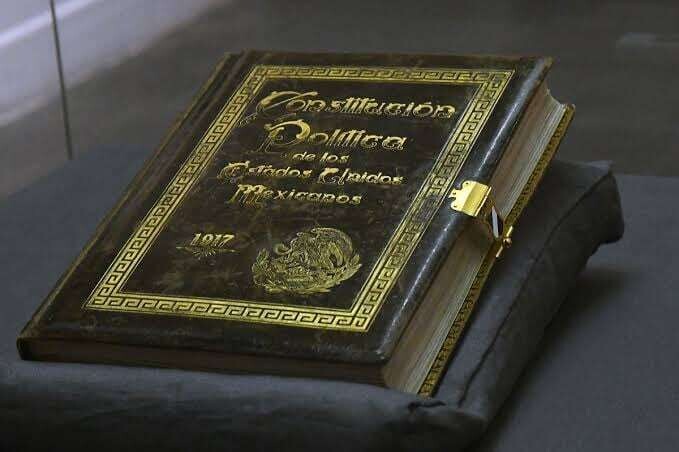
108 years ago, at the Iturbide Theater in the city of Querétaro, a historical process began that would culminate in the promulgation of the Political Constitution of the United Mexican States on February 5, 1917. Deputies from all over the country gathered at this site for two months, concluding discussions on January 31, 1917.
The Constitution of 1917 consists of 136 articles divided into 9 titles, highlighting individual guarantees, constitutional rights, national sovereignty, and the separation of the Legislative, Executive, and Judicial Powers. This document laid the foundations of the Mexican government, guaranteed the human rights of citizens, and addressed agrarian reform in response to the demands of the Zapatistas and Villistas.
Considered avant-garde, the Constitution of 1917 was the first internationally to include social rights in its content, marking a significant milestone in the country's history. Over more than a century, it has been subject to 699 reforms that have contributed to its evolution and updating.
Every February 5, Mexico commemorates the promulgation of its Magna Carta, a result of a period of social and political agitation that began with the Mexican Revolution. After the ousting of Porfirio Díaz and the assassination of Francisco I. Madero, President Venustiano Carranza convened a Constituent Congress in 1916, whose sessions were held at the Iturbide Theater in Querétaro, also the place of premiere of the Official Mexican Anthem.