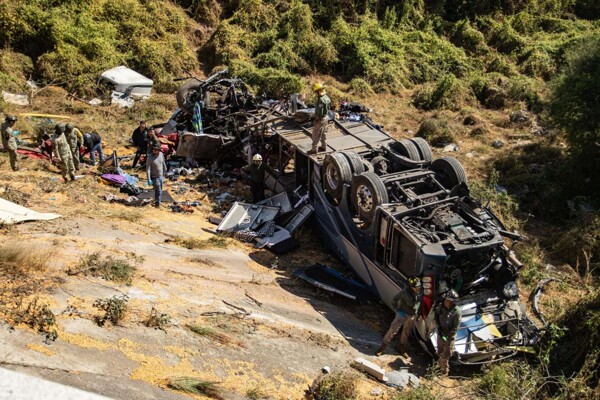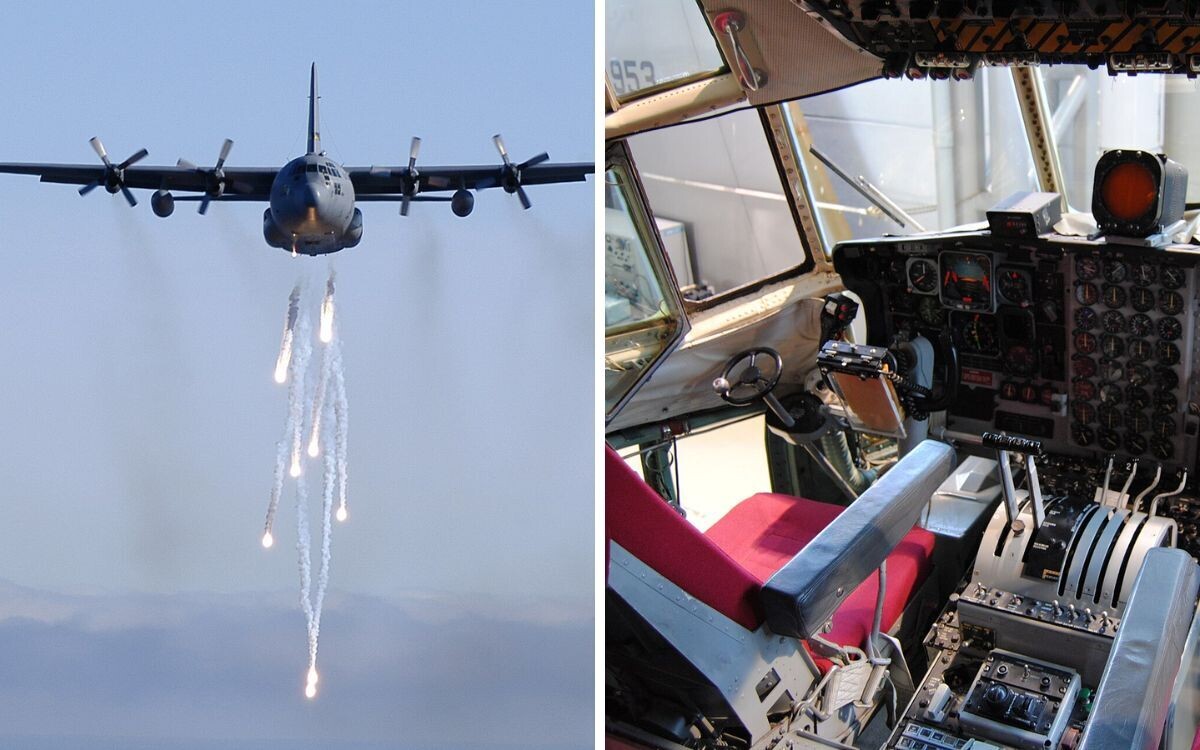
The C-130 Hercules aircraft originated from the needs of the United States during the Korean War. According to the Maps Air Museum, this conflict highlighted the need for a new transport, as World War II models were “no longer suitable.” This led to the requirement that gave rise to the C-130. In its more than 70 years of history, this aircraft model has been involved in several fatal accidents, including one in Mexico that left 6 military personnel dead. On September 19, 2003, six military personnel died after a Mexican Air Force Hercules C-130 plane crashed in Zacatecas. The Secretariat of National Defense informed in a press release that the accident occurred in an area known as La Quemada, in the municipality of Villanueva, about seventy kilometers from the city of Zacatecas. Twenty years after the tragedy, Sedena reported in a transparency request that the aircraft suffered a “mechanical failure in engine number one, as the thrust difference of this engine is notoriously high compared to the rest of the engines.” The Hercules C-130 is a military aircraft originally designed by Lockheed, now Lockheed Martin, conceived primarily as a transport for troops, cargo, and for medical evacuation missions. It is notable for its ability to use unprepared airstrips. According to the MAPS Air Museum, it has become “the primary tactical transport for many military forces around the world.” The versatility of the platform has allowed for the development of more than 40 variants that operate in more than 60 nations. These specialized versions include the AC-130, used as a gunship; the KC-130, for in-flight refueling; and the HC-130, employed for long-range search and rescue missions. Its standard cargo capacity allows it to carry 92 passengers, 64 paratroopers, or up to 74 stretcher patients with medical staff. The Hercules made its first flight on August 23, 1954, and entered active service in December 1956. The Hercules was used to carry out transport and logistics missions, moving personnel and supplies between bases. Wars in which the Hercules C-130 has been used According to the technical specifications of the Lockheed C-130 Hercules published by the MAPS Air Museum, this aircraft has been used in the main wars and invasions of the United States. For example, during the Vietnam War, it was used for Forward Air Control (FAC) missions over the Ho Chi Minh Trail in Laos starting in 1964. It also led bombing formations over North Vietnam in 1965 and missions to create mudslides and landslides with chemicals on supply routes. During the Gulf War (1991), the document shows that the C-130 was operationally used in Operation Desert Storm by the forces of the United States, Australia, New Zealand, Saudi Arabia, South Korea, and the United Kingdom. Last weekend, the presence of a Hercules C-130 at Toluca International Airport in the State of Mexico was reported, which has been questioned by various political actors. During her morning conference this Monday, President Claudia Sheinbaum explained that the entry of the plane “should not have been consulted” with the Senate since no U.S. troops entered Mexico. What happened was that they took Mexican personnel – from the Secretariat of Security and Citizen Protection – for training by the Northern Command. The landing authorization was granted by the Secretariat of National Defense. In June 2015, more than 140 people died when a Hercules C-130 piloted by the Indonesian Army crashed into several buildings in a residential area in the city of Medan, capital of North Sumatra province. The aircraft may have suffered a “mechanical problem,” then said the head of the Indonesian Air Force, Agus Supriatna. In addition, it is feasible to consider a total spatial disorientation due to the amount of aerodynamic forces on the aircraft, which causes a total lack of handling and coordination among the cockpit crew. During the invasion of Afghanistan in 2001, the document records its operational use by an international coalition that includes the United States, Australia, Belgium, Canada, Denmark, France, Italy, the Netherlands, Norway, Portugal, Romania, South Korea, Spain, and the United Kingdom. Furthermore, in Iraq (2003), it was used during the initial invasion phase and subsequent support for multinational forces.