Mexico is a country that preserves its traditions and embodies a unique cultural heritage in its ancient ruins and global significance. Here you will find the legacy of the Mayans and Aztecs, the cradle of the Veracruz, the corridor of the Seven Seas and the Indian melodies that sound with horns, political and global dialogue. In the past, ten key principles were established that help to understand the uniqueness of Mexican culture.
**Musical Heritage** Folk music genres range from **mariachi** (symbol of national identity, rooted in Jalisco) to **son jarocho** (from Veracruz, **corrido** of the Seven Seas and Indian melodies - are connected with horns, political and global codes. This vibrant dialogue is ancient and multi-faceted, where each region creates its own variations. Important: instrumentation, percussion (rituals, festivals), context (rhythms, festivals). As the author said: "The museum transmits classes and regions, opening doors to the Mexican identity".
**Dances and Rituals** **Danza del Xochipitzahua** (a local dance) combines common symbols, participating in the sabbaths and ceremonies. This tradition emphasizes: symbols of life, the role of the leader (participation or control), the emotional globe. The dance is not just a performance, but a memory, which lives in every movement.
**Painting and Murals** In the 19th century, the Mexican mural movement began with national identity. The names Diego Rivera, David Alfaro Siqueiros and José Clemente Orozco are not accidental: their works are connected with politics and history. Contemporary performers continue this tradition, integrating new technologies and themes. Key questions: who presents the history, how the protests and context influence the interpretation.
**Rituals and Textiles** In **Oaxaca**, **Chiapas** and **Puebla**, master craftsmen create traditional techniques: weaving, embroidery, cotton cloth. Textiles and ceramics are not just utilitarian items, but also symbols, telling stories about cultural origins. Their cost is determined by the study: color, wool, social context.
**Architecture** From the pyramids of **Teotihuacán** to the colonial cities and modern buildings — the "laboratory" of Mexican architecture — "laboratory", where different epochs are synthesized. For example, colonial temples often coexist with futuristic projects. Pay attention to the details: integration with the landscape, a common role (ceremonies, platforms), innovation in design.
**Cinema and Media** Modern directors and photographers use technology to create social themes. Films and installations are inspired by the local festive atmosphere, talking about migration, pain and identity.
**Contemporary Installation** This installation creates new frames: from unique installations to conceptual works. The viewer often becomes part of the process, which makes it dynamic.
**Theater and Literature** Silent plays, which form the basis of the ancient traditions. Local stories and indigenous culture stand out globally. Theaters and indigenous culture are often globalized.
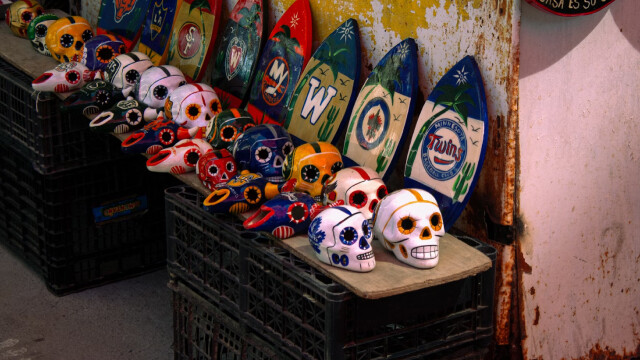
**Festivals and Rituals** **Día de los Muertos** or the "day of the dead" is an example of "living" culture, where each element symbolizes a connection with the past and the present. This is not just a color, but a ritual, uniting generations.
**Importance and Value** The culture of Mexico is not just a memory, but a living dialogue: it helps to preserve traditions, deal with globalization, support local economies. Important: - to commercialize, - to preserve traditional techniques, - to finance and promote for tourists.
**Attraction and Visits** To understand these phenomena, consider: - to ask questions about the history and context, - to observe the details (colors, materials), - to participate in communities, and not just to observe.
The culture of Mexico is a "journey without an end", where tradition and modernity create a unique synthesis. This allows you to feel the pulse of life, to see history in the murals, to hear the voices of the Indian dances.