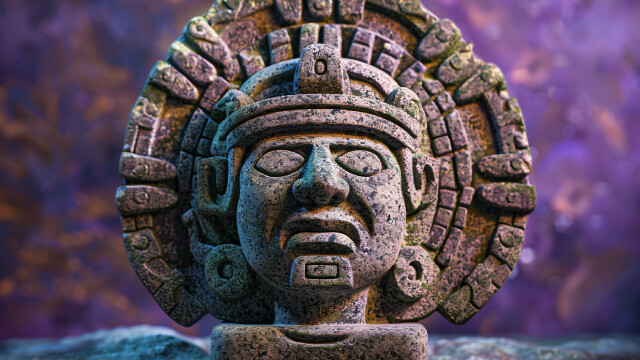
The pre-Columbian cultures of Mexico viewed nature as a living force inhabited by powerful deities. Each of the four main elements—water, fire, earth, and air—had its own guardian whose will dictated the life of the community. Veneration of these gods was inextricably linked to the care of natural resources.
Earth was revered as the mother of all living beings. For peoples who lived off agriculture, this was the primary element. The Aztec earth goddess, Coatlicue, symbolized fertility and life-giving force. Among the Zapotecs, the god of the earth and agriculture was Pitao Cozobi, the deity of maize and harvests. The earth was the source of all necessities for survival, and its spirits demanded respect and ritual offerings before trees could be felled or new fields plowed.
Water was another sacred element, vital for survival. The Mayan rain god, Chaac, wielded a stone axe to produce thunder and lightning. For the Aztecs, the god of water was Tlaloc, the lord of rain, lakes, and springs. He was worshipped to ensure good harvests and protection for travelers. Ceremonies associated with water included dances, songs, and pilgrimages to caves and cenotes, which were considered sacred gates to the underworld.
Fire was considered a gift from the gods, necessary to sustain life and maintain the balance of the universe. The Mayan god of fire and storms was Huracán, associated with the winds and lightning that produce fire. For the Aztecs, the god of fire was Xiuhtecuhtli, also known as the "Lord of Turquoise." He embodied energy, the heat of the sun, and the capacity for transformation. The Aztecs performed the "New Fire" ceremony every 52 years to ensure the sun would rise again and the world would not end.
Air represented the breath of life and a force that connected humans with the gods. The Aztec god of the wind was Ehécatl, a manifestation of Quetzalcoatl. The Mayans worshipped Kukulcán, the feathered serpent, who represented the winds and wisdom. Air was necessary for seed germination and the movement of the sun. He was prayed to to clear the way for other deities during rituals. Conch shells were used as sacred instruments, as their sound evoked the breath of the wind god.
This holistic system, where gods and natural elements were inseparably linked, defined the spiritual life, architecture, agriculture, and calendar of ancient civilizations. Knowledge of these deities allows us to better understand the spiritual wealth of Mexico and its deep connection with the environment, which is still felt in indigenous communities today.