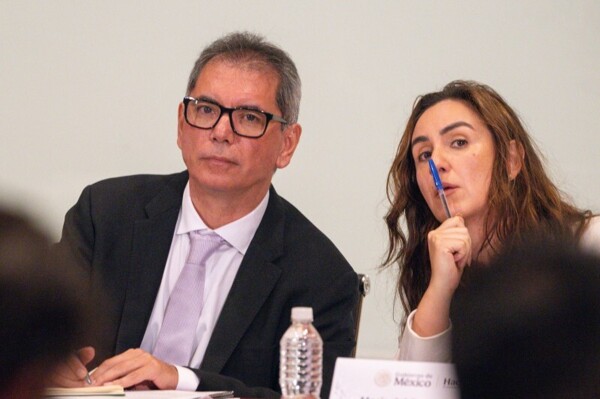
Mexicans First reminds us of a fundamental fact: regional origin continues to mark educational opportunities. "The Social Progress Index (SPI) reminds us of something fundamental: regional origin continues to mark educational opportunities," said Patricia Vázquez, executive president of Mexicans First.
Educational lag remains one of the factors that most push down the social progress score. "The greater the educational lag, the greater the lag in social progress," explained Sofía Ramírez, general director of México ¿cómo vamos?.
The "silent" educational lag has to do with the amount of resources the country dedicates to education. Southern states concentrate the highest percentages of the population with an educational lag and, at the same time, the lowest scores on the index. The report emphasizes that, despite progress, a person born in a lagging state has fewer chances to develop their potential than someone born in more advanced entities.
Although poverty has decreased, millions of Mexicans continue to face deprivations that income does not solve. The index first assesses whether people have their basic human needs covered, such as access to water, housing, security, and essential medical care; then it measures the foundations of well-being, that is, whether the population has basic education, information, health, and a suitable environment to develop; and finally, it analyzes opportunities, which have to do with rights, freedoms, inclusion, and access to higher education.
Since 2015, Basic Human Needs have increased by 4.5 points, Well-being Foundations by 3.2, and Opportunities by 11.8, although the latter remains the dimension with the worst result. This is indicated by the Social Progress Index—a holistic measurement of a country's social performance, independent of economic indicators like GDP—developed by México ¿cómo vamos?.
"How do we solve the absence of a health system: by paying, but what happens if we don't have the money to pay for it?" warned Roberto Vélez, director of the Espinosa Yglesias Studies Center, while explaining that about 48% of economic inequality originates from differences in opportunity from birth. Something similar happens in education.
The study confirms that it is not enough for wages to improve or for more people to have jobs: without strong public services, opportunities do not reach everyone. "Higher income does not necessarily imply a better quality of life, because public infrastructure is insufficient."
At the national level, the three dimensions of the SPI show advances, but also limits. The distance between the best-performing states—such as Mexico City, Aguascalientes, or Querétaro, above 71 points—and the most lagging—Guerrero, Chiapas, Oaxaca, or Veracruz, which hover between 53 and 56 points—remains very wide.
The income of the richest 1% is 442 times greater than that of the poorest 10%. Multidimensional poverty fell to 29.6%, its lowest level in a decade, but at the same time, key deprivations increased. Although all states advanced, the progress is not homogeneous. The percentage of people without access to health services increased by 18.6 points since 2016, and in 2024, more than half of those who had a health problem ended up being treated in private services because the public system was insufficient.
The central figure of the report summarizes it: the national SPI 2024 score was 65 points out of 100, the best since 2015, but still insufficient in the face of internal gaps.