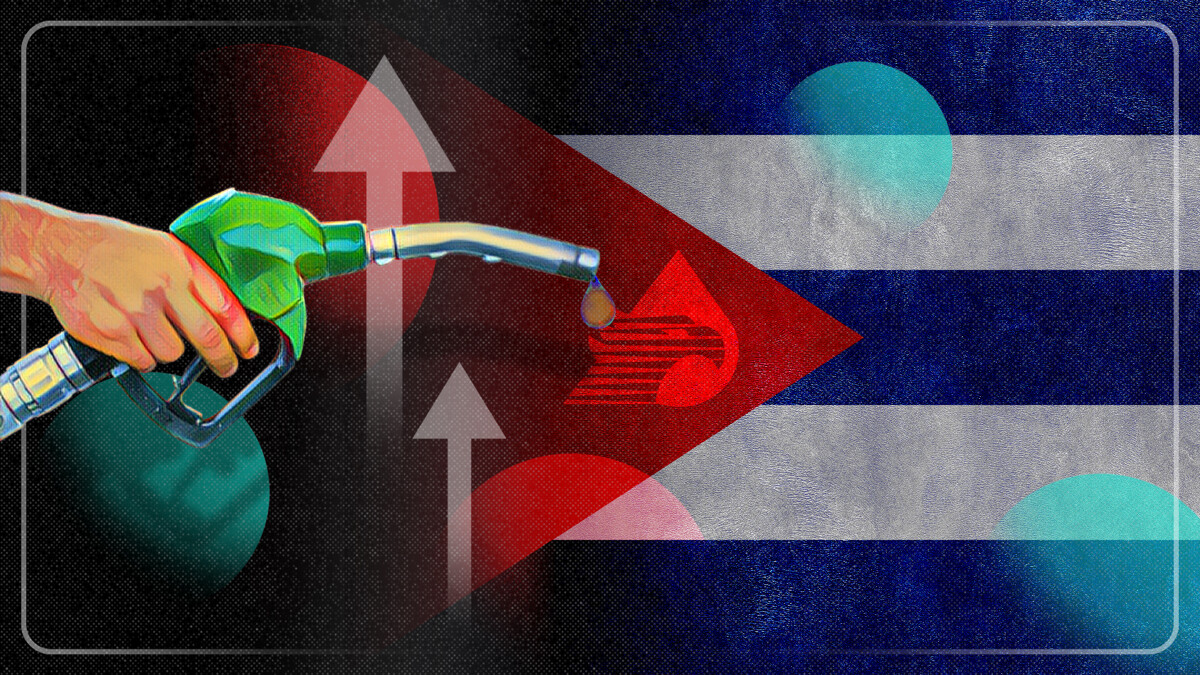
Mexico's energy policy has become trapped in an increasingly risky triangle with Cuba and Venezuela, as the state-owned oil company Petróleos Mexicanos (Pemex) navigates a critical financial situation and faces potential international sanctions that could exacerbate an already deep crisis.
While Venezuelan oil exports to Cuba fell to historic lows in 2025—with only about 8,000 barrels per day in June, compared to averages of over 50,000 barrels per day in 2023—Mexico has increasingly stepped in to fill the void. suspicions are growing that a portion of the Mexican oil products being sent to the island may end up fueling illegal contraband circuits linked to the Havana and Caracas regimes.
The operations are channeled through Gasolinas Bienestar S.A. de C.V., a subsidiary created in 2022 whose only client is Cuba. Data available through December 2025 indicates that in the first half of the year alone, more than 3.2 million barrels of crude and derivatives were sent, with an average daily rate of nearly 18,000 barrels of crude oil and about 1,700 barrels per day of refined products. The peak occurred between late May and late June, when over 10 million barrels of crude and 132 million liters of refined fuels were dispatched in just one month via 39 shipments.
Although Pemex reports these operations as sales in its filings with U.S. regulators, Gasolinas Bienestar records net losses equivalent to the value of the shipments, reinforcing the hypothesis that the fuel is delivered on a subsidized basis without effective payments from Cuba. The official refusal to show proof of payment, arguing that it is 'private' information of the subsidiary, adds to the opacity.
The seizure of the oil tanker Skipper on December 10, 2025, marked a turning point: it was the first physical seizure of a Venezuelan crude cargo since 2019. The vessel, operating under a flag of convenience, was carrying nearly two million barrels of heavy crude and was listed in the U.S. Treasury's sanctions registry due to its links with international networks that, according to Washington, finance illicit activities. Subsequent investigations indicated that the cargo was destined for the Cuban port of Matanzas via the state-owned company Cubametals and that the operation was part of a contraband scheme used as a financial lifeline by the Cuban regime.
For Mexico, the dilemma is strategic: to persist in aligning with declining regimes like those of Cuba and Venezuela or to re-compose a key relationship with the United States and protect its state-owned oil company from irreversible damage. For Pemex, a company already in dire straits, the risk is immense. It faces the possibility of international financial sanctions that could turn its situation into a real bankruptcy.