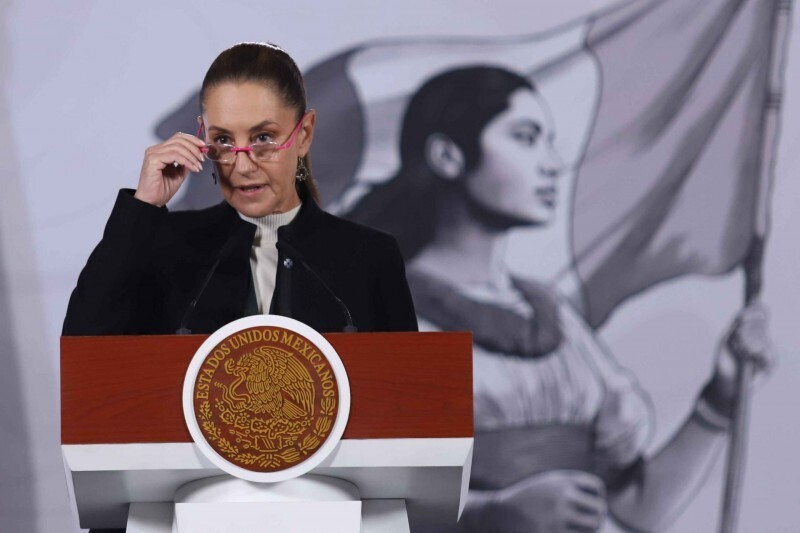
Claudia Sheinbaum announced on Tuesday that the video game tax will not be charged, despite being included in the 2026 Revenue Law, as she assured she will bet on campaigns to raise awareness among young people. During her morning conference, the last one of this week due to Christmas festivities, the president indicated that she requested the taxes to be removed because she recognized that it generates many complications to determine which ones should be applied. "It is very difficult to distinguish between a video game that has violence and one that does not, so how are you going to put a tax on it? Who is going to determine that circumstance?" "We have to analyze very carefully what has to do with the content of video games. It is a new phenomenon that has its positive aspects, but it must be regulated." The economic package sent in September to Congress by the Treasury Department established a tax of up to 8% on sales in physical format and on digital access or download services for video games, offered by national or foreign companies without a establishment in the country. "This within the concept of 'healthy taxes', which also considers increases in sugary drinks and tobacco, in the midst of greater pressures to add income to the government," Sheinbaum pointed out. "Then, we decided that the tax will not be charged and instead make campaigns for young people and adolescents about where these types of games can take you because many of those are online and generate addiction, cost money and can generate violence," she explained. For his part, the Secretary of Health, David Kershenobich, said that the phenomenon of violence related to video games is new, which has grown in the last ten years.