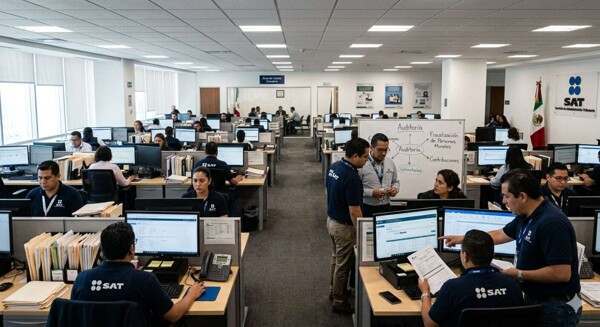
The method, whether on-site or remote, considers the team members, their competencies in handling the assigned audit's complexity, and compliance with objectives under agreed criteria. Its management involves reports with approval regarding objectives, management, and preservation of the obtained records, all for the purpose of tracking the program. Beyond fulfilling the audit's procedures and objectives, feedback to the Board of Directors and their responses to findings are a primary part of the management ethics. Communication is indispensable, naturally adhering to the truth of what occurred to report violations of operational procedures. And what else? The future of auditing, like the future of consulting, has changed. The audit of Financial Statements is governed by the International Standard ISO 19011, a detailed guide whose subtitle is: Guidelines for the management systems auditing. It begins with planning to establish audit program objectives, and to assess the program's risks and opportunities. The auditor must contribute to generating value, support sustainability, and carry out the business's purpose. At a minimum, the auditor can convince the Audit Committee to review each ongoing strategic project, due to the amount of expenditure involved, and to monitor the expected results. How to do this is described in the IMEF Technical Bulletin 2024.02 Values in Corporate Governance. Only by auditing value generation indicators and not just money can the audit fulfill the function proposed by the governing ISO standard. The audit team must meet periodically to exchange information, assess progress, and reassign tasks within the team as necessary, the standard states. The general process of gathering and verifying information involves identifying its source, collecting it through appropriate sampling, preserving audit evidence, evaluating it against the audit criteria, defining findings, reviewing them, and generating conclusions. Up to this point—based on our common understanding of the auditor's function—the reader and the writer visualize the public accountant reviewing accounting records, contrasting them with merchandise, money, billing, and paid services; payments in accordance with signed contracts, all properly fiscally recorded. If a strategy already exists, the auditor must verify that it has been communicated throughout the organization, that activities have objectives, a unit of measurement, and a target, assigned to specific people and teams. To ensure that agreed-upon targets are being met, it is important to assess if the unit of measurement and performance records are correct and if performance evaluations are conducted and used to select candidates for promotion, whether men or women, all with equity. Thus, the auditor contributes to achieving added value and complies with what is proposed by the ISO standard: auditing the entire management system. Similarly, the auditor must validate that the organization has a code of ethics, review if it has an implemented responsibility and sustainability map, where the values and principles of the code are linked to the organizational activities that reflect them and their goals. It identifies the roles and responsibilities of the people responsible for the program's management, their competence, scope, and budget. To implement it, it is necessary to define the scope and acceptance criteria regarding the objectives. It is not enough to point out operational deviations. And, if pressed, to validate the operation of a whistleblower channel. IMEF, in collaboration with specialists, developed for CONOCER the competency standard RC1305 Management for the increase and remuneration of productivity, linking the strategy to measure with the generation of value. The lack of a strategic plan must be pointed out if it does not exist, and to promote within the Board of Directors to formulate it and communicate it.

The Evolution of Auditing: From Checking Numbers to Creating Value
Modern auditing goes beyond checking financial statements. It becomes a tool for strategic management, focused on creating value, sustainability, and achieving business goals. New standards, like ISO 19011, emphasize the importance of ethics, communication, and a comprehensive analysis of the entire management system, not just financial metrics.