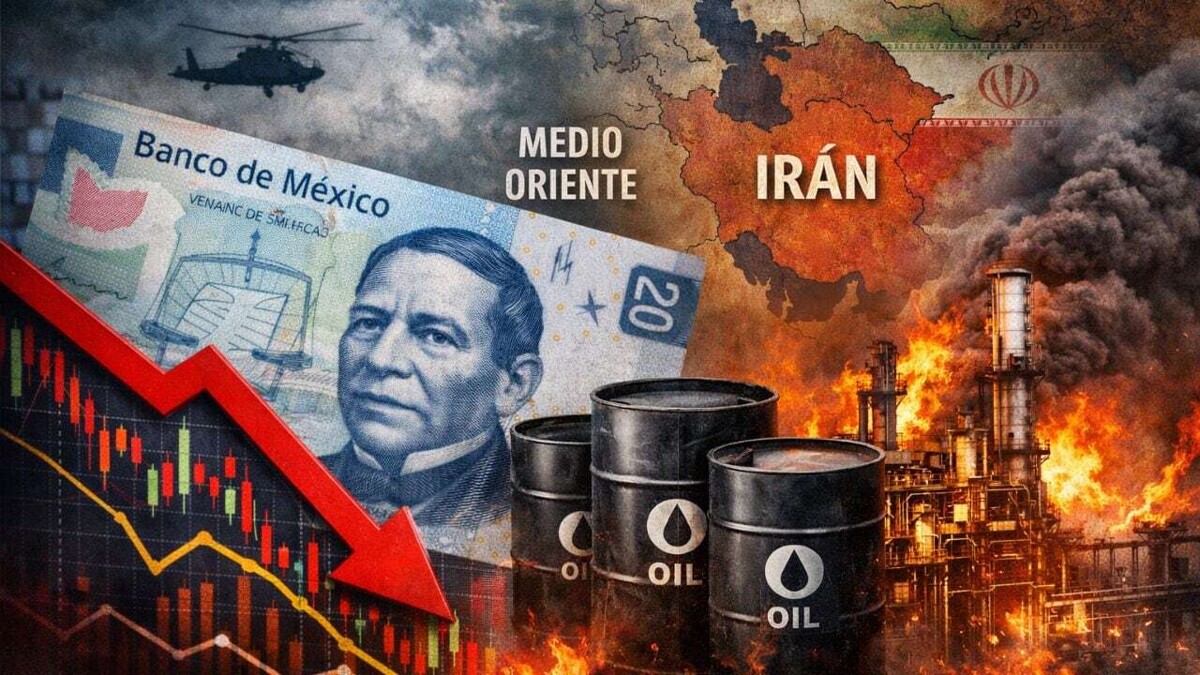
The recent fire at the Olmeca refinery introduces uncertainty about the country's energy operational capacity, just as international oil prices are on the rise. Although the Federal Government has stated that the economic impact will be neutral thanks to fuel subsidies, this strategy implies additional pressure on public finances. This indicator will be crucial for assessing the resilience of domestic consumption against imported inflation. Weak performance could reinforce the perception of economic slowdown and limit the scope for action by the Bank of Mexico, while a positive reading would offer some relief amid the adverse environment.
Internal factors: energy, politics, and public finances The domestic front adds complexity to the landscape. Volatility in oil prices adds further pressure, especially for economies with high exposure to external shocks. Key indicators: consumption in focus Locally, investors' attention is focused on the Retail Sales data, whose previous reading was 4.3%. This movement reflects a session start marked by risk aversion and investor caution in a complex global scenario.
External pressure: geopolitics and oil The main catalyst behind the currency's weakness is the deterioration of the international environment. However, the environment remains dominated by uncertainty, both external and internal, which limits a sustained strengthening of the Mexican peso. This initiative, which seeks to reduce resources to organizations and limit institutional spending, has raised concerns about the institutional balance. Additionally, the president's statements about the possibility of extending her stay in power until 2030, with popular support, add a political component that usually translates into a higher risk premium for the country.
Perspectives: short-term volatility For the rest of the day, the exchange rate is expected to oscillate in a range between 17.90 and 18.15 pesos per dollar, with a bullish bias. If the retail sales data disappoints or tensions in the Strait of Hormuz escalate, the peso could surpass the 18.10 barrier, with the potential to reach levels close to 18.25. Conversely, a cooling of geopolitical rhetoric could allow for a recovery towards the 17.90 zone.
The growing tension in the Middle East, stemming from the US administration's 48-hour ultimatum to Iran and Tehran's response with threats to global energy infrastructure, has caused a sharp rebound in WTI and Brent crude prices. This context has pushed markets towards safe-haven assets, particularly affecting highly liquid emerging market currencies like the Mexican peso. This occurs as President Claudia Sheinbaum has acknowledged that Mexico "needs to grow more," pointing out structural weaknesses in the economy. Politically, the call from the Banking Convention for the financial sector to increase its support for national development adds to the progress of the so-called "Plan B" in Congress.
The Mexican peso opened the session with a depreciation of 0.30%, standing at 17.97 units per dollar, compared to the previous close of 17.91.