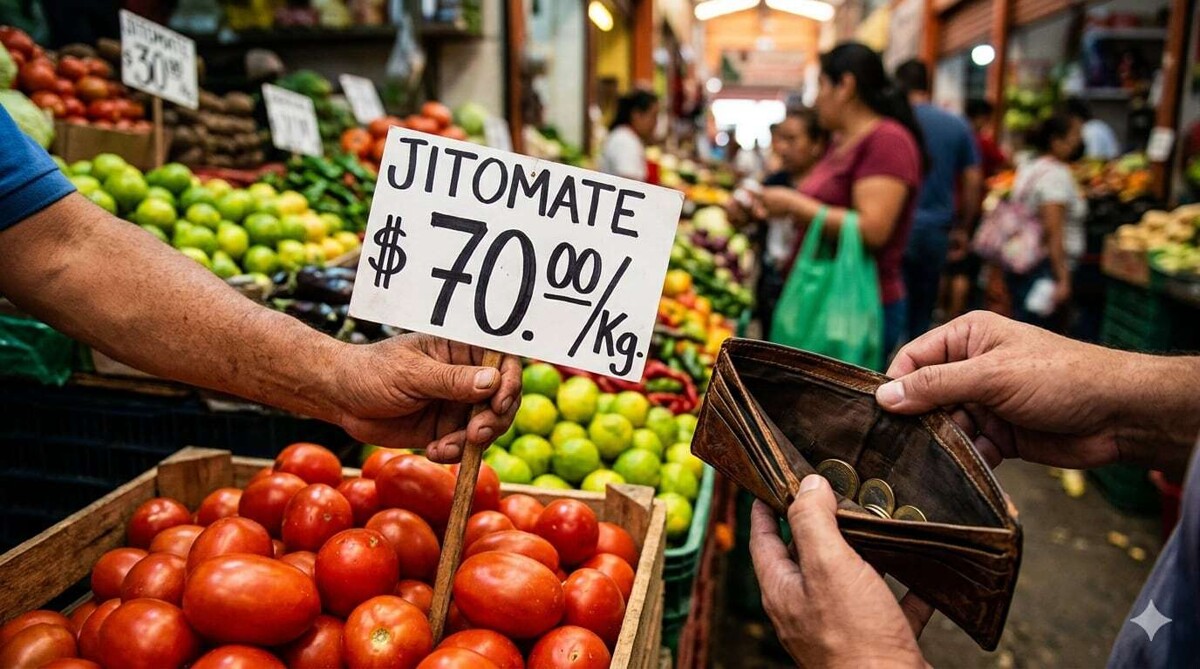
Public prices for these foods reached record highs of 56 to 71 pesos per kilogram. To make matters worse, INEGI pointed out that – only in the first half of March – chicken registered an increase of 3.18%; tortillas, tacos, and combo meals rose by 0.62%. These movements may seem minimal, but they have a strong impact on the wallet, as they are high-demand foods.
Holy Week Pushes Inflation The director of the Agricultural Markets Consulting Group, Juan Carlos Anaya, explained that the increase in food prices, especially fruits and vegetables, is not yet related to the effects of the war in the Middle East as anticipated. He stated that the food inflation, recorded in the first two weeks of March, is an effect of the higher consumption of fresh fruits and vegetables during Lent, and therefore, the start of Holy Week, which drives the purchase of products like lemon, tomato, cucumber, and water. In addition to a decrease in the harvest of these products due to frosts, rains, and weather damage in the country's most important agricultural zones: Sinaloa, Zacatecas, Puebla, and Morelos, which reduced the availability of red tomatoes, green tomatoes, and zucchini.
Anaya mentioned that, although the cost of fertilizers has increased by up to 40% following the war in the Middle East, its impact on agricultural production has not yet materialized, although it is a latent risk that in the coming weeks can drive up food prices. “The armed conflict in the Strait of Hormuz – which is closed due to the war – represents a medium-term risk via the price of fertilizers and agricultural inputs, but its effects on consumer prices have not yet materialized,” concluded the director of the Agricultural Markets Consulting Group.
Most Expensive Products First Half of March INEGI reported that the products that became most expensive, only during the first half of March 2026, were: Tomato: 32.17% Air Transport: 21.86% Zucchini: 16.78% Lemon: 13.11% Green Tomato: 10.79% Potatoes and other tubers: 7.77% Chicken: 3.18% Electricity: 2.17% Lunch counters, fondas, tortillerías, and taquerías: 0.62% Owner-occupied housing: 0.18%
Some foods like tomato, green tomato, potato, and lemon have had constant increases for several months, driving their price up by more than 100% annually.
Products That Decreased in Price In the first half of March 2026, the following products decreased in price: Nopales: -5.49% Internet, telephone, and pay TV packages: -3.47% Other fruits: -1.66% Men's shirts and t-shirts: -1.51% Egg: -1.33% Internet Service: -1.29% Cream and dental hygiene products: -0.64% Personal deodorants: -0.59% Pork: -0.57% Beef: -0.19%
INEI reported that the general price index in Mexico jumped to 4.63% at the close of the first half of March, the highest in 15 months, with food and services being the main drivers of the increase. It reported that the price of fruits and vegetables reached an average annual increase of 23.91%, with record increases in tomato and green tomato, and very high variations in poblano chili, cucumber, and serrano chili; in addition to increases in chicken, tacos, tortas, and combo meals.
The Agricultural Markets Consulting Group (GCMA) explained to Publimetro that the new inflationary blow has two culprits: higher consumption due to Lent, as well as lower harvests due to frosts, rains, and sudden temperature changes that hit the country's producing regions.
Fruits and Vegetables… Very Expensive The National Institute of Statistics and Geography (INEGI) reported that tomato reaffirmed its crown as the fresh food that has become most expensive in Mexico, with a record 152% increase in the first half of March, forcing families to pay up to 70 pesos per kilogram. While green tomato or tomatillo was the second product that hit families' wallets the most, with an annualized increase of 105% that brought its price to 69.9 pesos per kilogram in markets and shopping centers across the country.
Behind them were poblano chili, with a variation of 47.90%; cucumber, with an increase of 44.78%; serrano chili, with a surcharge of 37.93%; and lemon, with an increase of 37.70%.
Lent and the arrival of Holy Week hit the wallet directly: food prices rose up to 152% by the end of the first half of March, while services, airplane tickets, and travel are rising sharply, and money is no longer enough.
The impact was already reflected in inflation.