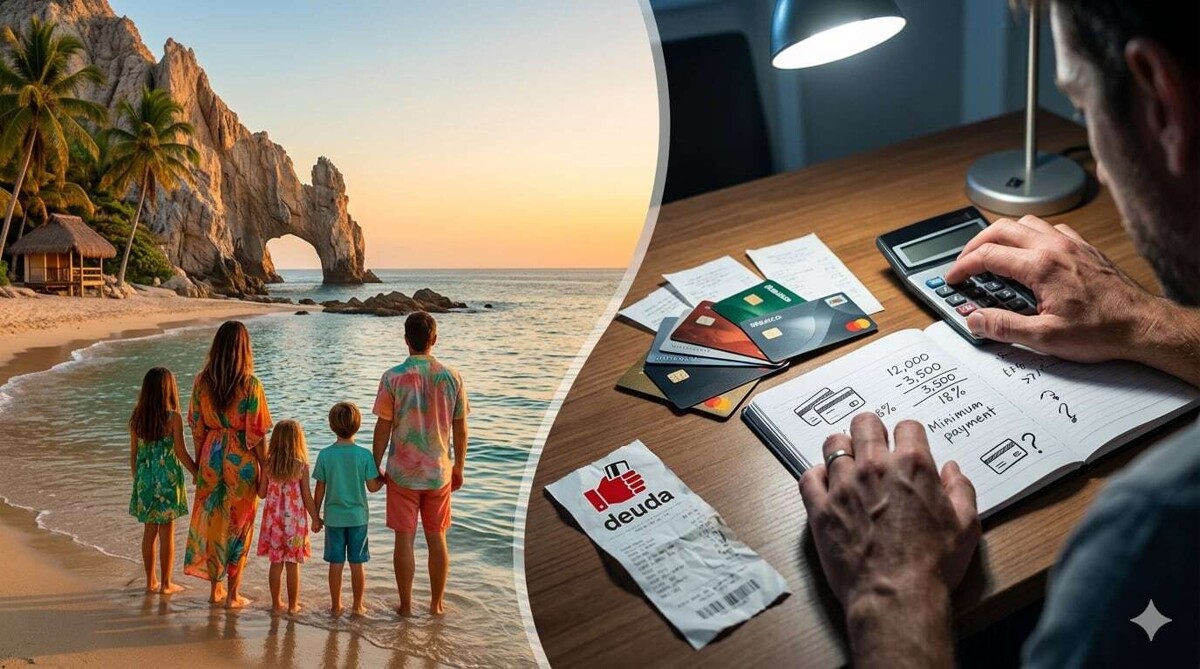
More than just paying for the trip, the goal is to return with predictability, defined amounts, clear dates, and protected liquidity for the next pay periods. 'Credit can be a useful tool for managing this type of expense, as long as there is clarity on the total amount and the ability to pay. Without a clear plan, the vacation becomes a debt that lasts longer than the trip.' The credit information society (SIC) Círculo de Crédito reported that there are more than 26.5 million credit cards in circulation in Mexico, and during high-spending seasons like the Easter holidays, the risk is clear: if you don't define amounts and terms from the start, the revolving balance can extend for months. It stated that the difference between enjoying the trip and dragging debt lies in deciding before you leave how much you will pay and in what time you will settle it. Therefore, it pointed out, before resorting to credit for any expense, it is convenient to answer three questions: Can I pay for it without affecting my basic expenses? Financing must adjust to what is left available after covering the essentials. Do I know the interest rates and terms? Having clarity on the total amount and payment time prevents surprises. Does it add value to my well-being or that of my family? Not all outings require credit. 'The difference between a planned trip and an unpayable debt lies in anticipation,' explained Círculo de Crédito's Chief Consumer Officer, Hugh Bruce. A credit with no price In this context, Círculo de Crédito indicated that before booking the hotel, Andrea did something simple: she reviewed her budget. It was not an impulsive decision, but a serious financial question: 'Can I do it without compromising the next pay periods?' More than the trip, what worried her was returning with unpayable debts that would take away her sleep and peace of mind,' it noted. The SIC highlighted that both the questions and the experiences of Andrea are a key opportunity for any family, as they lay the groundwork for a budget where it is defined how much they can spend on transportation, lodging, and entertainment. It pointed out that these proposals invite better organization of the monthly cash flow and prevent bank cards from taking control of the holidays. In certain cases, it can be the bridge between wishing for that experience and making it possible. She defined the exact term in which she would settle the total and ruled out any additional expense that could force her to pay only the minimum. It stated that settling this type of experience can be part of a healthy financial life when there is planning. She calculated how much she could allocate without affecting rent, tuition, or services. The problem is using the card without knowing how you are going to pay. The problem is not traveling during Holy Week. This simple formula translates into greater stability and tranquility for your economy. Approach to the problem To recreate the real impact of the irresponsible use of credit cards during the Easter holidays, Círculo de Crédito presented the case of Andrea, who began to do the math from February to organize and finance a family trip. 'Holy Week was approaching and Andrea's children insisted on going to the beach for a few days.'