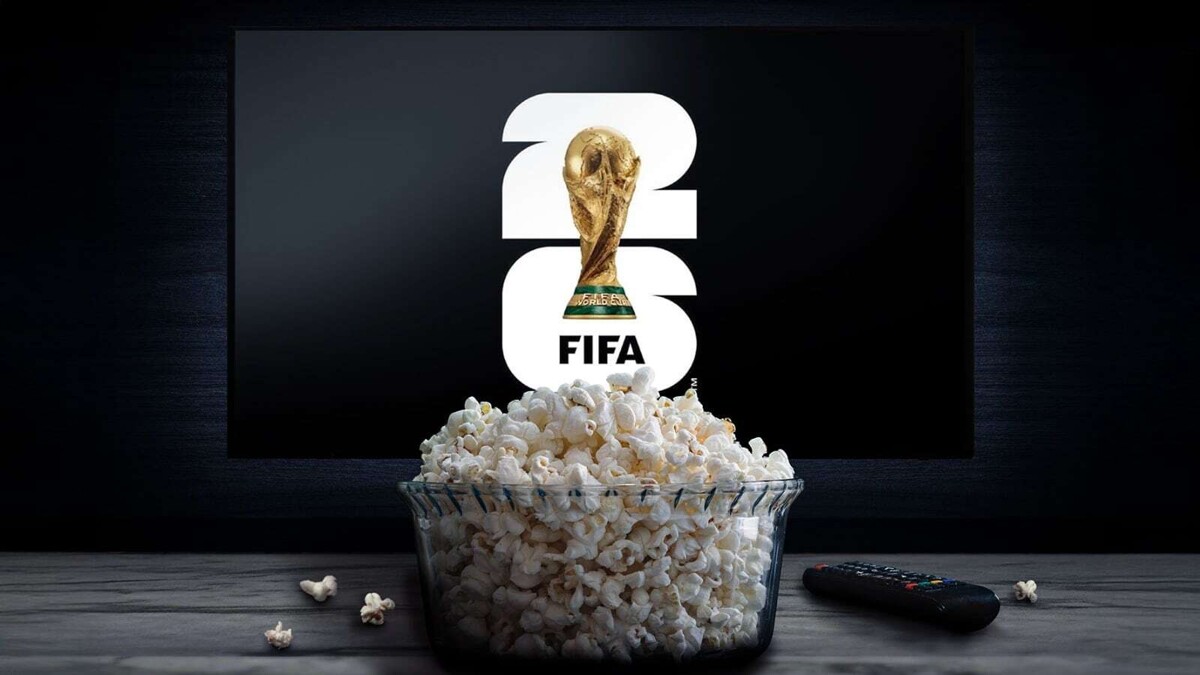
The 2026 FIFA World Cup, to be held in Mexico, the United States, and Canada, is poised to be a key catalyst for the sale of smart TVs in the country. Experts anticipate an estimated 6% increase in demand for the first few months of the year due to this sporting event, with the industry's value reaching $3.546 billion. "We predict growth in the acquisition of Smart TVs this year, and it will be driven by the World Cup; last year, TV purchases contracted by 1.5%, that is, from 2024 to 2025," explained Enrique Espinosa de los Monteros, Head of Technology and Durables for Latin America at NielsenIQ. In 2025, screen sales recorded an annual contraction of 1.5%, reaching $3.345 billion, compared to $3.396 billion in 2024. Enrique Espinosa de los Monteros explained that for 2026, the industry anticipates a rebound driven by the sporting event and a clear trend towards the technological renewal of homes, where consumers seek larger and higher-resolution screens. "What we are expecting for this year is a growth of around 5 or 6 percent, and this will be very positive for all brands, but especially for Chinese brands, which have been gaining ground in the Mexican market," he detailed. Fans are opting for screens larger than 55 inches Analysts predict that the growth in demand will not be homogeneous. Small screens continue to lose relevance, while models larger than 55 inches are concentrating demand, driven by streaming consumption and the improvement in the audiovisual experience, according to expert opinion. "When we look at the trends, we are observing that the growth is not going to happen in small screens; part of the contraction we saw last year was because the consumer stopped acquiring screens of 40 inches or less, those are contracting and will continue to contract," indicated Espinosa de los Monteros. The expert considered that fans in the country who are going to renew their TVs during the first half of 2026 will opt to buy equipment larger than 55 inches. "What we predict is that people are going to start replacing their screens with larger TVs; last year, that is in 2025, we saw a growth trend in screens larger than 55 inches, that was the only segment that grew, and for this World Cup year, we are sure the trend will be the same," added the NielsenIQ executive. In fact, the brands are aware of this, and today we see that their offerings in screens larger than 55 inches include advanced functions such as 4K UHD, voice control (Google/Alexa), screen mirroring (AirPlay/Chromecast), use as a smart home hub, video calls, and intelligent image/sound modes (Dolby Vision/Atmos). Chinese TV brands will be the most benefited For Daniel Gutiérrez, Telco and Tech & Durables Director for NielsenIQ, the fever for a greater acquisition of Smart TVs prior to the 2026 FIFA World Cup will mostly benefit Chinese brands, which have currently managed to combine competitive prices with technological advances that have elevated their perception among consumers. "Chinese brands are the ones bringing interesting dynamism to the market and the ones that will bring this growth for the World Cup," commented Daniel. Firms like TCL, Hisense, and Xiaomi have gained ground against traditional competitors like Sony, Samsung, and LG, by diversifying their offer in mid-range and high-end segments. "It is interesting to see that previously Chinese brands were perceived as copy brands that did not bring technological advances, but today we are no longer seeing it that way; today what we see is that Chinese brands have increasingly advanced technology and even some are innovating," added Daniel. The market's advance is also supported by a solid user base. Currently, Mexico has around 51 million connected TV users, while 65 percent of consumers use their screen to access streaming platforms. "Some brands are focused on lowering the price, others on improving the image quality or the digital services of the screens, but definitely they will be the ones that will capitalize on a good part of the screen purchases for the World Cup," concluded Enrique Espinosa, who affirmed that the World Cup will not only drive TV sales but will also accelerate the transition to a digital ecosystem.