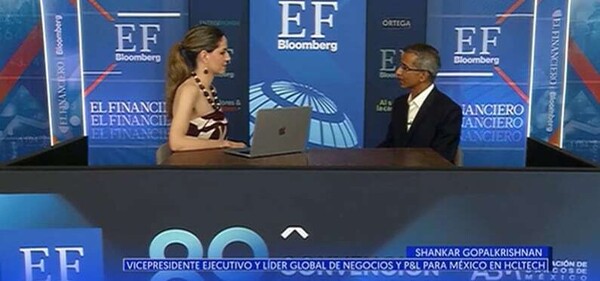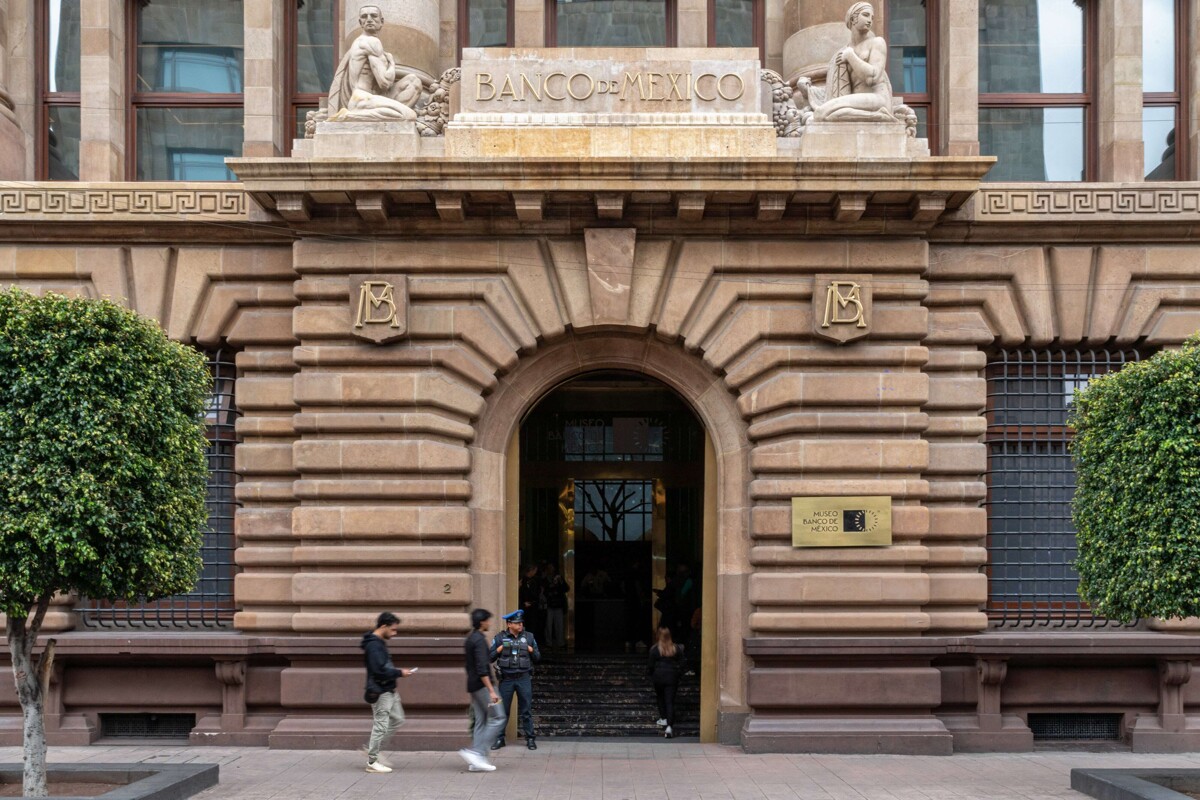
The Governor of the Bank of Mexico (Banxico), Victoria Rodríguez Ceja, defended in an interview with El Financiero the decision to lower the target rate by a quarter of a percentage point and stated that “in assessing the inflationary outlook and the evolution of its determinants, I consider that we are close to concluding the period of adjustments in the reference rate”. Part of the market had anticipated that the monetary authority would keep the interest rate unchanged, given the rebound in general inflation in the first half of March, which rose from 3.77% to 4.63% between January and that period. Rodríguez Ceja was direct in dismissing this data as a reason for a policy change, since the increase was caused entirely by the volatility in fruit and vegetable prices, a component over which monetary policy has no incidence. “These are price increases of a temporary nature that, although they affect our inflation figures, will also have a downward effect on inflation when they decrease as supply conditions normalize,” she stated. She anticipated that this normalization will occur soon. In contrast, she pointed out that underlying inflation remained practically stable, rising from 4.47% to 4.46% between the first half of January and the first half of March. However, the governor specified that in Mexico, the impact on consumer prices has so far been very limited. The agreement between the federal government and fuel retailers to keep regular gasoline below 24.00 pesos per liter and diesel at 28.50, along with associated fiscal stimuli, have helped to contain both the direct and indirect effect of the global shock on energy prices. Nevertheless, inflation forecasts showed marginal upward adjustments in the short term; however, Rodríguez Ceja reiterates that the convergence to the 3.0% target remains projected for the second quarter of 2027. At the same time, she recognized that “the balance of risks for inflation remains biased upwards”, given the intensification of geopolitical conflicts and changes in economic policy in the United States have added uncertainty to Banxico's forecasts. The decision was approved with a divided vote of 3 to 2, which reveals divergent views within the Governing Board. For the governor, this confirms that the effect of the tax changes was limited and there were no second-order effects. This behavior, added to the slack conditions in the economy and the exchange rate as a shock-absorbing mechanism, supported the decision to continue the cycle of cuts. The external environment added complexity to the analysis. Asked whether this division could erode the credibility of the central bank, the governor responded: “The strength of the central bank lies in its framework, institutional design, clear communication, and commitment to its mandate; and unanimous or dissenting decisions are part of this institutional design and always consistent with the primary mandate”. Rodríguez Ceja indicated that the ex ante real rate is at 2.82%, a level slightly above the midpoint of the neutral rate's estimate range, which oscillates between 1.8 and 3.6 percent. In her opinion, the stance will continue to exert downward pressure on the price formation process, taking into account the restriction implemented for a little over three years and the lags with which monetary policy operates. She framed this as part of the legacy of combating the most severe inflationary episode of the last two decades: the bank raised the rate to its highest historical level since the adoption of the inflation-targeting regime and thereby achieved “a sustained disinflationary process, while maintaining the anchoring of long-term expectations”. Regarding future cuts, she recalled that the cycle of reductions has reflected the margin available to adjust the monetary stance according to the evolution of inflationary determinants, and not in response to cyclical readings. In this context, she specified that the institute will remain attentive to external conditions and their implications for inflation: “As the evolution of macroeconomic and financial conditions warrants, we will assess the appropriateness and timing of making an additional cut to the reference rate”. But she stressed that, “in assessing the inflationary outlook and the evolution of its determinants, I consider that we are close to concluding the period of adjustments in the reference rate”. The escalation of the conflict in the Middle East and the closure of the Strait of Hormuz have pressured international prices of energy and commodities.