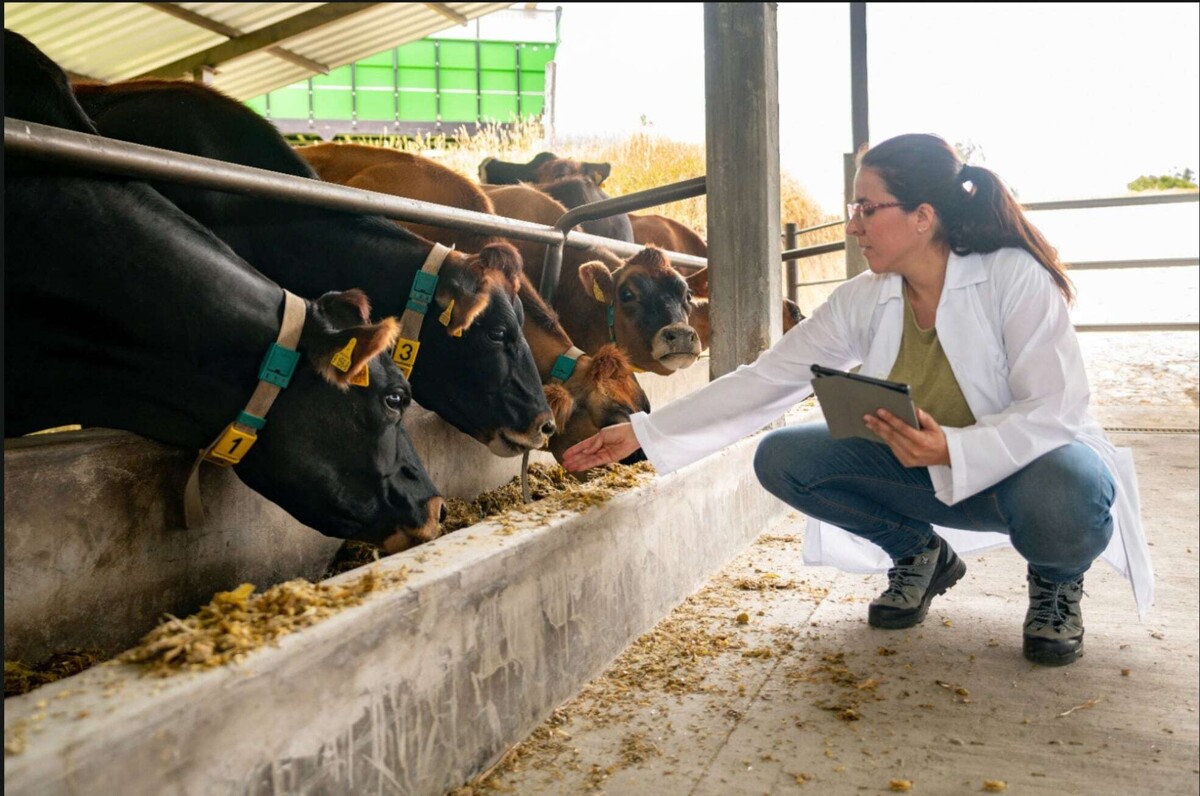
Women's participation in the livestock sector in Mexico has shown sustained growth in recent years; however, structural gaps persist that limit their access to leadership positions, financing, and technology. According to data from international organizations and industry actors, women make up about 23% to 25% of the workforce in Mexico's agricultural sector, a proportion aligned with the global average estimated by the FAO. Increasing participation, but with structural limits. In an interview with Publimetro, Irma Egoavil, general director of Zoetisy Camcar, said that while the female presence is becoming more common in activities like milk production, administrative areas, and operational management, their participation in decision-making spaces remains limited. Currently, only 10% to 15% of women in the sector hold leadership positions, mainly in associations, administrative roles, or guild structures. This scenario reflects a partial integration that, while it has advanced, still faces historical barriers within a traditionally male-dominated industry. Gaps in financing, technology, and training. Irma Egoavil emphasized that one of the main obstacles identified is unequal access to key resources for productive development. Women in the livestock sector have less access to financing, technical training, and production technologies, factors that directly impact the competitiveness and sustainability of productive units. Studies cited in the industry indicate that when these conditions are balanced, productivity can increase significantly, with impacts not only economic but also social in rural communities. Impact on productivity and community development. The director of Zoeties mentioned that women's participation is not just an equity issue but also a strategic factor for sector development. Livestock sector data shows that women's access to productive resources can increase production by up to 18% and improve productivity by around 20%, in addition to strengthening the family and community economy. This multiplier effect positions female inclusion as a key element for the sustainability of Mexican agriculture. Cultural changes and pending public policies. Specialists agree that the challenge is not only operational but also cultural. The need to break gender stereotypes in the field, as well as generate conditions of security, visibility, and professional development, remains one of the main challenges. In this context, initiatives such as training programs, support networks, and industry organizations focused on women are mentioned as ways to close the gap and promote their participation in strategic areas. A sector in transition. The advancement of women in livestock reflects a transformation process in the agricultural sector; however, the persistence of structural inequalities shows that inclusion is not yet complete. The challenge for authorities, companies, and sector organizations will be to consolidate mechanisms that ensure equitable access to resources, training, and leadership, in a context where productivity and rural development increasingly depend on the integration of all actors.