The United States has hardened its assessment of the business environment in Mexico for 2026, documenting a greater number of barriers compared to 2025.
For example, it highlights that illegal fishing and clandestine trafficking distort prices and affect the competitiveness of U.S. producers. In the fishing sector, imports from Mexico reached $646.9 million in 2025, but products linked to illegal activities can be sold below market value, pressuring prices in the United States.
The report also noted that between 30 and 70 percent of the wood in Mexico could have an illegal origin, representing a structural problem of environmental and commercial compliance. It also highlighted that “customs authorities have an expanded capacity to stop and seize shipments,” which introduces logistical uncertainty and financial risks for exporters.
Mexico will boost local support in 2026 Another new element in the 2026 report is the inclusion of measures in government procurement with a bias towards national content. Starting this year, Mexico will grant additional points in tenders to companies that invest in local production or develop infrastructure in the country.
According to the report, this policy “potentially disadvantages U.S. companies in the health sector” by introducing criteria not necessarily linked to efficiency or cost.
Mexico rewards state-owned companies in energy The assessment in the Energy sector is more incisive in 2026, as the report indicates that recent reforms consolidate a model that privileges state-owned companies and limits private participation.
Among the most relevant changes, a reduction in the validity of permits (from up to 20 years to just 5 for fuel imports) and new logistical restrictions are mentioned, which “increase operational costs and unfairly favor Pemex.”
The National Trade Estimate (NTE) 2026 report expanded the chapter dedicated to Mexico, increasing from seven pages in 2025 to nine in 2026.
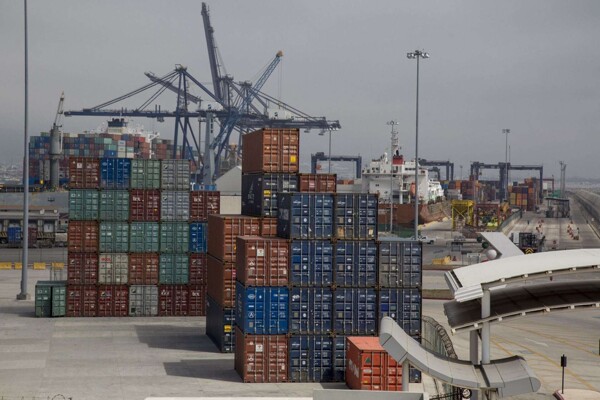
One of the changes between 2025 and 2026 is observed in customs. While the previous report pointed to problems such as late notifications, inconsistent criteria, and operational limitations at entry ports, the most recent report documents a shift towards a more restrictive and punitive scheme.
The U.S. emphasized that “significantly more information is required for each import transaction, while responsibility for sanctions has increased dramatically,” which increases compliance costs.
The United States hardened its diagnosis of the business environment in Mexico during 2026, documenting a greater number of barriers compared to 2025.
Additionally, U.S. companies report debts of more than $2.5 billion from Pemex, which adds financial pressure and elevates the country risk in the sector.
Organized crime affects U.S. producers Unlike in 2025, the 2026 report incorporates concerns regarding environmental issues and non-market practices.