Mexico faces a medium-term path to reduce its dependence on Asia for semiconductors, as developing an industry capable of replacing imports of basic microchips will take at least five years. The country participates in a global market exceeding $700 billion annually, driven by sectors like automotive, electronics, and telecommunications, where semiconductors are critical inputs. "When stable rules of origin are in place, which are currently under review, we will be able to see where and what type of supply chain activity Mexico is attracting," added a Canieti executive.
The current strategy focuses on supply chain substitution. Currently, Mexico imports a significant proportion of electronic components from Asia, particularly from economies like China, South Korea, and Taiwan, which limits its technological autonomy and exposes it to global disruptions. "Attracting supply chains is complex because it's not about basic supply chains; these are goods that require significant investment and years of ecosystem adaptation. This strategy aims to strengthen the industry and create conditions to attract investment, even through its integration into the T-MEC review."
Mexico currently has an expanding ecosystem of over 460 sector companies, including 54 national firms already actively engaged in technological development. Under the Mexico Plan, the government and industry are mapping inputs that could already be produced locally, especially in less complex segments. "Perhaps they are referring to the fact that they are starting to identify goods that are likely brought from Asia today but are already produced locally," added the Canieti vice president.
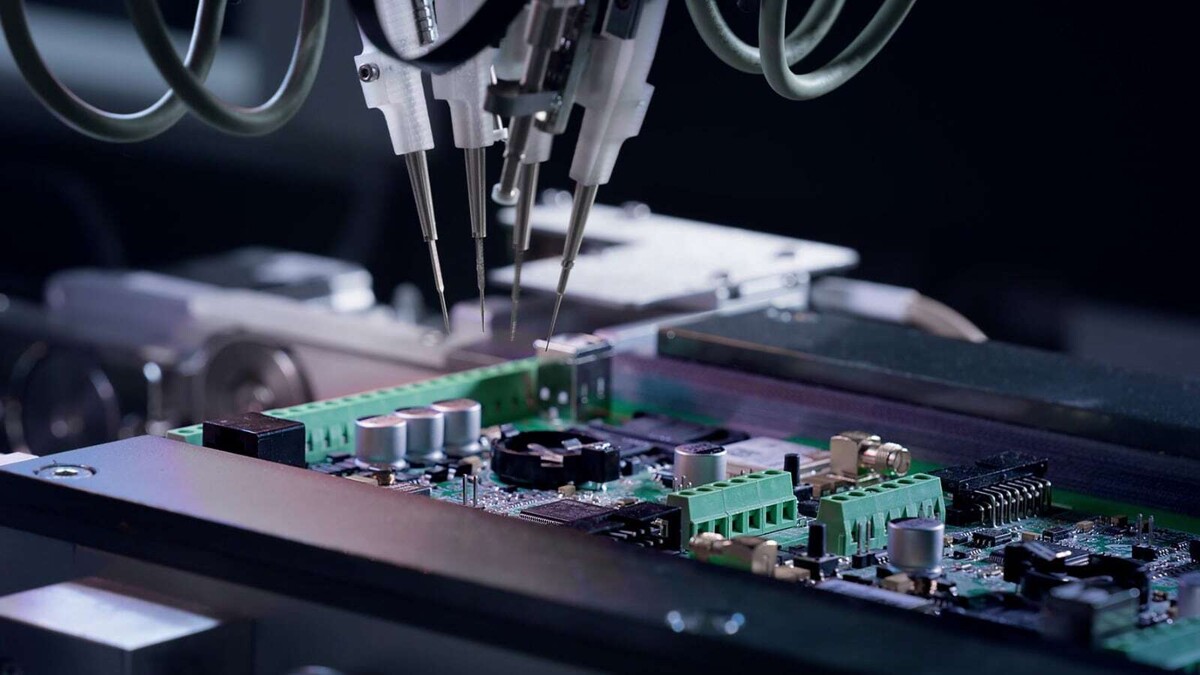
For now, national capacity is concentrated on basic components, while more sophisticated elements, such as silicon wafers or advanced boards, remain beyond the reach of local manufacturing. "They are almost like a chip in themselves, but there are small components of basic electronics (diodes, cables, very basic materials, boards) that small national electronics providers already make, and that's where this process is starting to unfold," he stated.
The move towards greater self-sufficiency will depend on sustained investment, technology transfer, and regulatory certainty, factors that will determine if Mexico can scale up the value chain or remain a secondary player in the global semiconductor industry.
The Mexican semiconductor sector is entering a key consolidation phase, driven by the global realignment of supply chains, its proximity to the United States, and a more active industrial policy. The relocation of supply chains and the renegotiation of the Mexico, United States, and Canada Agreement (T-MEC) place Mexico in a key position to attract investment, although it still faces limitations in technological capabilities and productive ecosystems. "They want to start with what is viable to avoid negative impacts. This environment has favored the installation of new plants and the strengthening of the national technological ecosystem."
In 2024, the country reached a historic high in patent registrations related to semiconductors, with 16,000 approvals, of which around 700 corresponded to Mexican developments. However, its productive integration remains concentrated in assembly stages. "The challenge is not only industrial but also strategic. Taiwan, for example, took 30 years," said Rebellón.
Despite this, the country has begun to identify opportunities within its industrial base. For 2025, a new record is projected with nearly 1,000 national applications, reflecting growth in local innovation. This advance is also supported by the 2024-2030 Master Plan for Semiconductors, more than half of whose objectives have already been met. "If a tariff is placed on something that is not substitutable, that tariff is passed on to the end consumer, and that is what they want to avoid," commented Carlos Rebellon, national vice president of Semiconductors at Canieti.
The development of this industry is closely tied to the rules of origin that will be defined in the review of the trade agreement (T-MEC) with the United States and Canada, as these will determine which components must be produced in the region to maintain tariff advantages. "What rules of origin are set after the T-MEC review will be crucial."